Species · genus Ophiopogon · Asparagaceae
Black Mondo
Ophiopogon planiscapus Nakai
Also known as: Black Mondo Grass · Mondo Grass
Cultivars of O. planiscapus
The named forms growers keep — each with its own page, each honest about how much we know.
No named cultivars catalogued under O. planiscapus yet. When growers document a stable, named form, it earns its own page here.
Guide
The species-level account. Cultivar pages build on this and say where they differ.
A Dark-Leaved Ground Cover
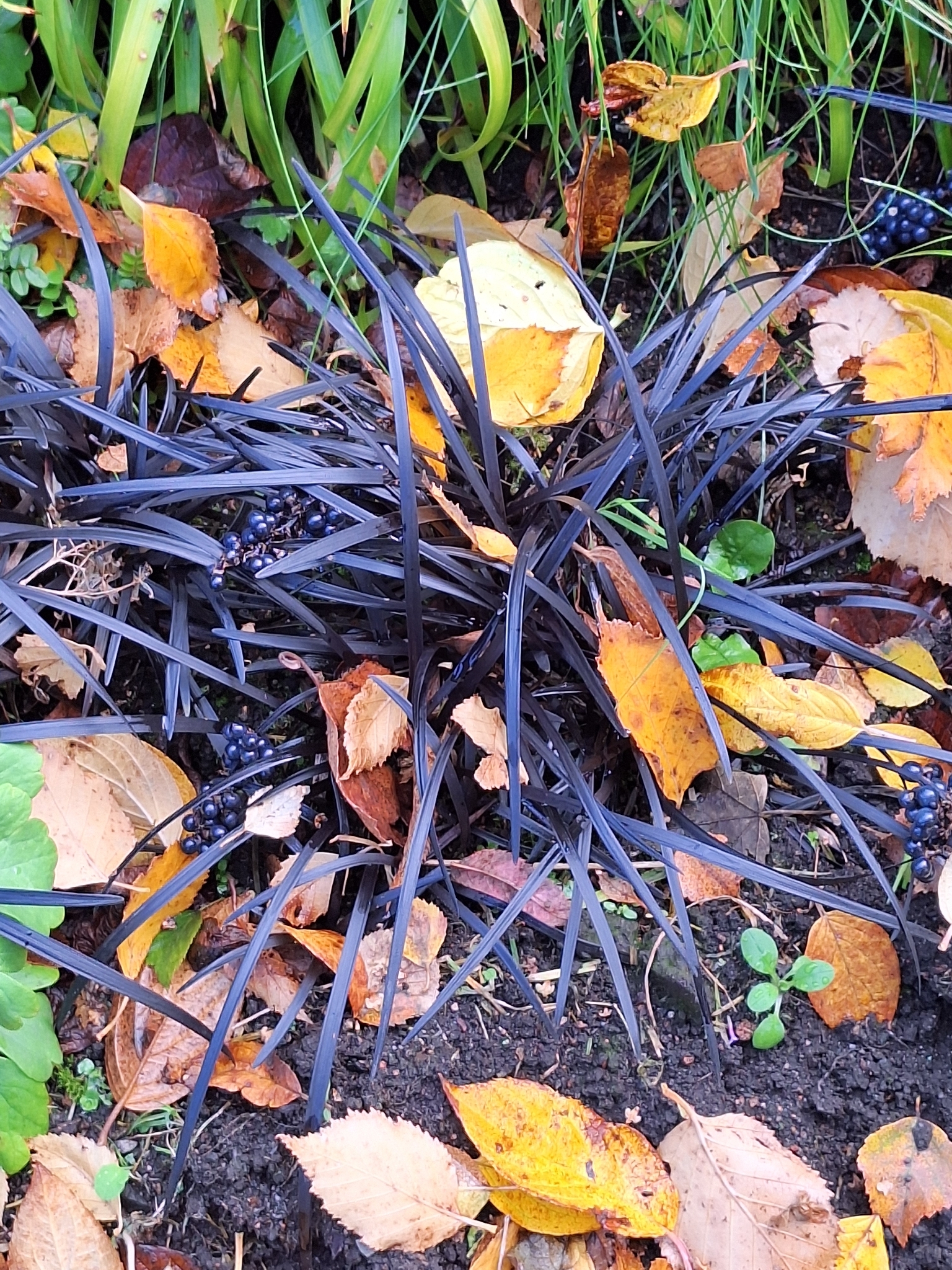
Black mondo grass, Ophiopogon planiscapus 'Nigrescens', is a low, clump-forming perennial grown for foliage so dark it reads as black in most light. Despite the name, it is not a true grass but a member of the asparagus family, and it is prized as a distinctive, low-maintenance ground cover rather than for its flowers.
Source: Epic Gardening
Roots in Japan
This plant traces back to Japan, and specifically the wild species Ophiopogon planiscapus from central and southern Japan, from which 'Nigrescens' was selected for its exceptionally dark leaves. It has since traveled well beyond its native range to become a landscaping staple prized for contrast.
Source: RHS
Steady Moisture, Cool Sun
Black mondo grass wants moist but well-drained, fertile, humus-rich soil that is slightly acid to neutral, sited in full sun or partial shade. Consistent, even moisture suits it best, since the soil should not be allowed to dry out for long stretches. Once established it tolerates some drought, and it needs no regular feeding beyond an occasional light top-up.
Source: RHS
Dividing the Clumps
The easiest way to increase black mondo grass is division in spring as growth resumes, lifting a clump and separating it into smaller pieces with roots attached. It can also be grown from seed sown as soon as it is ripe, though this is a slower route to a mature-looking clump.
Source: RHS
Leaves Nearly Black
The narrow, strap-like leaves start out dark green and deepen toward charcoal or near-black as the weather warms, sometimes taking on a faint reflective, greyish cast. It stays low, generally six to eight inches, forming tight arching clumps, and in summer it sends up racemes of small white to lilac-tinted bell flowers followed by glossy dark purple berries. This cultivar is often considered to have the darkest foliage of any perennial.
Source: Missouri Botanical Garden
Slugs Are the Main Bother
This plant is largely left alone by pests, but slugs are the notable exception, feeding on the leaves and leaving visible damage. Otherwise it tends to stay clear of the more common insect troubles.
Source: RHS
Watch the Wet Soil
No serious insect or disease problems trouble black mondo grass, but where it is grown at the edge of its hardiness, winter cold can set back the foliage, causing it to look worn or damaged after harsh seasons. In St. Louis-type winter conditions the evergreen leaves can depreciate noticeably even though the plant itself survives.
Source: Missouri Botanical Garden
Little Pruning Needed
Black mondo grass asks for very little upkeep: no regular pruning is required, and it should never be mowed, since a mistimed cut can set the slow-growing clump back for a long while. Simply tidy away any dead or damaged leaves as they appear.
Source: RHS
Care recipe
The species record — the baseline every cultivar inherits unless it says otherwise.
Care notes are early — not yet verified
- Light
- ai:claude-opus-4-8
- Water
- ai:claude-opus-4-8 (range 5-10d)
- Humidity
- ai:claude-opus-4-8
- Soil
- ai:claude-fable-5
- Care
- ai:claude-fable-5
Medium light
≈ every 10 days
Medium
5–24 °C
Well-draining, moisture-retentive mix rich in organic matter
Division of the clumping rhizomes
Light balanced feed once or twice in spring and summer
Slow
Small mauve-white flowers in summer; grown for its dark foliage
Not yet documented
This is where toxicity lives — every cultivar of this species inherits it and none can override it.
Reference images
Every image credited. Licenses link to their deeds.
PrimarySources: ai:claude-opus-4-8 · ai:claude-opus-4-8 (range 5-10d) · ai:claude-fable-5
Kept true by its growers
Every fact here carries its source. Grow Black Mondo yourself? What you’ve observed — how it drinks, how it holds its color, a name that’s off — and a clear photo of your plant are exactly what keep this page honest. Contributions are reviewed before anything changes.
Sign in to add what you know →