Species · genus Oncidium · Orchidaceae
Kandyan Dancer Orchid
Oncidium sphacelatum Lindl.
Cultivars of O. sphacelatum
The named forms growers keep — each with its own page, each honest about how much we know.
No named cultivars catalogued under O. sphacelatum yet. When growers document a stable, named form, it earns its own page here.
Guide
The species-level account. Cultivar pages build on this and say where they differ.
Dancing Lady Orchids
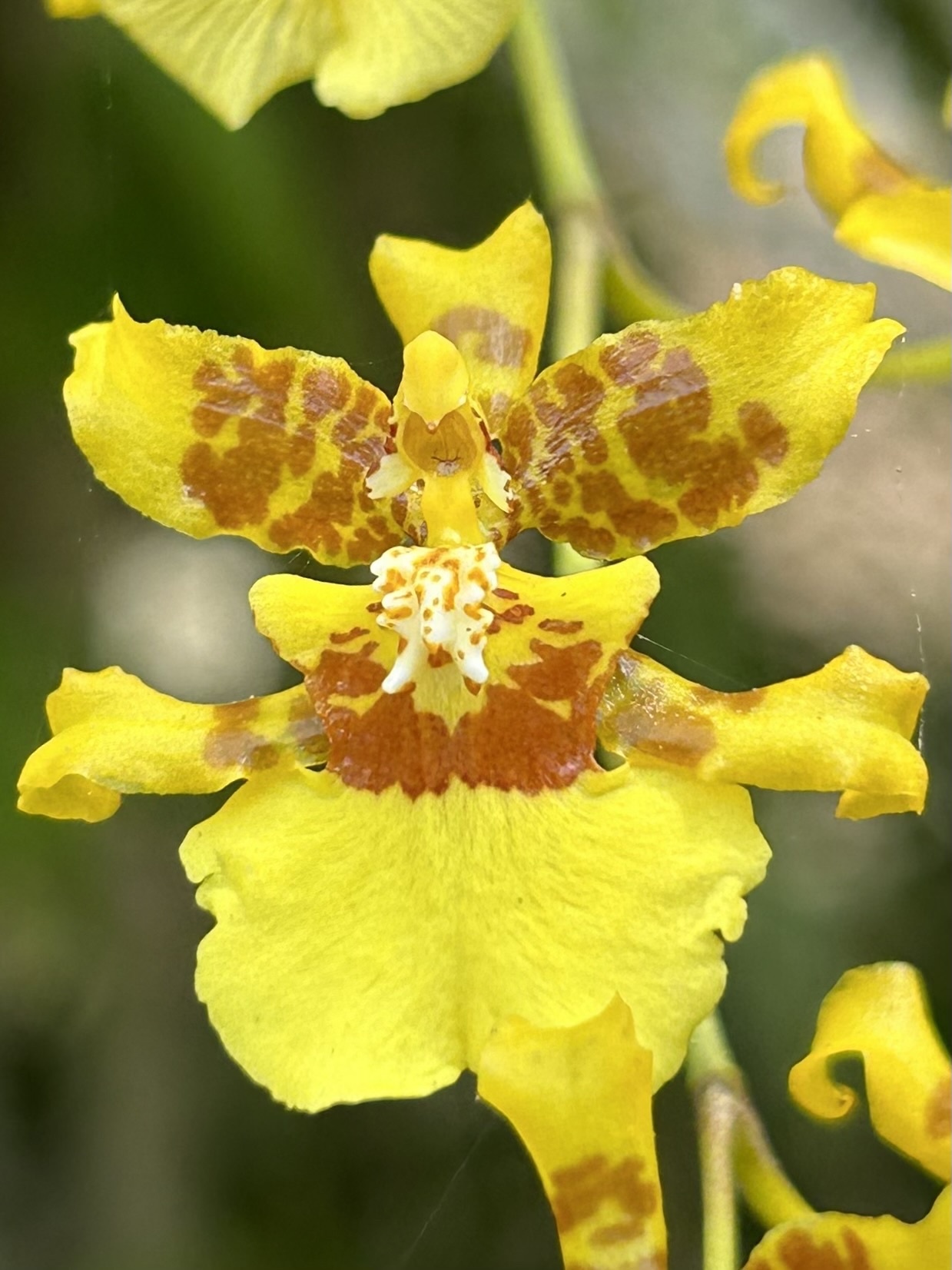
Warm growing oncidiums are tropical and sub-tropical orchids grown as houseplants for their tall, branching stems of small, dainty flowers. Each bloom is shaped rather like a dancing lady, and a single plant can send up a whole cloud of them at once. Colours run from the common yellow through pink, reddish-purple and white, often flecked or striped with maroon.
Source: RHS
Warmth, Light, Water
Give this orchid a warm, bright spot indoors, ideally on an east- or west-facing sill, with a little shading from strong summer sun on south-facing windows. It prefers daytime temperatures of 18–25°C and a cooler night of 13–17°C, which helps trigger flowering. Water every few days through spring and autumn, letting the compost dry slightly between waterings, then cut back to once a month or less in winter, as the pseudobulbs store water and dislike sitting wet. Feed lightly with a quarter-strength orchid fertiliser every second or third watering during the growing season, and keep humidity up around 55–75%, never letting it drop below 40%.
Source: RHS
Dividing Established Clumps
Over time these orchids form large clumps that can be divided into new plants at repotting, best done after flowering in February to April or September to October. Lift the plant, cut the clump into sections each holding at least three pseudobulbs, and pot each piece into its own small container of bark-based orchid compost. Depending on their size, these divisions may take a few years before they flower.
Source: RHS
Pseudobulbs, Leaves, Sprays
This plant is an epiphytic orchid, forming clumps of ovoid to conical pseudobulbs, each topped with one to three leathery, mid-green leaves. Narrow evergreen leaves can reach up to 60cm long, and the flower panicles that rise from the base of the pseudobulbs vary widely in colour and shape. A large, established specimen can throw up six or seven sprays of bloom at once.
Source: RHS
Sap-Sucking Visitors
These orchids are generally healthy, but keep an eye out for sap-sucking insects such as aphids, mealybugs and red spider mites.
Source: RHS
Reading The Symptoms
A wrinkled pseudobulb usually points to too little water, while black, rotten roots signal overwatering. Leaf colour is a useful gauge too: reddish-green leaves mean too much light, and dark green leaves mean too little.
Source: RHS
Repotting And Deadheading
These orchids are happiest left undisturbed and can usually stay in their original pot for the first couple of years, needing repotting only when the bark has broken down or there's no room for new growth, roughly every two years. Repot after flowering, in February to April or September to October, handling the delicate roots carefully and trimming away any that are brown, soft or papery. No routine pruning is needed beyond cutting the spent flower stems back to the base once the blooms have faded.
Source: RHS
Care recipe
The species record — the baseline every cultivar inherits unless it says otherwise.
Care notes are early — not yet verified
- Light
- ai:claude-opus-4-8
- Water
- ai:claude-opus-4-8 (range 5-10d)
- Humidity
- ai:claude-opus-4-8
- Soil
- ai:claude-fable-5
- Care
- ai:claude-fable-5
Bright, indirect
≈ every 10 days
High
15–29 °C
Coarse, fast-draining orchid bark; never ordinary potting soil
Division of pseudobulbs once clumps are large
Weak orchid feed every couple of weeks while in growth
Moderate
Sprays of small yellow-and-brown blooms in winter to spring
Not yet documented
This is where toxicity lives — every cultivar of this species inherits it and none can override it.
Reference images
Every image credited. Licenses link to their deeds.
PrimarySources: ai:claude-opus-4-8 · ai:claude-opus-4-8 (range 5-10d) · ai:claude-fable-5
Kept true by its growers
Every fact here carries its source. Grow Kandyan Dancer Orchid yourself? What you’ve observed — how it drinks, how it holds its color, a name that’s off — and a clear photo of your plant are exactly what keep this page honest. Contributions are reviewed before anything changes.
Sign in to add what you know →