Species · genus Nephrolepis · Nephrolepidaceae
Tuber Ladder Fern
Nephrolepis cordifolia (L.) C.Presl
Also known as: Boston Fern · Ladder Fern · Narrow Swordfern · Tuber Fern · Tuberous Sword Fern
Cultivars of N. cordifolia
The named forms growers keep — each with its own page, each honest about how much we know.
No named cultivars catalogued under N. cordifolia yet. When growers document a stable, named form, it earns its own page here.
Guide
The species-level account. Cultivar pages build on this and say where they differ.
An Upright Sword Fern
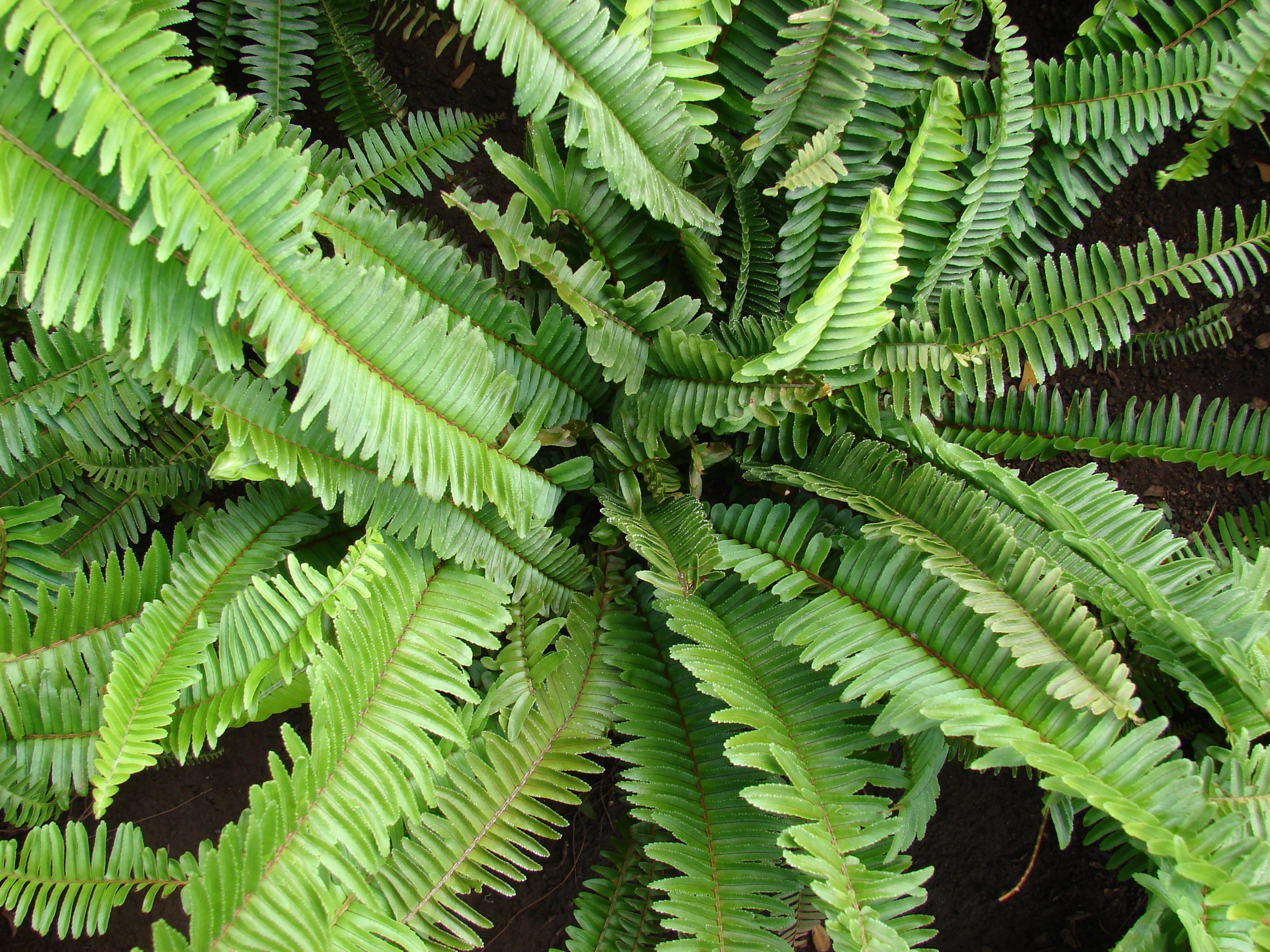
Nephrolepis cordifolia, the erect sword fern, is an upright, rhizomatous, evergreen fern that forms dense masses of dark green, sword-shaped fronds. It is grown widely as a houseplant, valued for its air-purifying reputation and its readiness to fill a terrarium or bottle garden.
Source: RHS
A Wide Native Range
This fern's native range stretches from São Tomé and southwest Cameroon through the western Indian Ocean and on across tropical and subtropical Asia to the Pacific. In the wild it behaves as a lithophyte or epiphyte, rooting on rock or bark rather than always in soil, and it turns up in forest, woodland, and shrubland habitats. In places such as Colombia it has also been cultivated and has naturalised, and it carries a long history of use as food, medicine, and in social and environmental contexts.
Source: Kew
Bright Filtered Light, Even Moisture
Grow this fern indoors or under glass in a peat-free multipurpose compost, or a homemade mix of loam, sharp sand, and leaf mould, set in bright filtered light with moderate to high humidity and good air movement. Water moderately with soft water through the growing season, feeding monthly with a half-strength balanced liquid fertiliser, then cut back to sparing water in winter. The fronds are prone to rotting if kept too wet, so err toward restraint rather than excess.
Source: RHS
Runners Over Spores
Spores can be sown at 21°C as soon as they ripen, though seedlings raised this way are unlikely to come true to the parent plant. The more reliable route is to separate rooted runners in late winter or early spring.
Source: RHS
Ruffled Tripinnate Fronds
The fronds are tripinnate, sword-shaped, and packed densely along the rhizome, with edges that ruffle rather than lie flat. It grows in a bushy, columnar upright habit and can reach half a metre to a metre in both height and spread. A related cultivar, Nephrolepis duffii, keeps the same dark, dense, ruffled fronds in miniature, staying under half a metre and adding a mild lemony scent to its foliage through the growing season.
Source: RHS
Watch For Scale
This fern may be susceptible to scale insects, which are worth checking for along the stems and frond undersides. Beyond that it is generally free of disease.
Source: RHS
Just Tidy The Dead Fronds
Maintenance is light: simply remove any dead fronds as they appear to keep the clump looking fresh.
Source: RHS
Care recipe
The species record — the baseline every cultivar inherits unless it says otherwise.
Care notes are early — not yet verified
- Light
- ai:claude-opus-4-8
- Water
- ai:claude-opus-4-8 (range 4-9d)
- Humidity
- ai:claude-opus-4-8
- Soil
- ai:claude-fable-5
- Care
- ai:claude-fable-5
Bright, indirect
≈ every 9 days
High
13–27 °C
Free-draining, humus-rich mix; tolerates a range of soils
Division or by its tuberous runners
Light balanced liquid feed monthly while actively growing
Fast
Never flowers — a fern, reproduces by spores
Not yet documented
This is where toxicity lives — every cultivar of this species inherits it and none can override it.
Reference images
Every image credited. Licenses link to their deeds.
Sources: ai:claude-opus-4-8 · ai:claude-opus-4-8 (range 4-9d) · ai:claude-fable-5
Kept true by its growers
Every fact here carries its source. Grow Tuber Ladder Fern yourself? What you’ve observed — how it drinks, how it holds its color, a name that’s off — and a clear photo of your plant are exactly what keep this page honest. Contributions are reviewed before anything changes.
Sign in to add what you know →