Species · genus Nepenthes · Nepenthaceae
Tropical Pitcherplant
Nepenthes mirabilis (Lour.) Druce
Also known as: Common Swamp Pitcher-Plant · Pitcher-Plant
Cultivars of N. mirabilis
The named forms growers keep — each with its own page, each honest about how much we know.
No named cultivars catalogued under N. mirabilis yet. When growers document a stable, named form, it earns its own page here.
Guide
The species-level account. Cultivar pages build on this and say where they differ.
The Monkey Cup
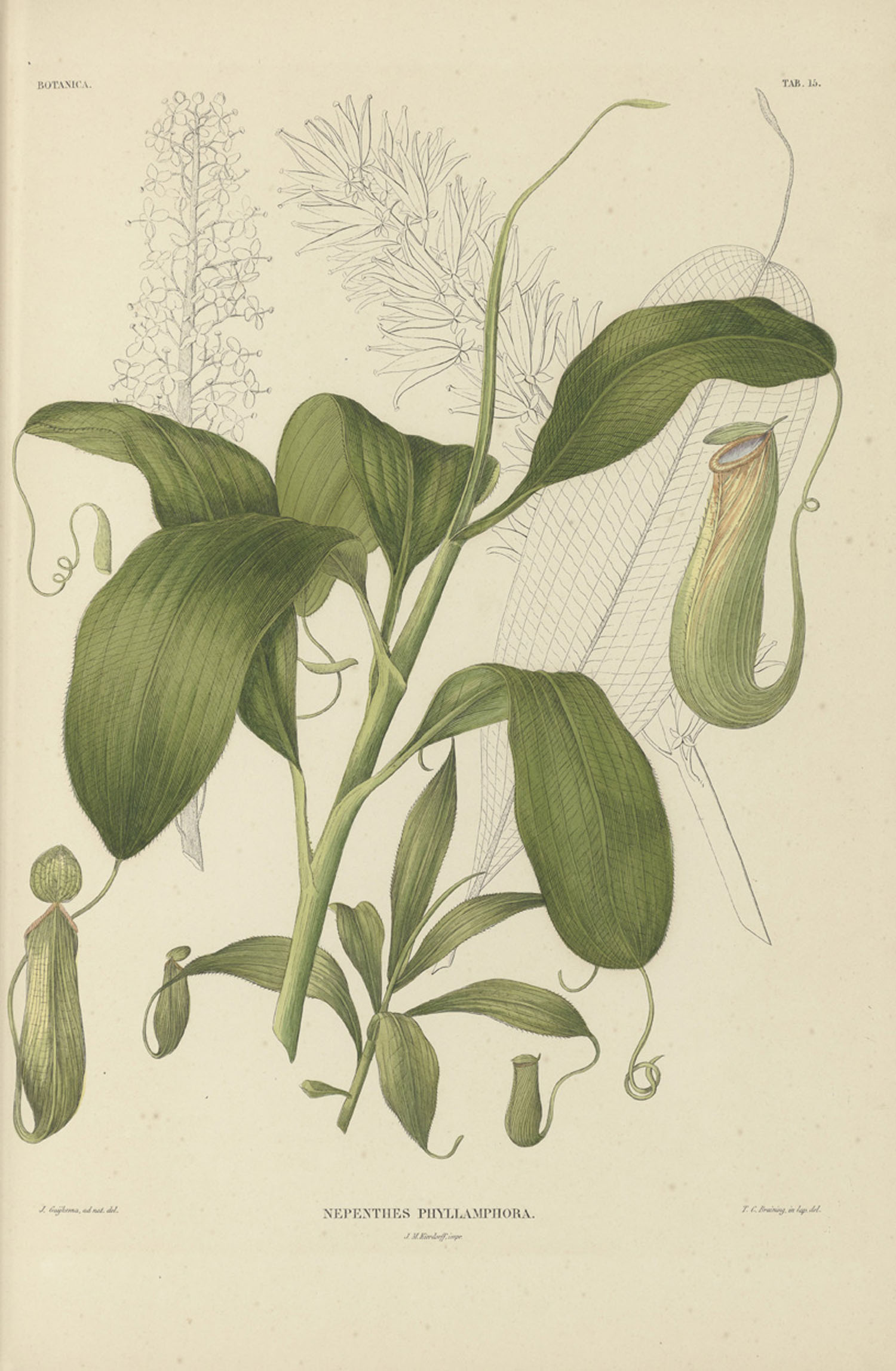
Nepenthes mirabilis, known plainly as monkey cup, belongs to the pitcher plant family Nepenthaceae. It is one of the most widespread of the tropical pitcher plants, an evergreen insectivorous perennial rather than a typical potted foliage plant.
Source: RHS
A Wide Tropical Range
This species grows as a liana across a broad sweep of the wet tropics, native from Indo-China through southern China into Queensland and the Caroline Islands. Kew records its range stretching further still, taking in Borneo, Java, the Philippines, New Guinea, Sumatra, Thailand, Vietnam, and many neighbouring islands and countries. Such a wide native distribution helps explain why the species carries so many historic synonyms, including forms once described separately as Nepenthes kennedyana or Nepenthes echinostoma.
Source: Kew
Traps Built From Leaves
As with other Nepenthes, this plant's leaves are adapted into pendulous, lidded pitchers, coloured to lure insects that are then trapped and digested within. The RHS notes that the genus is mostly epiphytic, so in habit these plants often grow perched rather than rooted in open ground. In its native range, Nepenthes mirabilis takes the form of a liana, a climbing, scrambling grower rather than a compact upright plant.
Source: RHS
Care recipe
The species record — the baseline every cultivar inherits unless it says otherwise.
Care notes are early — not yet verified
- Light
- ai:claude-opus-4-8
- Water
- ai:claude-opus-4-8 (range 2-5d)
- Humidity
- ai:claude-opus-4-8
- Soil
- ai:claude-fable-5
- Care
- ai:claude-fable-5
Bright, indirect
≈ every 5 days
High
18–32 °C
Nutrient-poor mix of sphagnum and perlite
Stem cuttings or basal offshoots
None to the soil; feeds itself by catching insects
Moderate
Rarely flowers indoors; blooms are inconspicuous
Not yet documented
This is where toxicity lives — every cultivar of this species inherits it and none can override it.
Reference images
Every image credited. Licenses link to their deeds.
Sources: ai:claude-opus-4-8 · ai:claude-opus-4-8 (range 2-5d) · ai:claude-fable-5
Kept true by its growers
Every fact here carries its source. Grow Tropical Pitcherplant yourself? What you’ve observed — how it drinks, how it holds its color, a name that’s off — and a clear photo of your plant are exactly what keep this page honest. Contributions are reviewed before anything changes.
Sign in to add what you know →