Species · genus Neoregelia · Bromeliaceae
Blushing Bromeliad
Neoregelia carolinae (Beer) L.B.Sm.
Cultivars of N. carolinae
The named forms growers keep — each with its own page, each honest about how much we know.
No named cultivars catalogued under N. carolinae yet. When growers document a stable, named form, it earns its own page here.
Guide
The species-level account. Cultivar pages build on this and say where they differ.
A Striped Blushing Bromeliad
Neoregelia carolinae f. tricolor, sometimes called the striped or three-coloured blushing bromeliad, is an evergreen rosette-forming perennial of the bromeliad family. It is grown as an epiphyte, valued in cultivation chiefly for its patterned, colour-suffused foliage rather than for its modest flowers.
Source: Missouri Botanical Garden
Brazilian Rainforest Roots
The species behind this form, Neoregelia carolinae, is native to the tropical rain forests of southeastern Brazil, where it grows as an epiphyte rather than rooting in soil. The tricolor form itself is a garden-origin variant. The genus name honours E.A. von Regel, a Russian botanist of German origin who directed the Imperial Botanical Gardens at St. Petersburg.
Source: Missouri Botanical Garden
Light, Water, Humidity
Grow it in part shade with bright indirect light, allowing some morning or late-afternoon sun but shielding it from direct midday sun in hot weather; it can tolerate conditions close to full shade. Water regularly but not excessively, pouring water into the funnel of leaves rather than onto the potting mix, and use a light, sharply-drained mix since this is an epiphyte by nature. High humidity suits it best, so setting the container on a pebble tray helps. Under glass, the RHS recommends bright filtered light, watering freely with soft water while in growth but keeping it just moist in winter, with a low-nitrogen liquid feed monthly during the growing season.
Source: RHS
Offsets or Seed
Propagation is by separating offsets in spring or summer, or by sowing seed as soon as it is ripe at around 27°C.
Source: RHS
Striped, Blushing Rosette
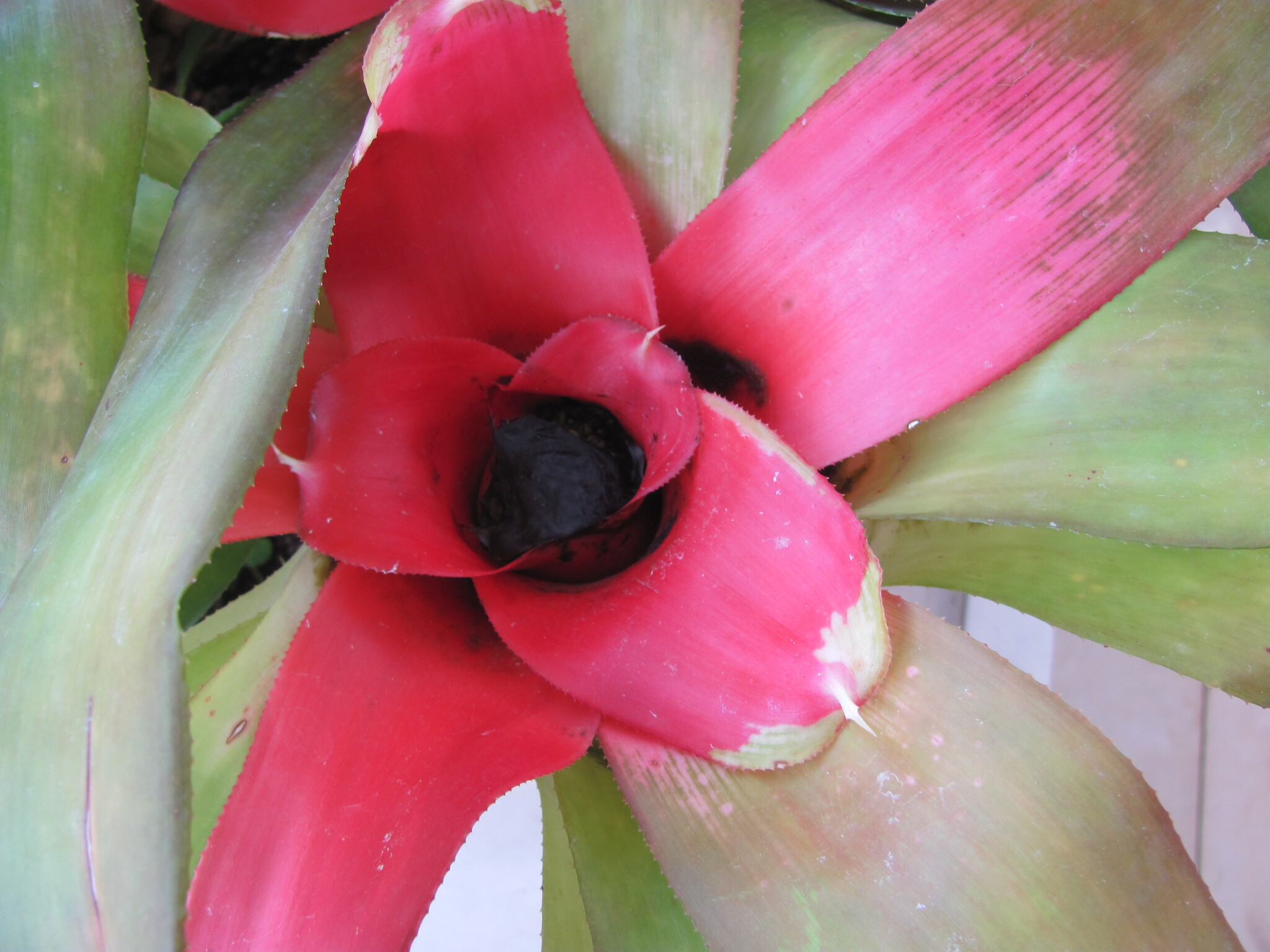
Its narrow, leathery, spine-tipped leaves form a funnel-shaped rosette, each leaf edged in green with a yellow-white stripe running its full length and suffused with rose-red. At bloom time violet to lavender flowers rise from the socket at the centre of the rosette. The RHS describes the leaves as strap-shaped, reaching up to 45cm, striped white and green, and flushed crimson toward the base.
Source: RHS
Aphids, Thrips, Scale
Keep an eye out for aphids, thrips, and scale insects, which are the common pests reported on this plant.
Source: Missouri Botanical Garden
Watch the Moisture Level
Rot can set in if the soil is kept too moist, so err toward the drier side between waterings.
Source: Missouri Botanical Garden
Low Upkeep, Simple Pruning
Overall maintenance is low. Once a rosette has finished flowering, sever the spent rosette at its base; north of its hardy zones, container plants need to be brought indoors for winter.
Source: Missouri Botanical Garden
Care recipe
The species record — the baseline every cultivar inherits unless it says otherwise.
Care notes are early — not yet verified
- Light
- ai:claude-opus-4-8
- Water
- ai:claude-opus-4-8 (range 7-14d)
- Humidity
- ai:claude-opus-4-8
- Soil
- ai:claude-fable-5
- Care
- ai:claude-fable-5
Bright, indirect
≈ every 14 days
High
15–29 °C
Airy, fast-draining bromeliad or orchid mix
Separate offset pups after the parent blooms
Very dilute feed occasionally, applied to the soil not the cup
Slow
Center blushes red at bloom, once per rosette
Not yet documented
This is where toxicity lives — every cultivar of this species inherits it and none can override it.
Reference images
Every image credited. Licenses link to their deeds.
Sources: ai:claude-opus-4-8 · ai:claude-opus-4-8 (range 7-14d) · ai:claude-fable-5
Kept true by its growers
Every fact here carries its source. Grow Blushing Bromeliad yourself? What you’ve observed — how it drinks, how it holds its color, a name that’s off — and a clear photo of your plant are exactly what keep this page honest. Contributions are reviewed before anything changes.
Sign in to add what you know →