Species · genus Musa · Musaceae
Pink Velvet Banana
Musa velutina H.Wendl. & Drude
Also known as: Hairy Banana · Pink Banana
Cultivars of M. velutina
The named forms growers keep — each with its own page, each honest about how much we know.
No named cultivars catalogued under M. velutina yet. When growers document a stable, named form, it earns its own page here.
Guide
The species-level account. Cultivar pages build on this and say where they differ.
The Pink Banana
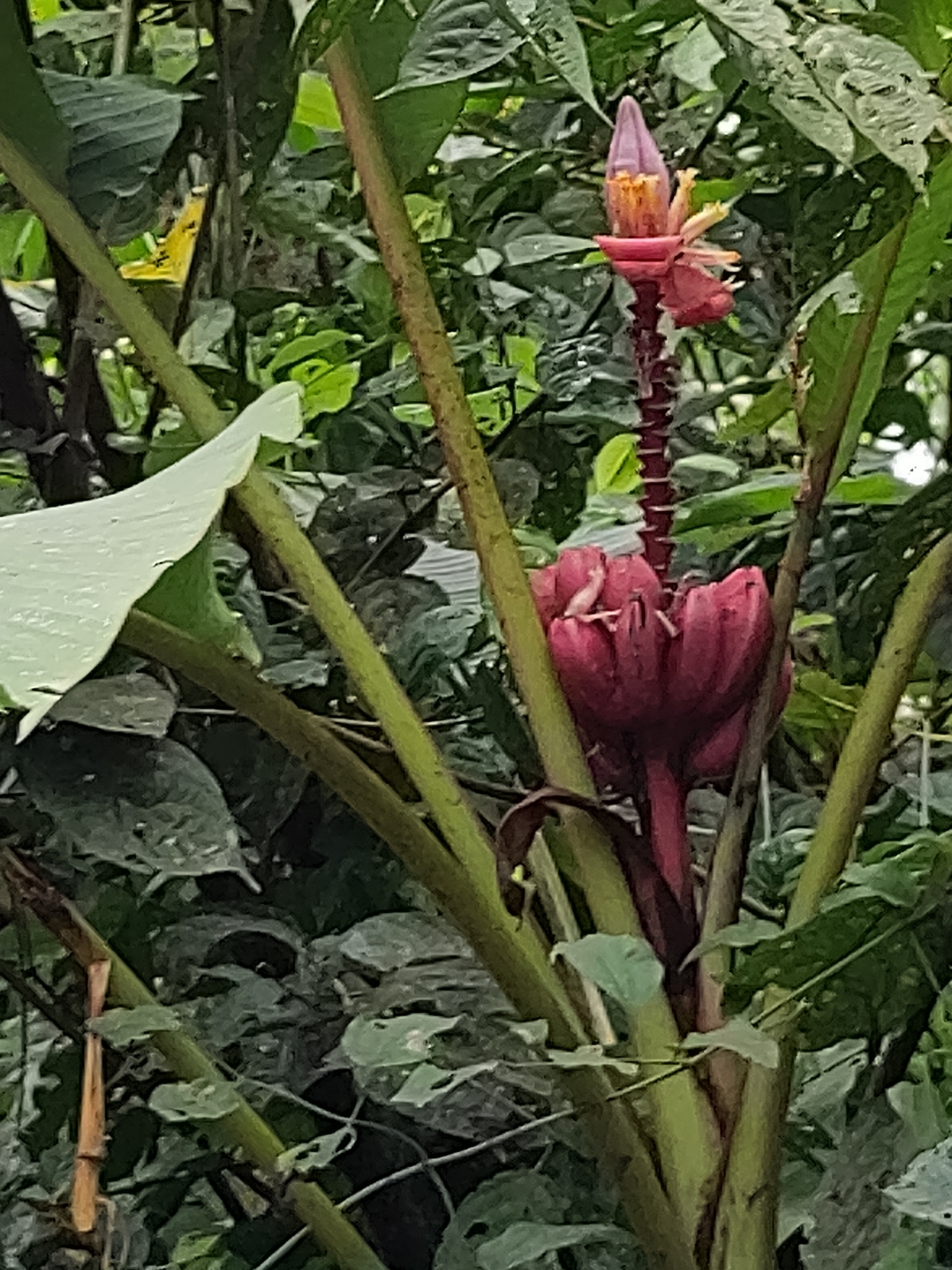
Musa velutina, commonly called the pink banana, is an evergreen suckering perennial in the banana family grown for its paddle-shaped leaves and its arching flower spikes with showy pink bracts. It is a conservatory or greenhouse plant in cooler climates, though it can spend summer outdoors.
Source: RHS
From the Eastern Himalaya
This species was first described in 1875 and belongs to the wider Musa genus, whose native range stretches across tropical and subtropical Asia to the western Pacific. Musa velutina itself is native to the eastern Himalaya and Assam, growing there as a herbaceous tree of subtropical habitats, and it has since been introduced to parts of South America, Central America, and Southeast Asia.
Source: Kew
Light, Water, Warmth
Grow this banana in full sun or partial shade, either outdoors in a sheltered spot with humus-rich soil or under glass in a peat-free, loam-based compost with shade from the strongest sun. Water freely through spring and summer, feed monthly with a balanced liquid fertiliser, and let the compost stay just moist over winter. It suits a west- or south-facing aspect but wants shelter from wind, and in the UK it is only reliably hardy outdoors through the warmer months.
Source: RHS
Seed or Division
Musa velutina can be raised from seed or increased by dividing an established clump.
Source: RHS
Fuzzy Fruit, Pink Bracts
The pink banana earns its name from its pink flower bracts and its pink, banana-shaped fruits, which are inedible rather than a food crop. It grows as a suckering evergreen with slender false stems formed from overlapping leaf stalks, reaching up to about 2.5 metres, and its tubular flowers appear in arching summer spikes.
Source: RHS
Watch for Red Spider Mite
The main pest to watch for is glasshouse red spider mite, though the plant is otherwise generally free of disease.
Source: RHS
Yearly Repotting
Repot this ornamental banana annually or every other year in spring, and remove its older leaves at the same time of year to keep growth tidy.
Source: RHS
Care recipe
The species record — the baseline every cultivar inherits unless it says otherwise.
Care notes are early — not yet verified
- Light
- ai:claude-opus-4-8
- Water
- ai:claude-opus-4-8 (range 4-9d)
- Humidity
- ai:claude-opus-4-8
- Soil
- ai:claude-fable-5
- Care
- ai:claude-fable-5
Bright, indirect
≈ every 9 days
High
16–30 °C
Rich, moisture-retentive free-draining mix
Division of pups from the base
Feed every 2 to 4 weeks while actively growing
Moderate
Often flowers and sets pink fruit indoors in bright warmth
Non-toxic to cats & dogs
Banana (Musa) — ASPCA non-toxic to cats, dogs, horses. This is where toxicity lives: every cultivar of this species inherits it and none can override it.
Reference images
Every image credited. Licenses link to their deeds.
PrimarySources: ai:claude-opus-4-8 · ai:claude-opus-4-8 (range 4-9d) · ai:claude-fable-5 · ASPCA
Kept true by its growers
Every fact here carries its source. Grow Pink Velvet Banana yourself? What you’ve observed — how it drinks, how it holds its color, a name that’s off — and a clear photo of your plant are exactly what keep this page honest. Contributions are reviewed before anything changes.
Sign in to add what you know →