Species · genus Musa · Musaceae
Flowering Banana
Musa ornata Roxb.
Cultivars of M. ornata
The named forms growers keep — each with its own page, each honest about how much we know.
No named cultivars catalogued under M. ornata yet. When growers document a stable, named form, it earns its own page here.
Guide
The species-level account. Cultivar pages build on this and say where they differ.
A Flowering Banana
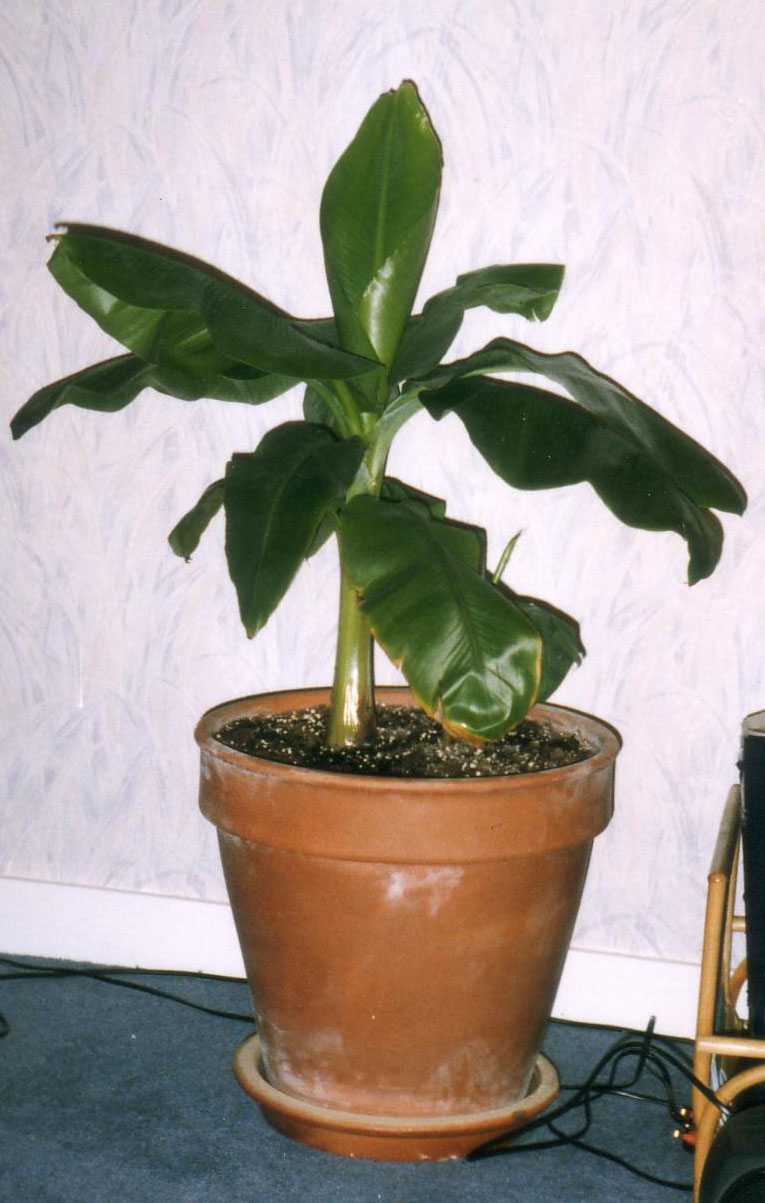
Musa ornata, known as the flowering banana, is a robust evergreen perennial that can reach up to 4 metres in height. It bears oblong leaves as long as 2 metres, erect spikes of orange-yellow flowers wrapped in pink bracts, and greenish-yellow fruits that follow.
Source: RHS
Native to South Asia
This species hails from the E. Himalaya through to Myanmar, with a native range spanning Assam, Bangladesh, India, and Myanmar. It grows naturally in the wet tropical biome, and has since been introduced well beyond its homeland, turning up in places as far-flung as Mexico, Colombia, Peru, and Trinidad-Tobago. People have long put it to use, too, as a food, a medicine, and for environmental purposes.
Source: Kew
Sun, Shelter, and Rich Soil
Grow this banana outdoors in humus-rich soil under full sun, ideally facing south or west, and in a sheltered spot since wind tends to shred its leaves. Winter protection is needed outdoors, or it can be kept under glass in a peat-free, loam-based compost with full light. It tolerates chalk, clay, loam or sand, in soil that is moist but well-drained to well-drained, and across acid, alkaline or neutral pH.
Source: RHS
Seed, Suckers, or Division
Musa ornata can be propagated from seed, by separating its suckers, or through division.
Source: RHS
Suckering Habit, Bold Leaves
As a member of the genus Musa, this plant grows as a suckering evergreen perennial with very large, paddle-shaped leaves, whose stalk bases form a false stem. Its clusters of tubular flowers, dressed in colourful bracts, give way to cylindrical fruit.
Source: RHS
Watch Under Glass
Grown under glass, this banana may be susceptible to glasshouse red spider mite, mealybugs, and aphids. Outdoors it is generally free of disease.
Source: RHS
Little Pruning Needed
No regular pruning is required, though removing spent foliage and cutting back in autumn may be worthwhile.
Source: RHS
Care recipe
The species record — the baseline every cultivar inherits unless it says otherwise.
Care notes are early — not yet verified
- Light
- ai:claude-opus-4-8
- Water
- ai:claude-opus-4-8 (range 4-9d)
- Humidity
- ai:claude-opus-4-8
- Soil
- ai:claude-fable-5
- Care
- ai:claude-fable-5
Bright, indirect
≈ every 9 days
High
16–30 °C
Rich, moisture-retentive loamy mix that drains well
Division of offset pups
Feed every 2 to 4 weeks in the growing season
Moderate
Can bloom indoors with strong light and warmth
Non-toxic to cats & dogs
Banana (Musa) — ASPCA non-toxic to cats, dogs, horses. This is where toxicity lives: every cultivar of this species inherits it and none can override it.
Reference images
Every image credited. Licenses link to their deeds.
PrimarySources: ai:claude-opus-4-8 · ai:claude-opus-4-8 (range 4-9d) · ai:claude-fable-5 · ASPCA
Kept true by its growers
Every fact here carries its source. Grow Flowering Banana yourself? What you’ve observed — how it drinks, how it holds its color, a name that’s off — and a clear photo of your plant are exactly what keep this page honest. Contributions are reviewed before anything changes.
Sign in to add what you know →