Species · genus Musa · Musaceae
Scarlet Banana
Musa coccinea Andrews
Also known as: Okinawa Torch · Red Flowering Banana · Red Flowering Thai Banana · Red Torch Banana
Cultivars of M. coccinea
The named forms growers keep — each with its own page, each honest about how much we know.
No named cultivars catalogued under M. coccinea yet. When growers document a stable, named form, it earns its own page here.
Guide
The species-level account. Cultivar pages build on this and say where they differ.
An Evergreen Scarlet Banana
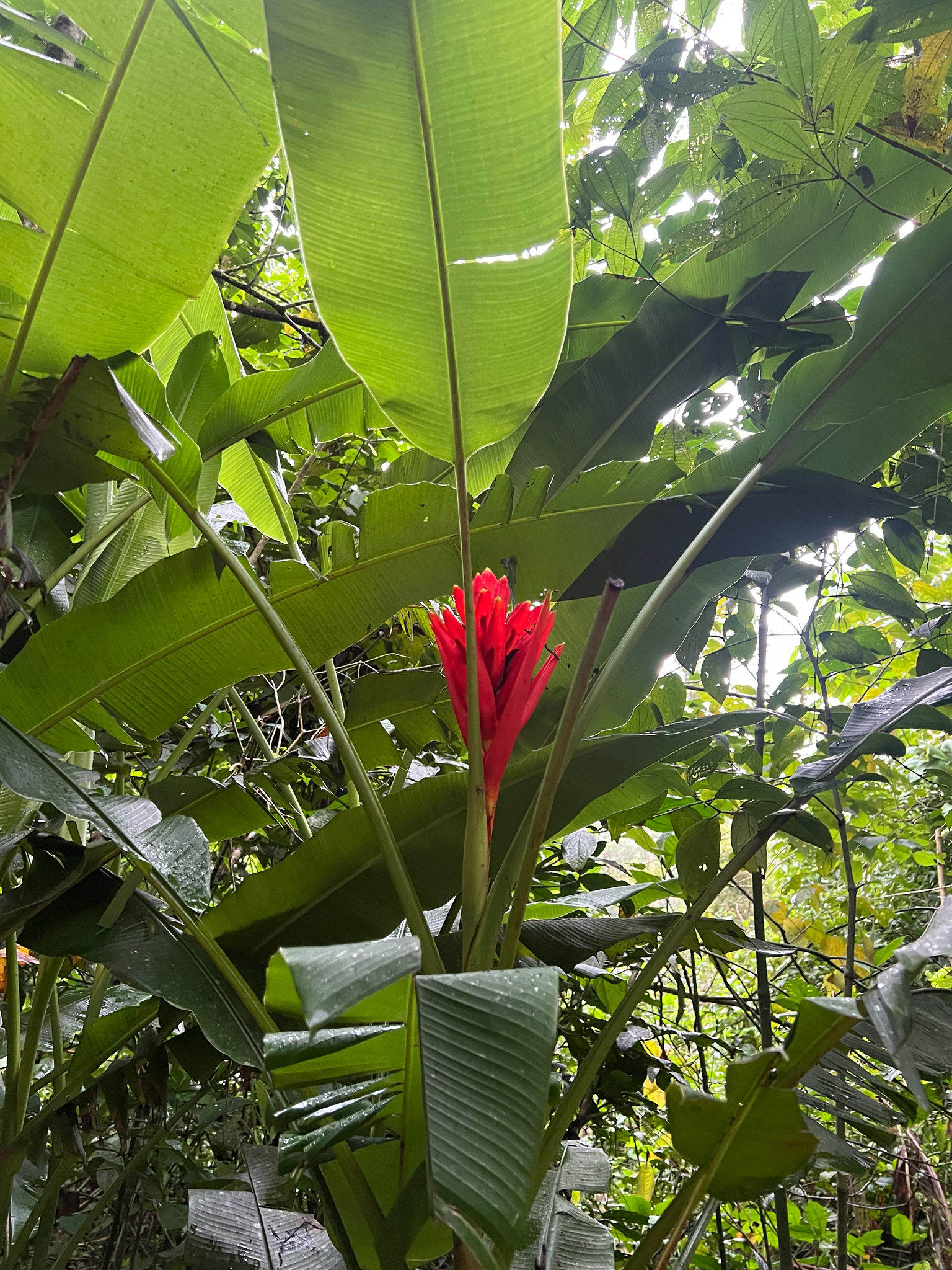
Musa coccinea, known as the scarlet banana, is an evergreen, palm-like perennial that suckers to form clumps of paddle-shaped, glossy green leaves. In summer it sends up erect spirals of tubular yellow flowers wrapped in showy red bracts, followed by small orange fruit that are not for eating.
Source: RHS
Native To Southern China And Vietnam
This species comes from southeast China, stretching from Yunnan to Guangdong, and on into Vietnam, where it grows as a herbaceous tree in subtropical conditions. It has since been carried further afield, taking root as an introduced plant in places such as Costa Rica, India, Java, the Philippines, and Trinidad and Tobago. Where it has long been present in its native range, people have also put it to use, both as medicine and as food.
Source: Kew
Light, Shelter, And Steady Moisture
Musa coccinea wants full sun or partial shade, and soil that stays moist but well-drained, ideally a neutral loam. In UK conditions it needs to be grown indoors, frost-free, though pots can be moved outside for summer if given a sheltered spot with a south, east, or west aspect.
Source: RHS
By Seed Or Suckers
This banana propagates either from seed or by potting up the suckers it produces once flowering has finished.
Source: RHS
Bracts, Not Just Fruit
The distinctive feature here is the flower display: tubular yellow blooms held in tight spirals, each spiral cupped by a bract in vivid red. These are followed by small, orange, inedible fruit. The plant itself stays tufted and suckering, with the classic false stem formed from overlapping leaf-stalk bases typical of the banana genus.
Source: RHS
Watch For Whitefly And Mealybug
Grown under glass, this plant is susceptible to the usual glasshouse troublemakers, particularly glasshouse whitefly and mealybugs.
Source: RHS
Simple Upkeep, Little Disease
Pruning is limited to removing any damaged or dead leaves as they appear. It is generally considered disease-free, so most care effort goes toward light, moisture, and shelter rather than fighting illness.
Source: RHS
Care recipe
The species record — the baseline every cultivar inherits unless it says otherwise.
Care notes are early — not yet verified
- Light
- ai:claude-opus-4-8
- Water
- ai:claude-opus-4-8 (range 5-10d)
- Humidity
- ai:claude-opus-4-8
- Soil
- ai:claude-fable-5
- Care
- ai:claude-fable-5
Bright, indirect
≈ every 10 days
High
16–30 °C
Rich, moisture-retentive but free-draining mix
Division of pups from the base
Feed every 2 to 4 weeks while actively growing
Moderate
Occasionally produces red bracts indoors in bright warmth
Non-toxic to cats & dogs
Banana (Musa) — ASPCA non-toxic to cats, dogs, horses. This is where toxicity lives: every cultivar of this species inherits it and none can override it.
Reference images
Every image credited. Licenses link to their deeds.
Sources: ai:claude-opus-4-8 · ai:claude-opus-4-8 (range 5-10d) · ai:claude-fable-5 · ASPCA
Kept true by its growers
Every fact here carries its source. Grow Scarlet Banana yourself? What you’ve observed — how it drinks, how it holds its color, a name that’s off — and a clear photo of your plant are exactly what keep this page honest. Contributions are reviewed before anything changes.
Sign in to add what you know →