Species · genus Musa · Musaceae
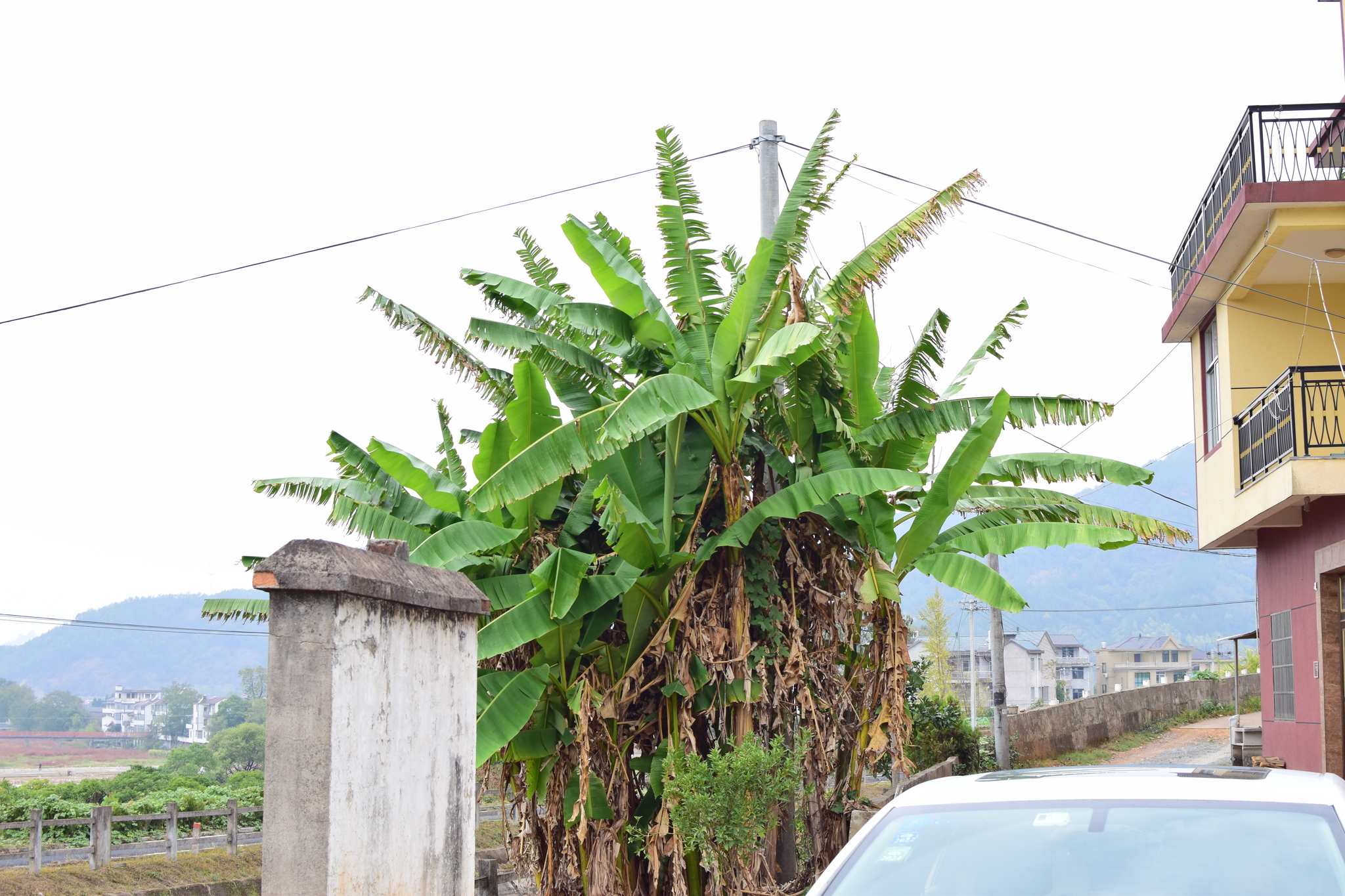
Japanese Banana
Musa basjoo Siebold & Zucc. ex Iinuma
Also known as: Hardy Banana · Japanese Fibre Banana
Cultivars of M. basjoo
The named forms growers keep — each with its own page, each honest about how much we know.
No named cultivars catalogued under M. basjoo yet. When growers document a stable, named form, it earns its own page here.
Guide
The species-level account. Cultivar pages build on this and say where they differ.
The banana in brief
Banana plants bring a tropical presence to gardens and homes over the summer months, with broad arching leaves that can reach up to 2m long and mature specimens climbing to 3m or more. Despite their trunk-like appearance, they are botanically herbaceous perennials rather than trees. They rarely flower or set fruit outdoors in the UK, though the show of foliage is reason enough to grow them.
Source: RHS
Two main kinds
The two genera commonly grown in the UK are Musa and Ensete, offered in a range of species and cultivars that vary in size and leaf colour. The Japanese banana, Musa basjoo, is the most widely grown and the hardiest, sometimes surviving a UK winter outdoors in a sheltered or mild spot. The Red Abyssinian banana, Ensete ventricosum 'Maurelii', is a tender cultivar valued for its red-tinted leaves and dark red stalk. Both have earned the RHS Award of Garden Merit for their reliable performance in trials.
Source: RHS
A summer of vigour
Give bananas a warm, sheltered, sunny position and fertile soil or compost that never sits waterlogged nor dries out completely. From late spring to late summer they grow rapidly and need regular watering, particularly in containers, fast-draining soil, or dry spells, alongside a spring feed and, ideally, a liquid feed through the growing season. In winter, growth stops and watering should be cut right back, letting compost dry out between waterings if the plant is kept indoors.
Source: RHS
From seed or offset
New plants can be raised from bought seed or by detaching offsets, also called suckers, that form around the base of established Musa plants. Seed benefits from filing one side and a 24-hour soak before sowing shallowly in warm, humid conditions around 21–24°C, with fresh seed germinating quickly and older seed taking up to six months. Offsets are best separated in spring, dug down to the rhizome and lifted with as many roots as possible. Ensete bananas do not produce suckers, so seed is the only route for them.
Source: RHS
Scale and drama
The defining trait of a banana plant is scale: paddle-shaped leaves up to 2m long on plants that can reach 3m or taller. Established Musa basjoo clumps can send up new stems from an underground rhizome, gradually forming an impressive multi-stemmed clump. Flowering and fruiting is rare outdoors in Britain, though it may occur in a warm conservatory or after an especially long, hot season.
Source: RHS
Mostly trouble-free
Outdoors, bananas are rarely bothered by pests. Indoors, though, they can fall prey to the usual glasshouse troublemakers, namely mealybugs and red spider mites.
Source: RHS
Reading the leaves
Damaged or shredded leaves usually point to cold, sun scorch, hail, or simply an exposed, windy site, and shredding in particular is a natural response the plant tolerates without lasting harm. Die-back of the crown is generally cold damage, though it can also follow rot brought on by excess moisture over winter. Limp leaves signal watering out of balance, either too much or too little, so check the compost before acting, while brown leaf edges usually trace back to insufficient water or low humidity.
Source: RHS
Repotting and winter wrapping
Vigorous plants in containers should be moved up in size every year or two, increasing the diameter by 5–7.5cm while young and by 10–15cm once the pot reaches 30cm, to keep growth strong. Little routine pruning is needed beyond removing tatty old leaves at the base of the stalk, though a plant that has grown too tall can be sawn back to any point above 60cm from the base and will resprout in the growing season. Most bananas must come indoors for winter, either kept growing in a warm room or conservatory with occasional water, or cut back, dug up, dried, and stored dormant in barely damp compost somewhere cool, dark, and frost-free. Musa basjoo alone can be left outside in milder areas if its foliage is removed and the stem is wrapped in fleece or hessian and straw, with the root zone mulched thickly for insulation.
Source: RHS
Care recipe
The species record — the baseline every cultivar inherits unless it says otherwise.
Care notes are early — not yet verified
- Light
- ai:claude-opus-4-8
- Water
- ai:claude-opus-4-8 (range 5-10d)
- Humidity
- ai:claude-opus-4-8
- Soil
- ai:claude-fable-5
- Care
- ai:claude-fable-5
Bright, indirect
≈ every 10 days
Medium
10–30 °C
Rich, moisture-retentive loam with good drainage
Division of offset pups
Feed heavily every 2 to 4 weeks in the growing season
Fast
Rarely flowers indoors
Non-toxic to cats & dogs
Banana (Musa) — ASPCA non-toxic to cats, dogs, horses. This is where toxicity lives: every cultivar of this species inherits it and none can override it.
Reference images
Every image credited. Licenses link to their deeds.
PrimarySources: ai:claude-opus-4-8 · ai:claude-opus-4-8 (range 5-10d) · ai:claude-fable-5 · ASPCA
Kept true by its growers
Every fact here carries its source. Grow Japanese Banana yourself? What you’ve observed — how it drinks, how it holds its color, a name that’s off — and a clear photo of your plant are exactly what keep this page honest. Contributions are reviewed before anything changes.
Sign in to add what you know →