Species · genus Monstera · Araceae
Silver Monstera
Monstera siltepecana Matuda
Cultivars of M. siltepecana
The named forms growers keep — each with its own page, each honest about how much we know.
No named cultivars catalogued under M. siltepecana yet. When growers document a stable, named form, it earns its own page here.
Guide
The species-level account. Cultivar pages build on this and say where they differ.
A Silvery Climbing Monstera
Monstera siltepecana, sometimes called the Silver Monstera, is a climbing and trailing houseplant known for its arrow-shaped leaves brushed in silver over medium green. It belongs to the same easy-growing, textural-foliage family that has made the genus so sought after among houseplant keepers.
Source: Costa Farms
Roots in Mexican Rainforest
This species was originally found in tropical rainforests stretching from Mexico to Panama, and it takes its name from Siltepec, a town near the Mexico-Guatemala border where it was said to be first discovered. Despite that rainforest origin, it has proven surprisingly well suited to life indoors as a houseplant.
Source: Costa Farms
Bright Light, Dry Side
This plant does best with plenty of bright, indirect light, though it tolerates lower light with a bit more patience. Let the top portion of the soil dry before watering again, since it would rather run a little dry than sit wet, and it may wilt if left excessively dry for too long. Ordinary household temperatures suit it fine, ideally staying above about 50°F, and while it tolerates average humidity, it prefers levels above 50 percent when they can be provided.
Source: Costa Farms
Cuttings, Layering, or Seed
The RHS notes this species can be propagated by seed, by root tip or leaf cuttings, or by layering during the summer months. Growers can also take cuttings to establish a plant either as a trailer or a climber, giving both looks from the same parent.
Source: RHS
Silvery Leaves, Slow Fenestration
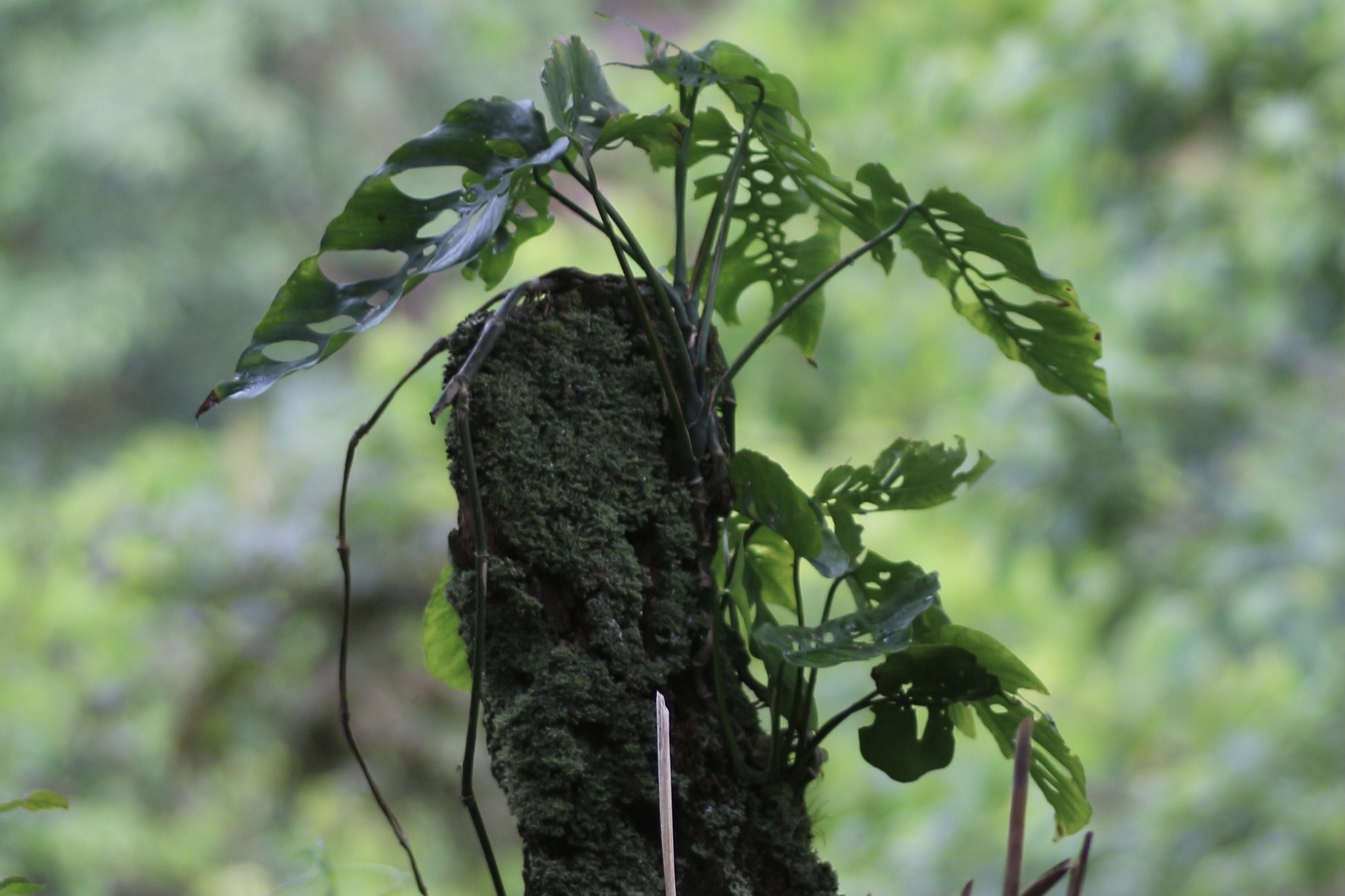
The RHS describes it as a slow-growing, evergreen trailing plant with heart-shaped, silvery emerald-green leaves marked by deep, dark-green veining. As plants mature, they develop tear-drop or oval perforations known as fenestrations, and container-grown specimens rarely flower, though when they do the blooms appear as creamy-yellow spathes. Left to climb, the leaves size up and show these holes more readily, while trailing growth keeps the foliage smaller.
Source: RHS
Watch for Scale and Mites
According to the RHS, this Monstera may be susceptible to scale insects and glasshouse red spider mite. It is otherwise generally free of disease.
Source: RHS
Feed and Water in Growth
The RHS recommends growing it under glass in a peat-free, loam-based compost, watering during active growth and keeping it just moist through winter. A balanced liquid fertiliser applied monthly while it is growing helps support it, and it falls into pruning group 11.
Source: RHS
Care recipe
The species record — the baseline every cultivar inherits unless it says otherwise.
Care notes are early — not yet verified
- Light
- ai:claude-opus-4-8
- Water
- ai:claude-opus-4-8 (range 7-12d)
- Humidity
- ai:claude-opus-4-8
- Soil
- ai:claude-fable-5
- Care
- ai:claude-fable-5
Bright, indirect
≈ every 12 days
High
18–29 °C
Well-draining aroid mix with bark and perlite
Stem cuttings rooted in water or moist mix
Balanced liquid feed monthly in the growing season
Fast
Rarely flowers indoors
Toxic to cats & dogs & humans
Araceae contain insoluble calcium oxalate crystals, which irritate mouth and digestive tract This is where toxicity lives: every cultivar of this species inherits it and none can override it.
Reference images
Every image credited. Licenses link to their deeds.
PrimarySources: ai:claude-opus-4-8 · ai:claude-opus-4-8 (range 7-12d) · ai:claude-fable-5 · ai:claude-opus-4-8 (family inference)
Kept true by its growers
Every fact here carries its source. Grow Silver Monstera yourself? What you’ve observed — how it drinks, how it holds its color, a name that’s off — and a clear photo of your plant are exactly what keep this page honest. Contributions are reviewed before anything changes.
Sign in to add what you know →