Species · genus Monstera · Araceae
Window-Leaf Monstera
Monstera obliqua Miq.
Cultivars of M. obliqua
The named forms growers keep — each with its own page, each honest about how much we know.
No named cultivars catalogued under M. obliqua yet. When growers document a stable, named form, it earns its own page here.
Guide
The species-level account. Cultivar pages build on this and say where they differ.
A Rare Lace-Leafed Aroid
Monstera obliqua is a rare, slow-growing evergreen trailing houseplant, notable for foliage so perforated it reads almost as lace rather than solid leaf. It is compact by monstera standards, and container-grown plants rarely flower, though when they do the blooms appear as creamy-yellow spathes. The related and often-confused Monkey Mask, sold under this name, is itself a form closer to Monstera adansonii, an evergreen climber from the same family.
Source: RHS
Native to the Americas
True Monstera obliqua and its Monkey Mask counterpart both trace back to the tropical Americas, with the RHS placing obliqua's range across northern South America. The wider Monstera adansonii, which the Monkey Mask trade name is often applied to, comes from Central and South America, southern Mexico, and the West Indies, and belongs to the arum family, Araceae.
Source: Epic Gardening
Bright Shade and Steady Moisture
Grow it under glass or as a houseplant in bright indirect light with moderate to high humidity, in a peat-free, loam-based compost that is moist but well-drained. Water freely while it is in active growth, keeping it just moist through winter, and feed monthly with a balanced liquid fertiliser during the growing season. A sheltered, draught-free spot suits it, and it will use its aerial roots to climb given a support such as a moss pole.
Source: RHS
Cuttings, Layering, or Seed
Propagation can be done by seed, by root-tip or leaf cuttings, or by layering in summer. For the Monkey Mask form specifically, internodal softwood cuttings, tip cuttings with a single leaf attached, or leaf cuttings all root well with bottom heat in a sandy mix in summer, and air-layering in autumn is another route.
Source: RHS
Leaves More Hole Than Leaf
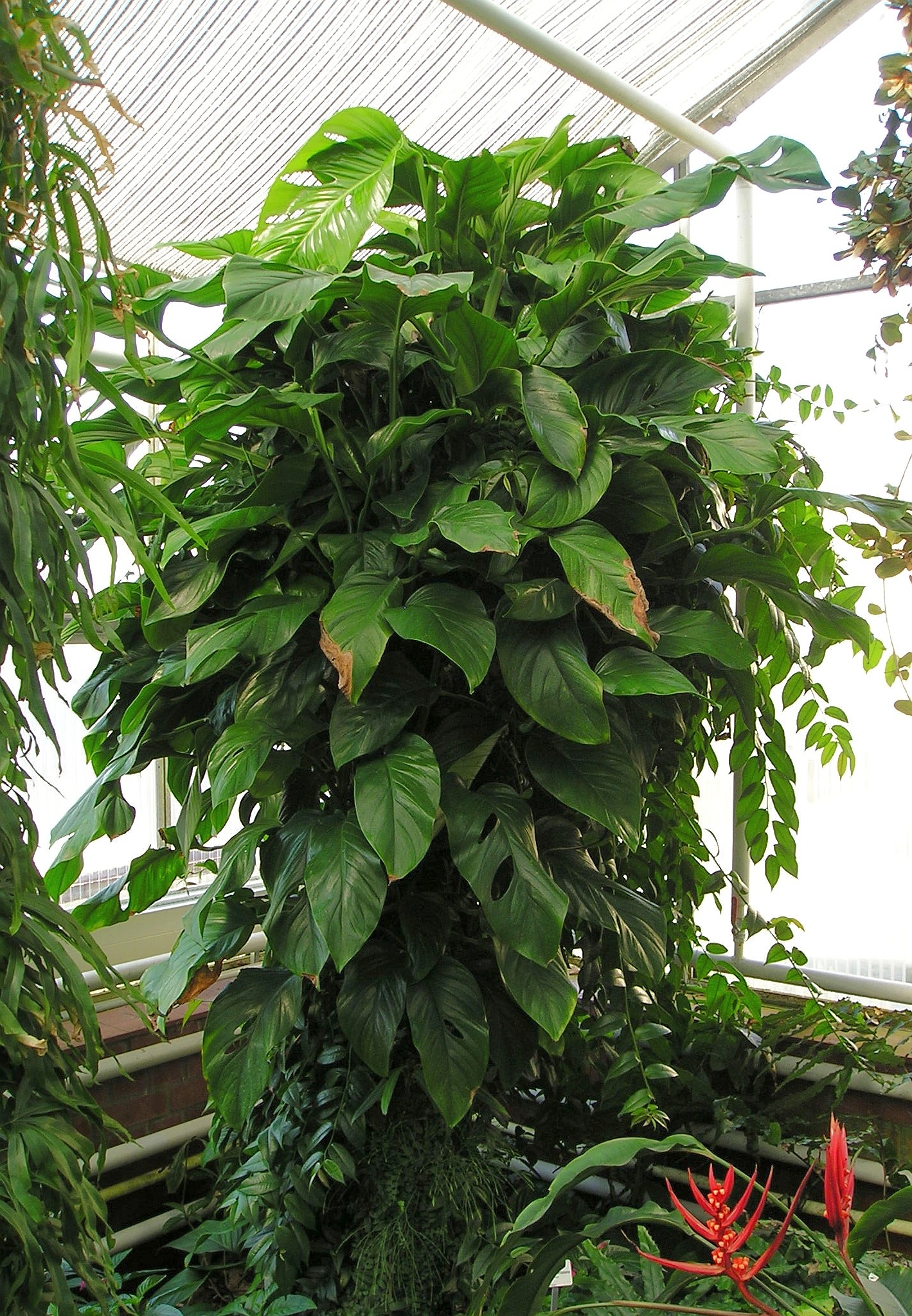
The defining trait here is fenestration: elliptic to oblong-lanceolate leaves marked by a large number of perforations, glossy and rich green in colour. True obliqua carries this to an extreme, with leaves so full of holes they can look more like lace than foliage, whereas the more commonly grown adansonii sold as Monkey Mask keeps roughly half leaf tissue to half hole. It is a climbing, trailing habit, using aerial roots, and stays modest in size for a monstera, reaching only a metre or so in height indoors.
Source: Epic Gardening
Scale and Spider Mite
The two pests most likely to trouble this plant are scale insects and spider mites, both sap-suckers that can build up on stems and leaf undersides. Small scale populations can be wiped off with a cotton swab dipped in rubbing alcohol, while heavier infestations of either pest usually call for a neem oil treatment over all leaf and stem surfaces.
Source: Epic Gardening
Yellowing and Leaf Spot
Yellowing leaves most often trace back to overwatering, though too much direct sun can cause the same yellowing or browning, so the fix is to check both light and watering habits before assuming one cause. Placement near an air conditioner or heater vent can also dry the air around the plant, since it prefers steady humidity. Fungal leaf spot diseases, such as alternaria or septoria, are another possibility, showing up as yellow or brown spotting that can spread across the leaf surface over time.
Source: Epic Gardening
Light Pruning, Occasional Repotting
This plant falls into pruning group 11, and for the Monkey Mask form that means trimming in spring only if it needs to be kept within its allotted space. It is generally disease-free and reaches maturity slowly, over five to twenty years depending on the form, so it asks for little beyond the occasional tidy and a watchful eye on its container.
Source: RHS
Care recipe
The species record — the baseline every cultivar inherits unless it says otherwise.
Care notes are early — not yet verified
- Light
- ai:claude-opus-4-8
- Water
- ai:claude-opus-4-8 (range 5-10d)
- Humidity
- ai:claude-opus-4-8
- Soil
- ai:claude-fable-5
- Care
- ai:claude-fable-5
Bright, indirect
≈ every 10 days
High
18–28 °C
Light, moisture-retentive sphagnum-rich aroid mix
Stem cuttings or runners with a node
Dilute balanced feed monthly while actively growing
Slow
Rarely flowers indoors
Toxic to cats & dogs & humans
Araceae contain insoluble calcium oxalate crystals, which irritate mouth and digestive tract if chewed. This is where toxicity lives: every cultivar of this species inherits it and none can override it.
Reference images
Every image credited. Licenses link to their deeds.
PrimarySources: ai:claude-opus-4-8 · ai:claude-opus-4-8 (range 5-10d) · ai:claude-fable-5 · ai:claude-opus-4-8 (family inference)
Kept true by its growers
Every fact here carries its source. Grow Window-Leaf Monstera yourself? What you’ve observed — how it drinks, how it holds its color, a name that’s off — and a clear photo of your plant are exactly what keep this page honest. Contributions are reviewed before anything changes.
Sign in to add what you know →