Species · genus Monstera · Araceae
Shingles Plant
Monstera dubia (Kunth) Engl. & K.Krause
Cultivars of M. dubia
The named forms growers keep — each with its own page, each honest about how much we know.
No named cultivars catalogued under M. dubia yet. When growers document a stable, named form, it earns its own page here.
Guide
The species-level account. Cultivar pages build on this and say where they differ.
A shingling Monstera
Monstera dubia is a compact, slow-growing evergreen climber grown as a houseplant for its silvery, heart-shaped juvenile leaves. It belongs to the arum family, and its foliage carries a mosaic-like veining that sets it apart from its larger, better-known cousins.
Source: RHS
Roots in tropical America
This species is native to a range stretching from Mexico's Veracruz and Chiapas down through South Tropical America and Trinidad, where it grows in wet tropical forest. In the wild it behaves as a hemiepiphyte, starting life as a creeping herb before climbing trunks toward the light. It has also found local use as a medicine in parts of its native range.
Source: Kew
Bright shade and steady moisture
Grow Monstera dubia under glass in a peat-free, loam-based potting mix, in bright indirect light with moderate to high humidity, sheltered from harsh exposure. Water while the plant is in active growth and let it run just moist through winter, feeding monthly with a balanced liquid fertiliser during the growing season. It suits a partial shade position and tolerates chalk, clay, loam, or sandy soils so long as they stay moist but well-drained.
Source: RHS
Seed, cuttings, or layering
New plants can be raised from seed, from root tip or leaf cuttings, or by layering, with summer being the season to attempt it.
Source: RHS
Shingling leaves and fenestrations
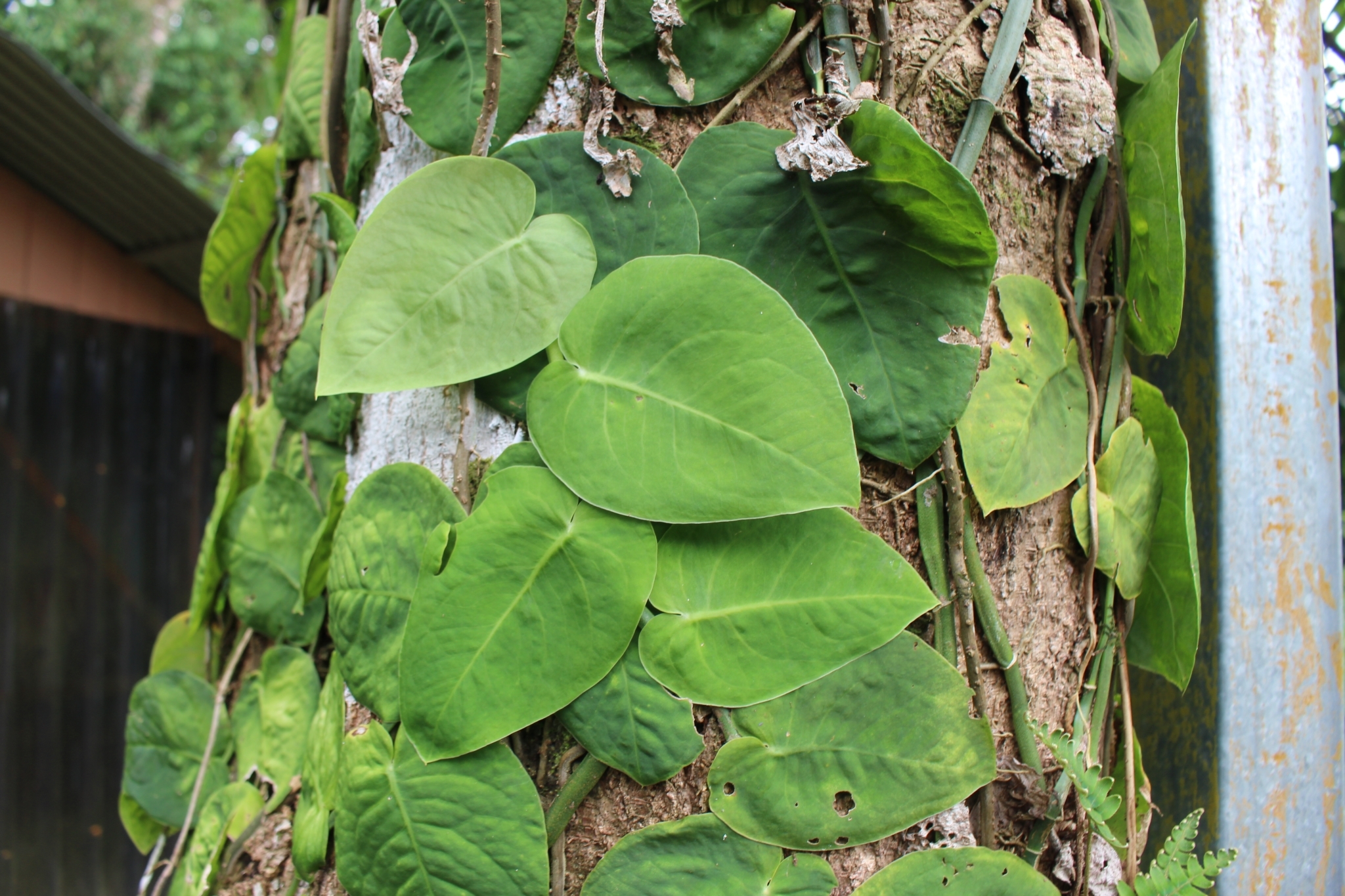
The plant's calling card is its habit of pressing small, heart-shaped, silvery-green leaves flat against a support in a shingle-like pattern, each leaf marked with attractive mosaic veining. As individual plants mature and gain size, teardrop or oval perforations, the fenestrations, begin to appear in the foliage. Container-grown specimens rarely flower, but on the odd occasion they do, the blooms show as creamy-yellow spathes.
Source: RHS
Scale and spider mite
Keep an eye out for scale insects and glasshouse red spider mite, the two pests most likely to trouble this plant. Otherwise it is generally free of disease.
Source: RHS
A patient grower
This is a genuinely slow plant, reaching only half a metre to a metre in height and spread, and taking somewhere between ten and twenty years to reach maturity. By comparison with other Monstera species it is one of the slowest, adding roughly five to ten inches a year under good conditions, so patience rather than frequent repotting is the main maintenance task. It falls into pruning group eleven when cutting back is needed.
Source: Epic Gardening
Care recipe
The species record — the baseline every cultivar inherits unless it says otherwise.
Care notes are early — not yet verified
- Light
- ai:claude-opus-4-8
- Water
- ai:claude-opus-4-8 (range 7-12d)
- Humidity
- ai:claude-opus-4-8
- Soil
- ai:claude-fable-5
- Care
- ai:claude-fable-5
Bright, indirect
≈ every 12 days
High
18–29 °C
Chunky, airy aroid mix with bark and perlite
Stem cuttings with a node, rooted against a flat surface
Balanced liquid feed monthly in the growing season
Moderate
Rarely flowers indoors
Toxic to cats & dogs & humans
Araceae contain insoluble calcium oxalate crystals that irritate mouth and digestive tract This is where toxicity lives: every cultivar of this species inherits it and none can override it.
Reference images
Every image credited. Licenses link to their deeds.
PrimarySources: ai:claude-opus-4-8 · ai:claude-opus-4-8 (range 7-12d) · ai:claude-fable-5 · ai:claude-opus-4-8 (family inference)
Kept true by its growers
Every fact here carries its source. Grow Shingles Plant yourself? What you’ve observed — how it drinks, how it holds its color, a name that’s off — and a clear photo of your plant are exactly what keep this page honest. Contributions are reviewed before anything changes.
Sign in to add what you know →