Species · genus Monstera · Araceae
Adanson's Monstera
Monstera adansonii Schott
Also known as: Swiss Cheese-plant · Mountain Ears · Tarovine · Five Holes Plant · Monkey-Mask
Cultivars of M. adansonii
The named forms growers keep — each with its own page, each honest about how much we know.
Guide
The species-level account. Cultivar pages build on this and say where they differ.
Swiss Cheese Vine
Little Swiss monstera, botanically Monstera adansonii, is a houseplant grown for its arrow-shaped leaves punched through with dramatic holes along the veins, a trait that earns it the nickname Swiss cheese plant. It is a medium- to fast-growing vine, considerably smaller in scale than its well-known cousin Monstera deliciosa.
Source: Costa Farms
A Rainforest Native
This monstera comes from Central and South America, including parts of southern Mexico and the West Indies, where it belongs to the Araceae family. In the wild it grows as a climber, sending out aerial roots to grasp tree bark, though it adapts just as readily to life as a cascading plant in a hanging basket.
Source: Epic Gardening
Light, Water, and Feeding Rhythm
Give this plant medium to bright indirect light indoors; it can also grow well under artificial lighting if natural light is limited. Let the top couple of inches of potting mix dry out between waterings, since like many aroids it resents overly wet soil, and aim for above-average humidity, though it tolerates average household conditions reasonably well. Feed only in spring and summer with a houseplant fertilizer at label-recommended strength, since overfeeding can harm the roots.
Source: Costa Farms
Rooting from Stem Cuttings
Stem cuttings are the standard way to propagate this monstera. Take a cutting just below a set of visible aerial roots if present, or choose a section with at least two to three nodes if not, then set it in damp soil with a node beneath the surface, keeping both cutting and soil humid until new growth appears.
Source: Epic Gardening
Fenestrated, Wind-Ready Leaves
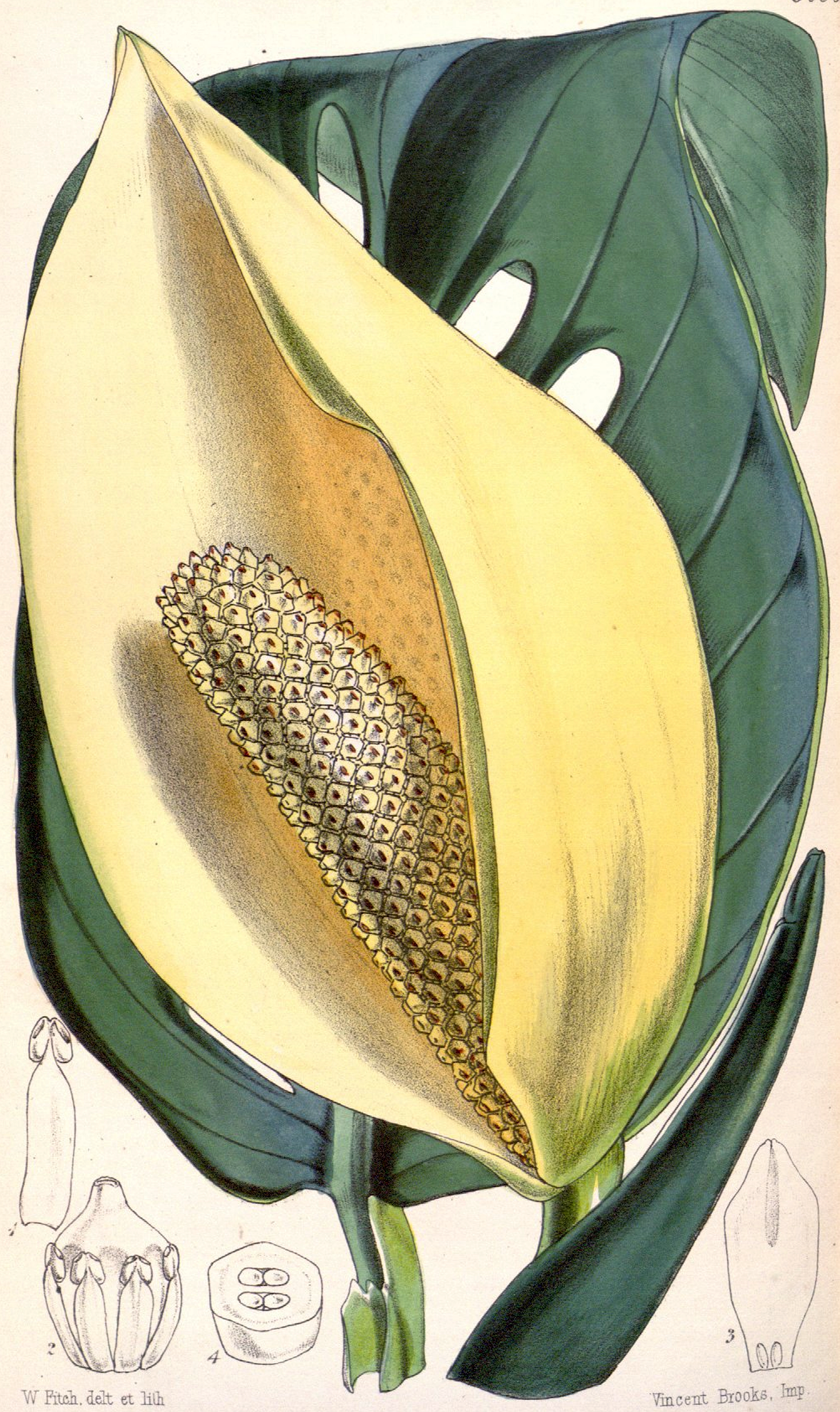
The heart- or oval-shaped leaves are built to gather light efficiently even riddled with holes, and those holes tend to multiply as the plant matures. Interestingly, the fenestrations also let strong breezes pass through the leaf rather than tearing it, and unlike Monstera deliciosa, this species keeps its leaf margins intact so the openings stay true holes rather than deep cuts. Given warmth and bright light, leaves can eventually reach up to 24 inches long, and a mature plant may even produce a cream-and-purple flower, though this is more common in the wild than indoors.
Source: Costa Farms
Sap-Sucking Troublemakers
Spider mites and scale insects are the two pests most likely to trouble this plant. Small scale populations can be wiped away with a cotton swab dipped in rubbing alcohol, while spider mites or heavier scale infestations call for a thorough neem oil coating over the leaves and stems.
Source: Epic Gardening
Reading the Leaves
Yellowed leaves paired with soggy soil point to overwatering or poor drainage, while crispy edges suggest underwatering or air that is too dry. New leaves lacking holes usually mean the plant is still young or isn't getting enough light, and curling or black spotting can signal watering too infrequently or exposure to cold. Splitting leaves are a normal sign of maturity, so a plant with unsplit leaves simply may need more light or more time.
Source: Costa Farms
Pruning and Support
This is a slow-growing vine that generally doesn't demand much pruning, though pinching back new growth encourages fuller, bushier branching rather than one long shoot. As it ages and climbs more, giving it a structure to grow up becomes helpful. Keep it out of reach of children and pets, since it isn't meant for consumption.
Source: Costa Farms
Care recipe
The species record — the baseline every cultivar inherits unless it says otherwise.
Care notes are early — not yet verified
- Light
- ai:claude-opus-4-8
- Water
- ai:claude-opus-4-8 (range 7-12d)
- Humidity
- ai:claude-opus-4-8
- Soil
- ai:claude-fable-5
- Care
- ai:claude-fable-5
Bright, indirect
≈ every 12 days
High
18–29 °C
Chunky, well-draining aroid mix with bark and perlite
Stem cuttings rooted in water or moist mix
Balanced liquid feed monthly in the growing season
Fast
Rarely flowers indoors; grown for its fenestrated leaves
Toxic to cats & dogs & humans
This is where toxicity lives — every cultivar of this species inherits it and none can override it.
Reference images
Every image credited. Licenses link to their deeds.
Sources: ai:claude-opus-4-8 · ai:claude-opus-4-8 (range 7-12d) · ai:claude-fable-5 · ai:claude-opus-4-8 (family inference)
Kept true by its growers
Every fact here carries its source. Grow Adanson's Monstera yourself? What you’ve observed — how it drinks, how it holds its color, a name that’s off — and a clear photo of your plant are exactly what keep this page honest. Contributions are reviewed before anything changes.
Sign in to add what you know →