Species · genus Microsorum · Polypodiaceae
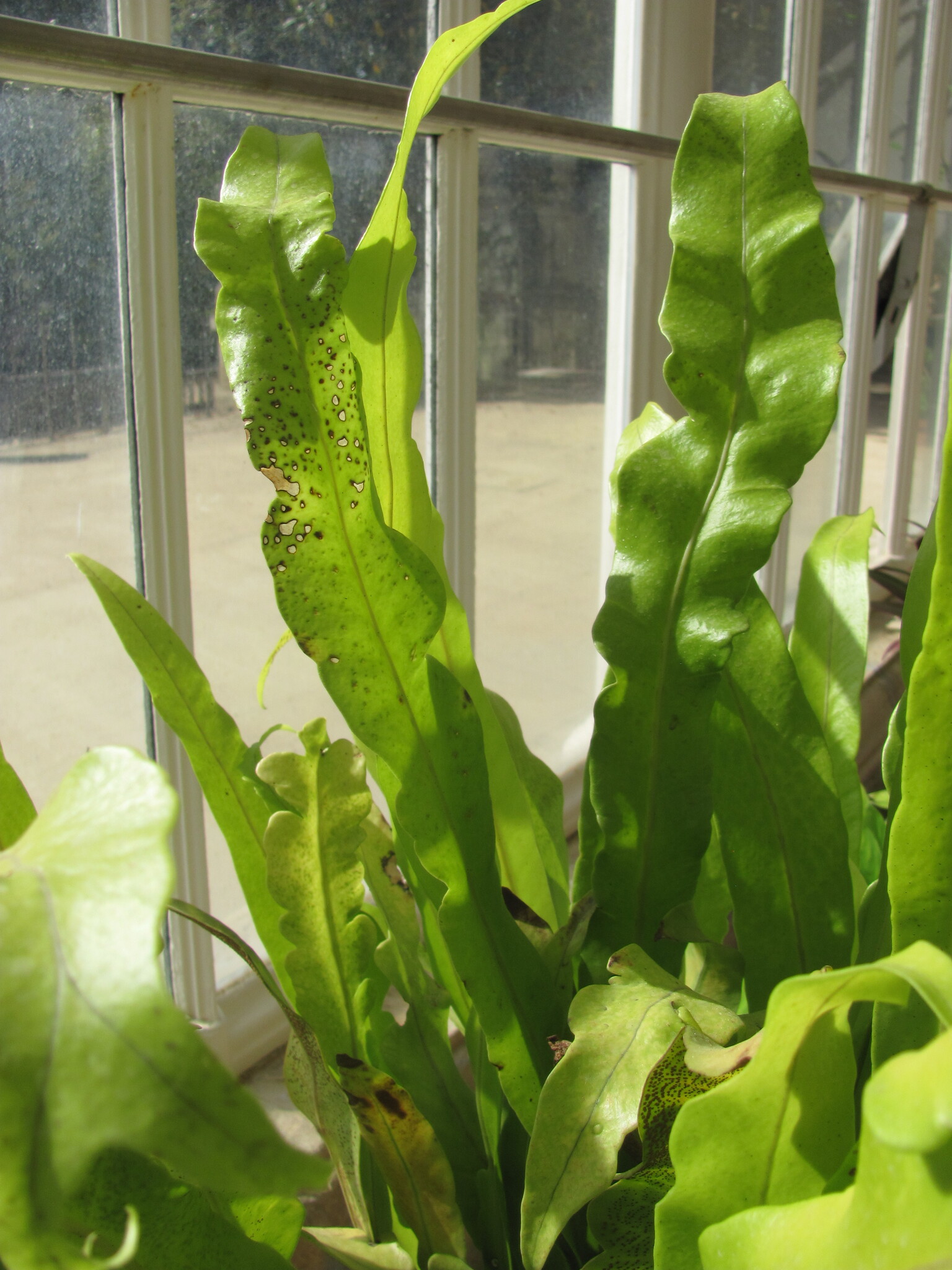
Climbing Bird's Nest Fern
Microsorum punctatum (L.) Copel.
Also known as: Elkhorn Fern · Fishtail Fern · Fishtail Strap-fern · Strapleaf Fern
Cultivars of M. punctatum
The named forms growers keep — each with its own page, each honest about how much we know.
No named cultivars catalogued under M. punctatum yet. When growers document a stable, named form, it earns its own page here.
Guide
The species-level account. Cultivar pages build on this and say where they differ.
A wide-ranging fern
Microsorum punctatum is the plant known in gardens as the climbing bird's nest fern, a member of the Polypodiaceae family. It sits in the genus Microsorum and carries the accepted botanical name Microsorum punctatum (L.) Copel.
Source: Kew
Old World tropics native
This fern's native range stretches across the tropical and subtropical Old World through to the Pacific, taking in territory from Africa and Madagascar across South and Southeast Asia to islands such as Fiji, New Caledonia and the Marianas. In the wild it behaves as a lithophyte or epiphyte, rooting on rock or bark rather than in open soil, and it belongs to the wet tropical biome. It has also been recorded as introduced into Colombia, well outside its native range. Beyond ornamental use, it has served people as a medicine, a food, and in various environmental applications.
Source: Kew
Strap-like fronds
True to its common name, the climbing bird's nest fern carries the family Polypodiaceae's fern habit, distinct from the true bird's nest fern in growth form despite the shared name. Its long history of reclassification, reflected in over fifty recorded synonyms, points to a plant that botanists have described and redescribed many times across its very wide native distribution.
Source: Kew
Care recipe
The species record — the baseline every cultivar inherits unless it says otherwise.
Care notes are early — not yet verified
- Light
- ai:claude-opus-4-8
- Water
- ai:claude-opus-4-8 (range 5-10d)
- Humidity
- ai:claude-opus-4-8
- Soil
- ai:claude-fable-5
- Care
- ai:claude-fable-5
Bright, indirect
≈ every 10 days
High
16–29 °C
Loose, bark-based epiphytic mix that stays airy
Division of the creeping rhizome
Dilute balanced feed monthly in the growing season
Moderate
Non-flowering fern, reproduces by spores
Not yet documented
This is where toxicity lives — every cultivar of this species inherits it and none can override it.
Reference images
Every image credited. Licenses link to their deeds.
Sources: ai:claude-opus-4-8 · ai:claude-opus-4-8 (range 5-10d) · ai:claude-fable-5
Kept true by its growers
Every fact here carries its source. Grow Climbing Bird's Nest Fern yourself? What you’ve observed — how it drinks, how it holds its color, a name that’s off — and a clear photo of your plant are exactly what keep this page honest. Contributions are reviewed before anything changes.
Sign in to add what you know →