Species · genus Microsorum · Polypodiaceae
Crocodile Fern
Microsorum musifolium (Blume) Copel.
Cultivars of M. musifolium
The named forms growers keep — each with its own page, each honest about how much we know.
No named cultivars catalogued under M. musifolium yet. When growers document a stable, named form, it earns its own page here.
Guide
The species-level account. Cultivar pages build on this and say where they differ.
A Textured Crocodile Fern
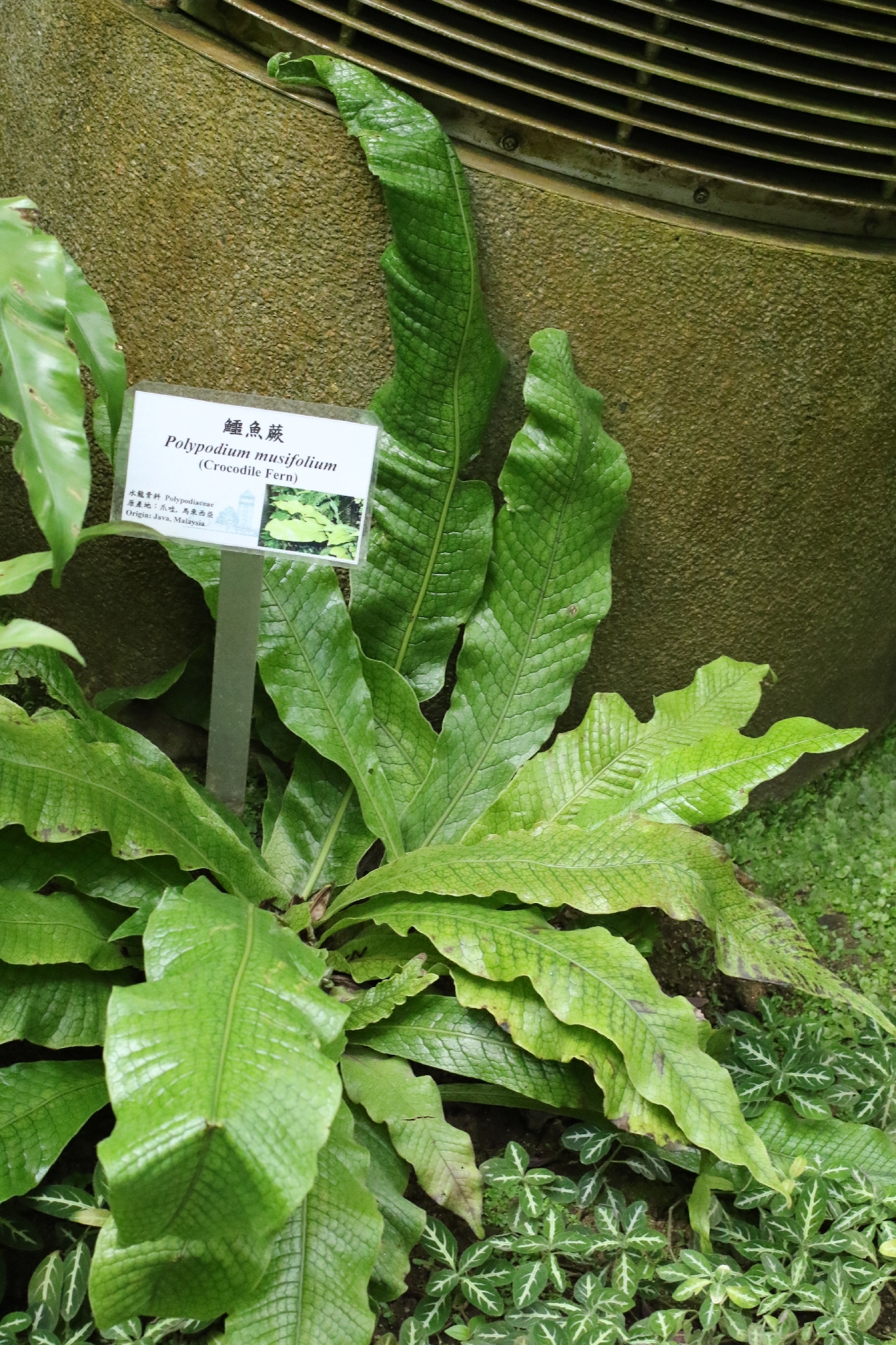
This is Microsorum musifolium 'Crocodyllus', a tender epiphytic fern grown for its simple, leathery fronds. The leaves stand upright to arching, bright glossy green when young, and carry the plant's common name of banana-leaved fern.
Source: RHS
Filtered Light, Steady Humidity
Grow this fern under glass in filtered light, kept away from direct sun and cold draughts. It wants a free-draining mix, high humidity maintained with something like a pebble tray, and soil that never sits waterlogged. Suited aspects include east, west, or south-facing spots as long as the position stays sheltered and partially shaded.
Source: RHS
Grown From Spores
Propagation is by spores, though seedlings raised this way may vary from the parent plant. Because this cultivar carries Plant Breeders' Rights protection, any propagation should stay personal rather than commercial.
Source: RHS
Textured, Vein-Marked Fronds
The fronds are undivided and leathery rather than lacy, which sets this fern apart from many of its relatives. Darker veins trace across the glossy green surface, giving each leaf a distinct pattern and texture. Growth is clump-forming and evergreen, reaching roughly half a metre to a metre in height and spread, usually over two to five years.
Source: RHS
Watch for Sap-Suckers
Scale insects, red spider mite, and mealybugs are the pests most likely to trouble this fern. It is otherwise generally free of disease.
Source: RHS
Little Pruning Needed
This fern asks for no routine pruning. Its main upkeep is the steady rhythm of humidity, drainage, and a sheltered spot away from direct sun.
Source: RHS
Care recipe
The species record — the baseline every cultivar inherits unless it says otherwise.
Care notes are early — not yet verified
- Light
- ai:claude-opus-4-8
- Water
- ai:claude-opus-4-8 (range 5-9d)
- Humidity
- ai:claude-opus-4-8
- Soil
- ai:claude-fable-5
- Care
- ai:claude-fable-5
Bright, indirect
≈ every 9 days
High
16–29 °C
Loose, bark-based epiphytic mix that stays airy
Division of the creeping rhizome
Dilute balanced feed monthly in the growing season
Moderate
Non-flowering fern, grown for its rippled banana-like fronds
Not yet documented
This is where toxicity lives — every cultivar of this species inherits it and none can override it.
Reference images
Every image credited. Licenses link to their deeds.
PrimarySources: ai:claude-opus-4-8 · ai:claude-opus-4-8 (range 5-9d) · ai:claude-fable-5
Kept true by its growers
Every fact here carries its source. Grow Crocodile Fern yourself? What you’ve observed — how it drinks, how it holds its color, a name that’s off — and a clear photo of your plant are exactly what keep this page honest. Contributions are reviewed before anything changes.
Sign in to add what you know →