Species · genus Microsorum · Polypodiaceae
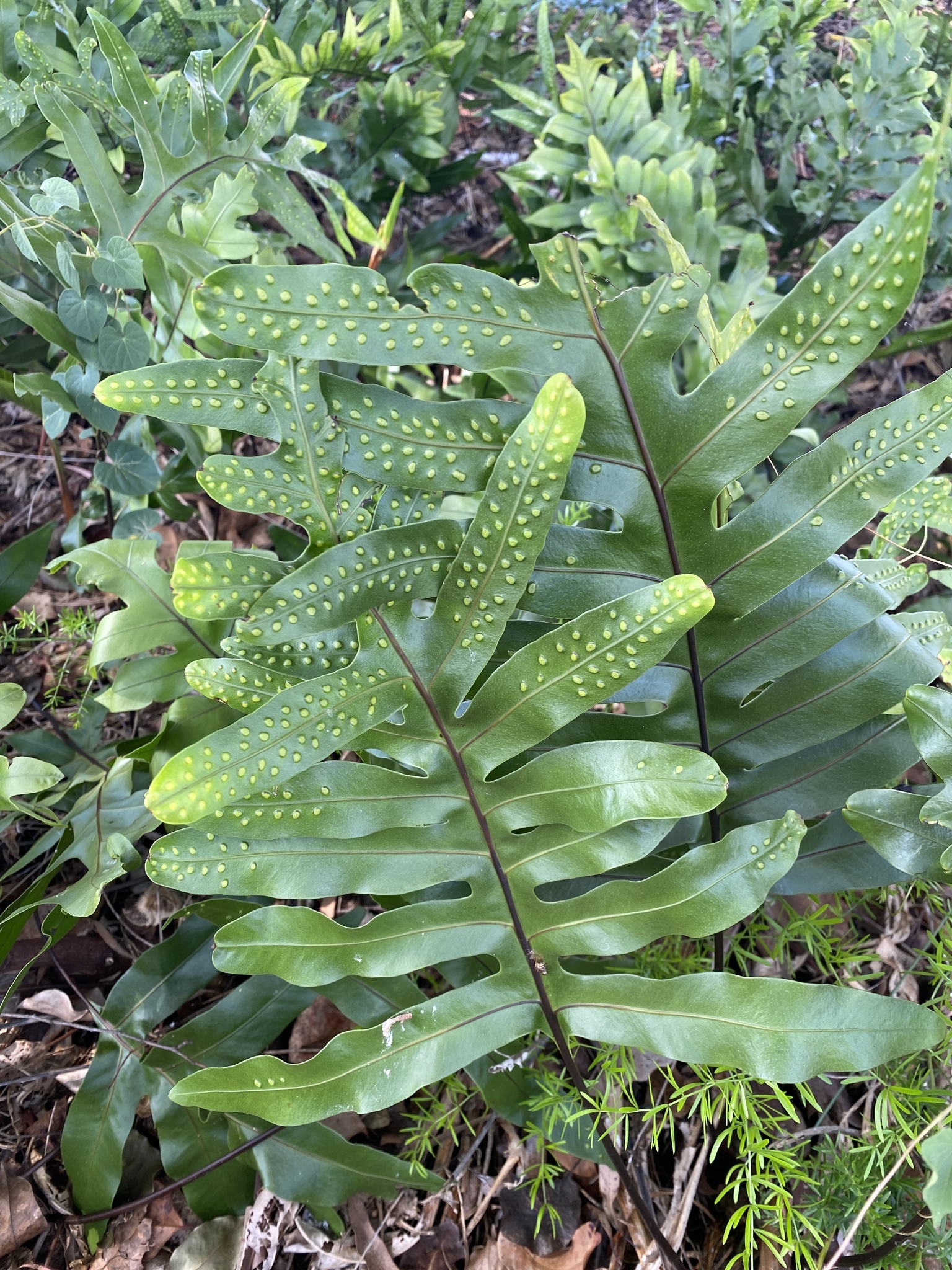
Musk Fern
Microsorum grossum (Langsd. & Fisch.) S.B.Andrews
Also known as: Maile-scented Fern
Cultivars of M. grossum
The named forms growers keep — each with its own page, each honest about how much we know.
No named cultivars catalogued under M. grossum yet. When growers document a stable, named form, it earns its own page here.
Guide
The species-level account. Cultivar pages build on this and say where they differ.
A Widespread Tropical Fern
Microsorum grossum is a fern classed as either a perennial or an epiphyte, depending on where it takes root. It belongs to the family Polypodiaceae, and carries a long list of past names that reflect how often botanists have reclassified it.
Source: Kew
A Broad Pacific Range
Its native range stretches from Hainan and Vietnam through Borneo and New Guinea to northern and northeastern Australia, and onward across a wide swath of the Pacific, including Fiji, Samoa, Tonga, and many smaller island groups. It has also been introduced beyond this native range, into Hawaii, India, Sri Lanka, and the Leeward Islands. The species was first published in 1990 under the name Microsorum grossum by S.B.Andrews, in Ferns of Queensland, though it had earlier been described as Polypodium grossum by Langsdorff and Fischer in 1810.
Source: Kew
Perennial or Epiphyte
This fern grows primarily in the wet tropical biome, and can live either rooted as a perennial or perched as an epiphyte on other plants. That flexibility of habit suits the humid forest environments across its native range.
Source: Kew
Care recipe
The species record — the baseline every cultivar inherits unless it says otherwise.
Care notes are early — not yet verified
- Light
- ai:claude-opus-4-8
- Water
- ai:claude-opus-4-8 (range 5-10d)
- Humidity
- ai:claude-opus-4-8
- Soil
- ai:claude-fable-5
- Care
- ai:claude-fable-5
Bright, indirect
≈ every 10 days
High
16–29 °C
Loose, bark-based epiphytic mix that stays airy
Division of the creeping rhizome
Dilute balanced feed monthly in the growing season
Moderate
Non-flowering fern, reproduces by spores
Not yet documented
This is where toxicity lives — every cultivar of this species inherits it and none can override it.
Reference images
Every image credited. Licenses link to their deeds.
PrimarySources: ai:claude-opus-4-8 · ai:claude-opus-4-8 (range 5-10d) · ai:claude-fable-5
Kept true by its growers
Every fact here carries its source. Grow Musk Fern yourself? What you’ve observed — how it drinks, how it holds its color, a name that’s off — and a clear photo of your plant are exactly what keep this page honest. Contributions are reviewed before anything changes.
Sign in to add what you know →