Species · genus Medinilla · Melastomataceae
Showy Medinilla
Medinilla magnifica Lindl.
Also known as: Pink Medinilla · Rose Grape
Cultivars of M. magnifica
The named forms growers keep — each with its own page, each honest about how much we know.
No named cultivars catalogued under M. magnifica yet. When growers document a stable, named form, it earns its own page here.
Guide
The species-level account. Cultivar pages build on this and say where they differ.
The rose grape
Medinilla magnifica, known as the rose grape, is an upright, epiphytic shrub grown for its bold foliage and dramatic summer flowers. It belongs to the Melastomataceae family and is grown under glass or as a houseplant in the UK.
Source: RHS
A Philippine native
This species comes from the Philippines, part of a genus of evergreen shrubs and woody climbers found in similar warm, humid conditions. In cultivation it is tender, needing glasshouse protection year-round in temperate climates.
Source: RHS
Warmth, light and humidity
Grow this plant under glass in peat-free, loam-based compost, in bright filtered light or full light shaded from hot sun. It appreciates high humidity, which can be provided by standing the pot on an upturned saucer within a tray of moist gravel. Water moderately and feed monthly with a balanced liquid fertiliser through the growing season, then water sparingly over winter.
Source: RHS
Cuttings or seed
Propagation is by seed, or by softwood cuttings taken in spring and semi-ripe cuttings taken in summer.
Source: RHS
Leathery leaves, showy bracts
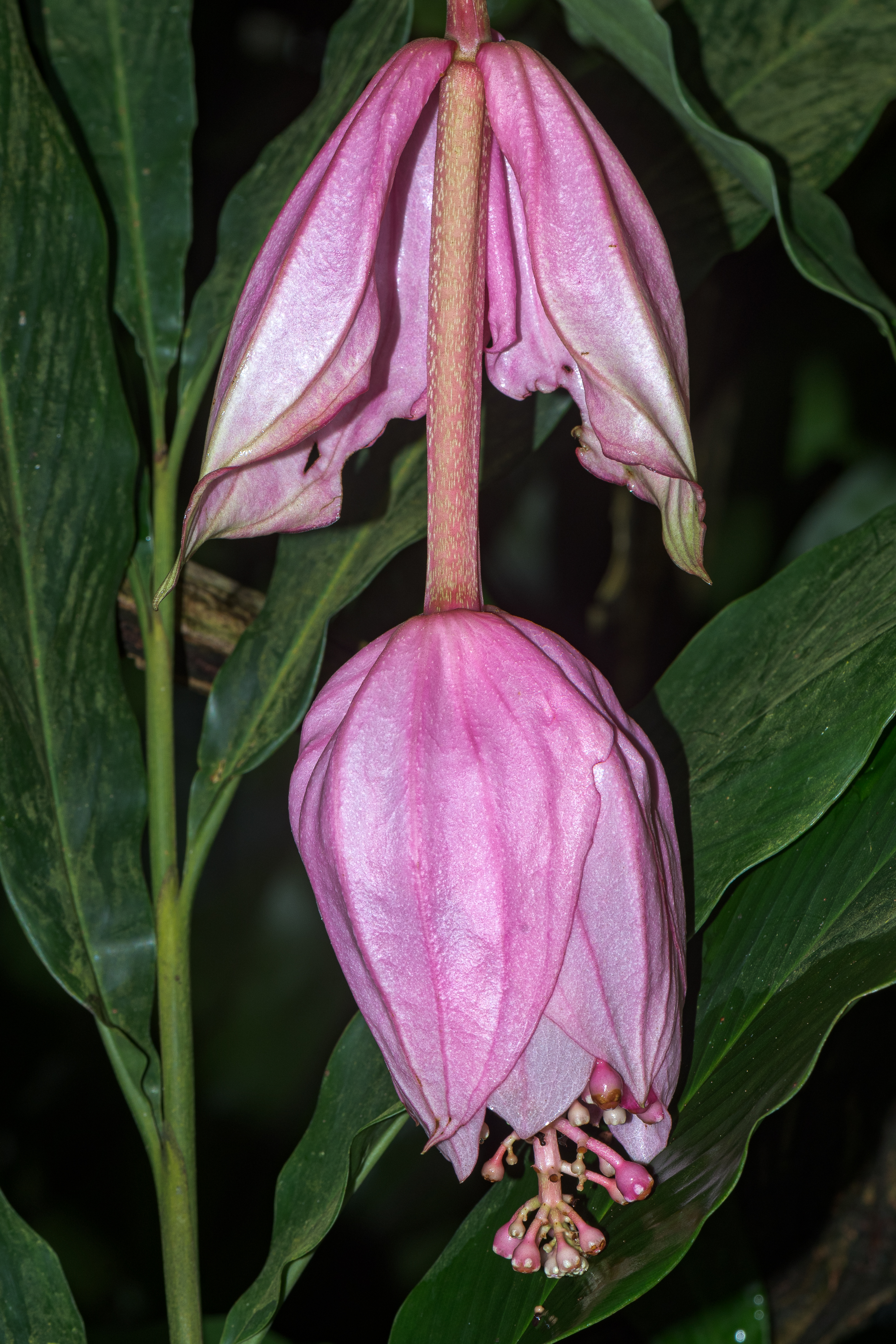
The rose grape carries leathery, broadly ovate, deep green leaves with pale veining, growing to some 30cm long. In summer it produces arching panicles of pink flowers around 2.5cm across, set off by showy pink basal bracts, on a bushy, upright habit that can reach 1.5 to 2.5 metres.
Source: RHS
Watch for scale
Scale insects are the main pest concern for this plant. Otherwise it is generally free of disease.
Source: RHS
Pruning group nine
This shrub falls into pruning group nine, and it is suited to pots, hanging baskets, and conservatory or greenhouse growing. It reaches maturity over five to ten years.
Source: RHS
Care recipe
The species record — the baseline every cultivar inherits unless it says otherwise.
Care notes are early — not yet verified
- Light
- ai:claude-opus-4-8
- Water
- ai:claude-opus-4-8 (range 5-10d)
- Humidity
- ai:claude-opus-4-8
- Soil
- ai:claude-fable-5
- Care
- ai:claude-fable-5
Bright, indirect
≈ every 10 days
High
18–29 °C
Airy, humus-rich mix with orchid bark and perlite
Stem cuttings under warmth and high humidity
Balanced liquid feed monthly in spring and summer
Moderate
Dramatic pendulous pink flower show with showy bracts when happy
Not yet documented
This is where toxicity lives — every cultivar of this species inherits it and none can override it.
Reference images
Every image credited. Licenses link to their deeds.
PrimarySources: ai:claude-opus-4-8 · ai:claude-opus-4-8 (range 5-10d) · ai:claude-fable-5
Kept true by its growers
Every fact here carries its source. Grow Showy Medinilla yourself? What you’ve observed — how it drinks, how it holds its color, a name that’s off — and a clear photo of your plant are exactly what keep this page honest. Contributions are reviewed before anything changes.
Sign in to add what you know →