Species · genus Maranta · Marantaceae
Prayer Plant
Maranta leuconeura É.Morren
Also known as: Prayerplant · Ten-commandments
Cultivars of M. leuconeura
The named forms growers keep — each with its own page, each honest about how much we know.
No named cultivars catalogued under M. leuconeura yet. When growers document a stable, named form, it earns its own page here.
Guide
The species-level account. Cultivar pages build on this and say where they differ.
A Foliage Plant with Rhythm
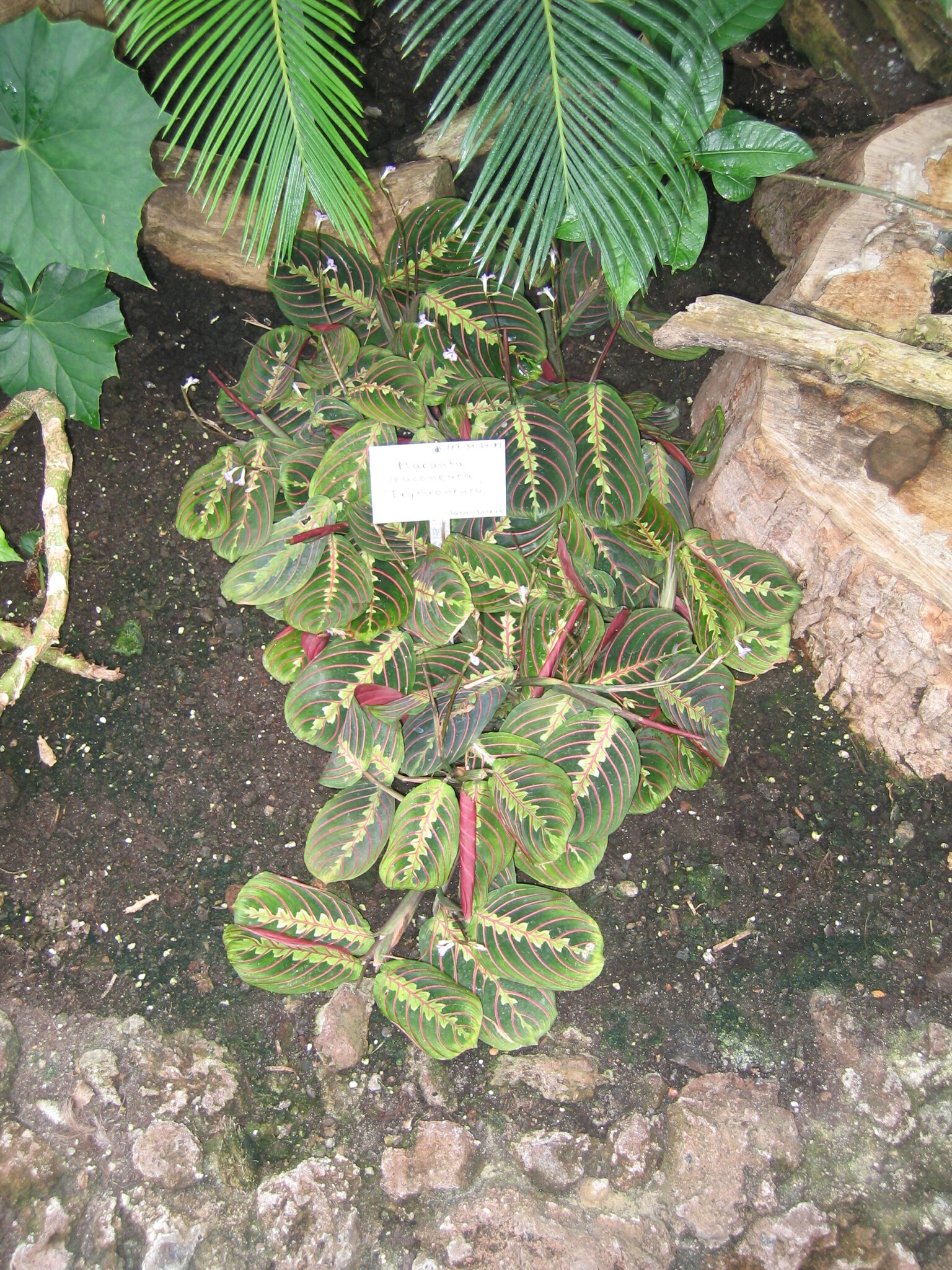
The prayer plant, Maranta leuconeura, is a slow-growing evergreen perennial in the arrowroot family, grown for its patterned leaves rather than for flowers. It gets its common name from the way its leaves rise upward at night and settle flatter by day, a movement folks have likened to praying hands. It is not toxic, which makes it a reasonably safe choice around children and pets.
Source: Epic Gardening
Rooted in Brazilian Rainforest
This plant's home ground is the tropical rainforest of Brazil, in South America. Its habit of lifting its leaves as the sun sets and lowering them again as it rises is what earned it the prayer plant name in the first place.
Source: Epic Gardening
Bright Shade, Steady Moisture
Give this plant bright, indirect light rather than direct sun, which can scorch the leaves; RHS recommends bright filtered or indirect light and notes it tolerates full or partial shade. Keep the soil evenly moist without letting it turn soggy, watering with room-temperature water and easing off in winter as the plant slows down. Humidity matters a great deal here, with Epic Gardening citing 50 to 60 percent as the target, achieved through misting, a pebble tray, or a humidifier, while RHS simply advises maintaining high humidity at all times. Feed regularly through the growing season, every two weeks per Epic Gardening or monthly per RHS, and hold back on fertilizer in winter.
Source: Epic Gardening
Easy From Cuttings or Division
Propagation is straightforward and can be done from stem cuttings taken below a leaf node in early spring, rooted either in soil with rooting hormone or in water. Slips, made by dividing rooted stem sections at repotting time, are another reliable route, and RHS confirms that basal cuttings, division, or seed are all viable methods. Growing from seed is possible but considered less dependable than cuttings.
Source: Epic Gardening
Patterned Leaves, Modest Flowers
The leaves are broad and elliptic, marked by veins that often run in a different colour than the leaf blade itself, with a waxy top surface and a matte grey-green underside. RHS notes the foliage carries silver lines from midrib to margin over dark green, with deep purple or grey-green undersides, and describes the plant as a rhizomatous, clump-forming perennial. Small white to purple tubular flowers can appear in summer, though they are unassuming next to the foliage, and Epic Gardening adds that in habit the plant stays bushy, growing to around three feet, occasionally serving as ground cover in the right tropical setting.
Source: RHS
Sap-Suckers to Watch For
Spider mites, aphids, and thrips can settle in and suck sap from the leaves, showing up as webbing or curling foliage, and neem oil is a common response. Mealybugs appear as small cottony clusters and can be dabbed away with alcohol before an insecticidal soap treatment, while fungus gnats are more of an indoor nuisance whose larvae can be managed with diluted neem drenches. RHS lists glasshouse red spider mite and mealybugs as the main pests to watch for on this plant.
Source: Epic Gardening
Reading the Leaves
Brown leaf tips or brown leaves usually point to too much direct sun, while wilting or yellowing leaves often mean the plant needs more fertilizer. Most trouble traces back to insufficient humidity or inconsistent soil moisture, and soggy brown tips can signal poor drainage, which calls for a container with better drainage holes. Overly wet, cool conditions also invite leaf spot and root rot, both fungal problems that call for reduced watering, removal of affected growth, and isolation from other plants if the disease has taken hold.
Source: Epic Gardening
Light Pruning, Occasional Repotting
This plant asks for little upkeep: RHS notes no pruning is required, though Epic Gardening suggests an occasional trim above a leaf node two to three times a year, in fall and early spring, to encourage bushier growth and to remove any diseased parts. Repotting is only needed every few years, once the plant becomes root-bound and growth slows, using a pot just one to two inches wider than the current one.
Source: Epic Gardening
Care recipe
The species record — the baseline every cultivar inherits unless it says otherwise.
Care notes are early — not yet verified
- Light
- ai:claude-opus-4-8
- Water
- ai:claude-opus-4-8 (range 4-9d)
- Humidity
- ai:claude-opus-4-8
- Soil
- ai:claude-fable-5
- Care
- ai:claude-fable-5
Bright, indirect
≈ every 9 days
High
16–27 °C
Rich, moisture-retentive mix with peat and perlite
Division of the clump at repotting
Balanced liquid feed monthly in the growing season
Moderate
Inconspicuous; prized for its patterned, night-folding leaves
Not yet documented
This is where toxicity lives — every cultivar of this species inherits it and none can override it.
Reference images
Every image credited. Licenses link to their deeds.
Sources: ai:claude-opus-4-8 · ai:claude-opus-4-8 (range 4-9d) · ai:claude-fable-5
Kept true by its growers
Every fact here carries its source. Grow Prayer Plant yourself? What you’ve observed — how it drinks, how it holds its color, a name that’s off — and a clear photo of your plant are exactly what keep this page honest. Contributions are reviewed before anything changes.
Sign in to add what you know →