Species · genus Maranta · Marantaceae
Arrowroot
Maranta arundinacea L.
Also known as: Maranta · West Indian Arrowroot
Cultivars of M. arundinacea
The named forms growers keep — each with its own page, each honest about how much we know.
No named cultivars catalogued under M. arundinacea yet. When growers document a stable, named form, it earns its own page here.
Guide
The species-level account. Cultivar pages build on this and say where they differ.
A Tropical Root and Leaf
Arrowroot, botanically Maranta arundinacea, is a tropical perennial herb grown both as an ornamental foliage plant and as a source of edible starch. It belongs to the Marantaceae, making it a relative of the familiar prayer plant, and it is sometimes called West Indian arrowroot, obedience plant, or Bermuda arrowroot.
Source: Epic Gardening
Roots in Latin America
This species traces back to Mexico and tropical America, with a native range spanning Central America, much of the Caribbean, and northern South America into Brazil and Peru. It has a long history of cultivation, having been grown in Latin America as far back as roughly 8200 BCE, originally valued for drawing poison from arrow wounds, which is where its common name comes from. Kew records it as a perennial of the wet tropical biome, long used as food, animal fodder, and medicine.
Source: Kew
Light, Water, and Feeding
This plant is best given partial shade with only a couple of hours of direct sun, though it can tolerate a sunnier or shadier spot with less vigorous growth. Because it naturally grows in water margins, the soil should be kept constantly moist, even watered daily, in a loamy, well-draining, slightly acidic mix, with some humidity around the foliage but not so much water on the leaves that fungal trouble sets in. During the growing season it appreciates a diluted balanced liquid fertilizer once or twice a month, cut back to weekly watering and no feeding once it goes dormant in cooler months.
Source: Epic Gardening
Dividing the Rhizomes
Arrowroot is most easily propagated by division of its spreading rhizomes, which is convenient since container plants need periodic dividing anyway as they outgrow their pots. Each separated piece needs both roots and a shoot, cut apart with a clean knife or spade. It can also be propagated from stem cuttings taken in late spring or summer, set upright in moist, well-draining soil, where roots typically form within about a month.
Source: Epic Gardening
Leaves, Flowers, and Rhizomes
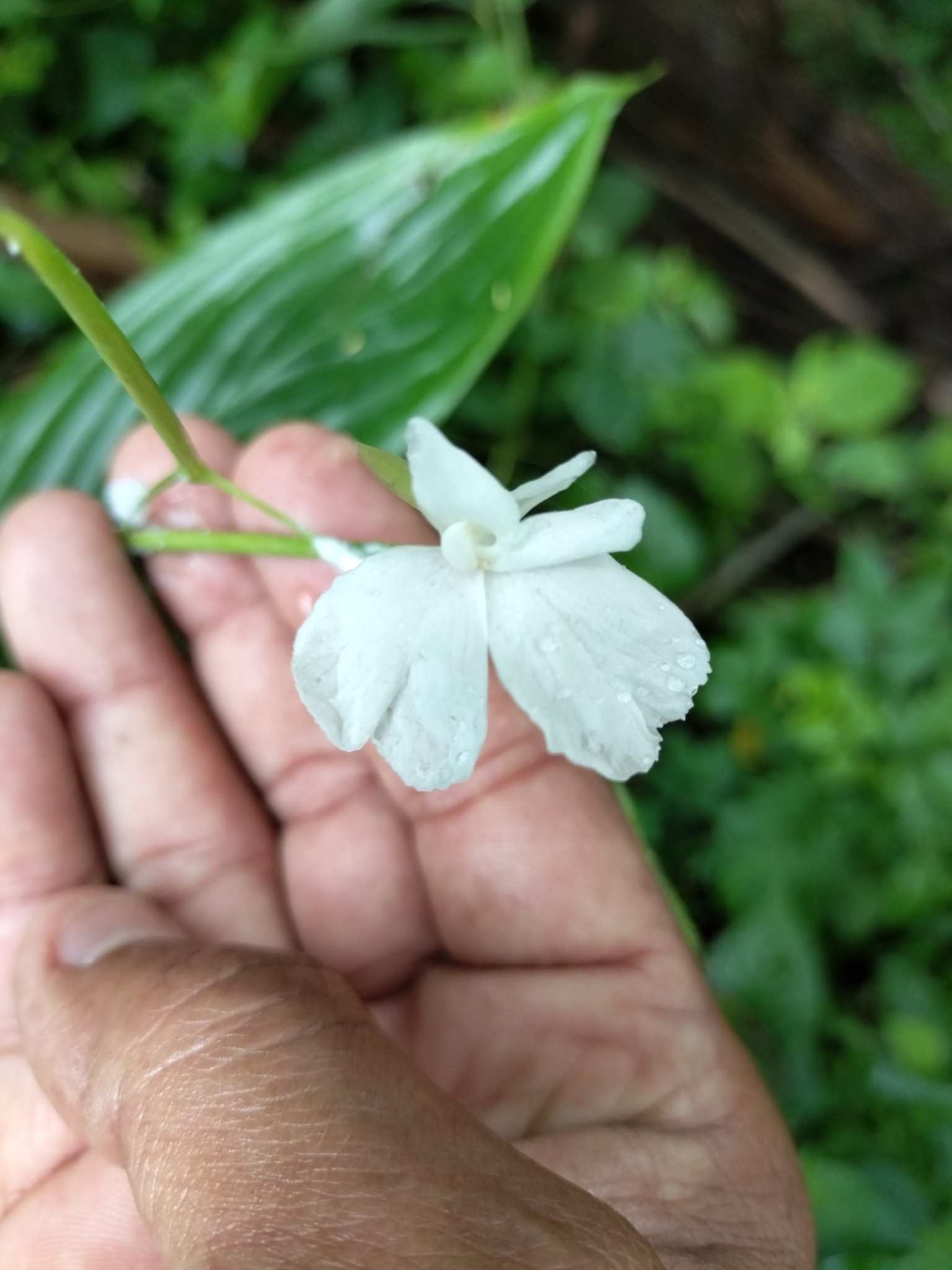
Arrowroot forms clusters of smooth, broadly elliptic leaves that can grow at least six inches long, reaching an overall height of one to five feet. In the growing season it sends up modest racemes of small, tubular white flowers held just above the foliage. Below ground it spreads by thick rhizomes, white or reddish-purple, which sprout the green stems; a Variegata form exists with leaves patched in white and light green.
Source: Epic Gardening
Scale and Spider Mites
Scale insects are a common nuisance, appearing as oval brown-to-white bumps that feed on sap and can stunt growth, yellow leaves, or cause foliage loss; good airflow and clean soil help prevent them, with horticultural oil or insecticidal soap for larger infestations. Spider mites, identifiable by fine webbing and leaf stippling, favor dry conditions, so adequate humidity is the best deterrent, alongside the same oil or soap treatments or predatory insects like ladybugs and lacewings.
Source: Epic Gardening
Reading the Leaves
Curled, dried leaf tips usually point to too much direct sun and heat combined with too little humidity, remedied by misting and better soil moisture, or by moving the plant to more afternoon shade. Yellowing leaves are the plant's general distress signal and can mean excess sun, water, or fertilizer, though pests or disease are worth ruling out too. The plant is also susceptible to rust fungus, seen as reddish-brown spore spots, which thrives in the same humid conditions arrowroot likes, so improving airflow and removing infected leaves promptly helps keep it in check.
Source: Epic Gardening
Seasonal Trimming
Through most of the growing season, maintenance is light, limited to trimming spent flowers or unattractive leaves as needed. If the plant will overwinter in cold conditions, cut back the above-ground growth in late fall, and expect the foliage to die back naturally in a mild winter before resprouting from the rhizomes come spring.
Source: Epic Gardening
Care recipe
The species record — the baseline every cultivar inherits unless it says otherwise.
Care notes are early — not yet verified
- Light
- ai:claude-opus-4-8
- Water
- ai:claude-opus-4-8 (range 5-10d)
- Humidity
- ai:claude-opus-4-8
- Soil
- ai:claude-fable-5
- Care
- ai:claude-fable-5
Bright, indirect
≈ every 10 days
High
16–29 °C
Rich, moisture-retentive mix with peat and perlite
Division of rhizomes at repotting
Balanced liquid feed monthly in the growing season
Moderate
Small white flowers, grown mainly for foliage
Not yet documented
This is where toxicity lives — every cultivar of this species inherits it and none can override it.
Reference images
Every image credited. Licenses link to their deeds.
PrimarySources: ai:claude-opus-4-8 · ai:claude-opus-4-8 (range 5-10d) · ai:claude-fable-5
Kept true by its growers
Every fact here carries its source. Grow Arrowroot yourself? What you’ve observed — how it drinks, how it holds its color, a name that’s off — and a clear photo of your plant are exactly what keep this page honest. Contributions are reviewed before anything changes.
Sign in to add what you know →