Species · genus Mammillaria · Cactaceae
Spiny Pincushion Cactus
Mammillaria spinosissima Lem.
Also known as: Pincushion Cactus · Red-headed Irishman
Cultivars of M. spinosissima
The named forms growers keep — each with its own page, each honest about how much we know.
No named cultivars catalogued under M. spinosissima yet. When growers document a stable, named form, it earns its own page here.
Guide
The species-level account. Cultivar pages build on this and say where they differ.
The spiny pincushion cactus
Mammillaria spinosissima is a cactus known as the spiny pincushion cactus, prized for its bristling spines and small carmine-pink flowers. It carries the RHS Award of Garden Merit, a mark of its reliability as a container and greenhouse subject.
Source: RHS
A native of central Mexico
This species comes from central Mexico. In cultivation it belongs to a genus of spiny cacti, Mammillaria, whose members typically show spherical or columnar stems clustered with prominent tubercles and funnel-shaped flowers arranged in a ring near the stem's tip.
Source: RHS
Bright light, dry rest
Grow this cactus under glass in a standard cactus compost, set in bright but filtered light and kept in low humidity. During active growth, water moderately and feed every two to three weeks with a balanced liquid feed, then let it rest almost dry over winter. It suits a sheltered spot in loam or sandy, well-drained soil, and tolerates full sun with an east, south or north aspect.
Source: RHS
By seed or offsets
Propagate by sowing seed at 19–24°C in early spring, or by taking offsets from the parent plant.
Source: RHS
Bristles, tubercles, and pink blooms
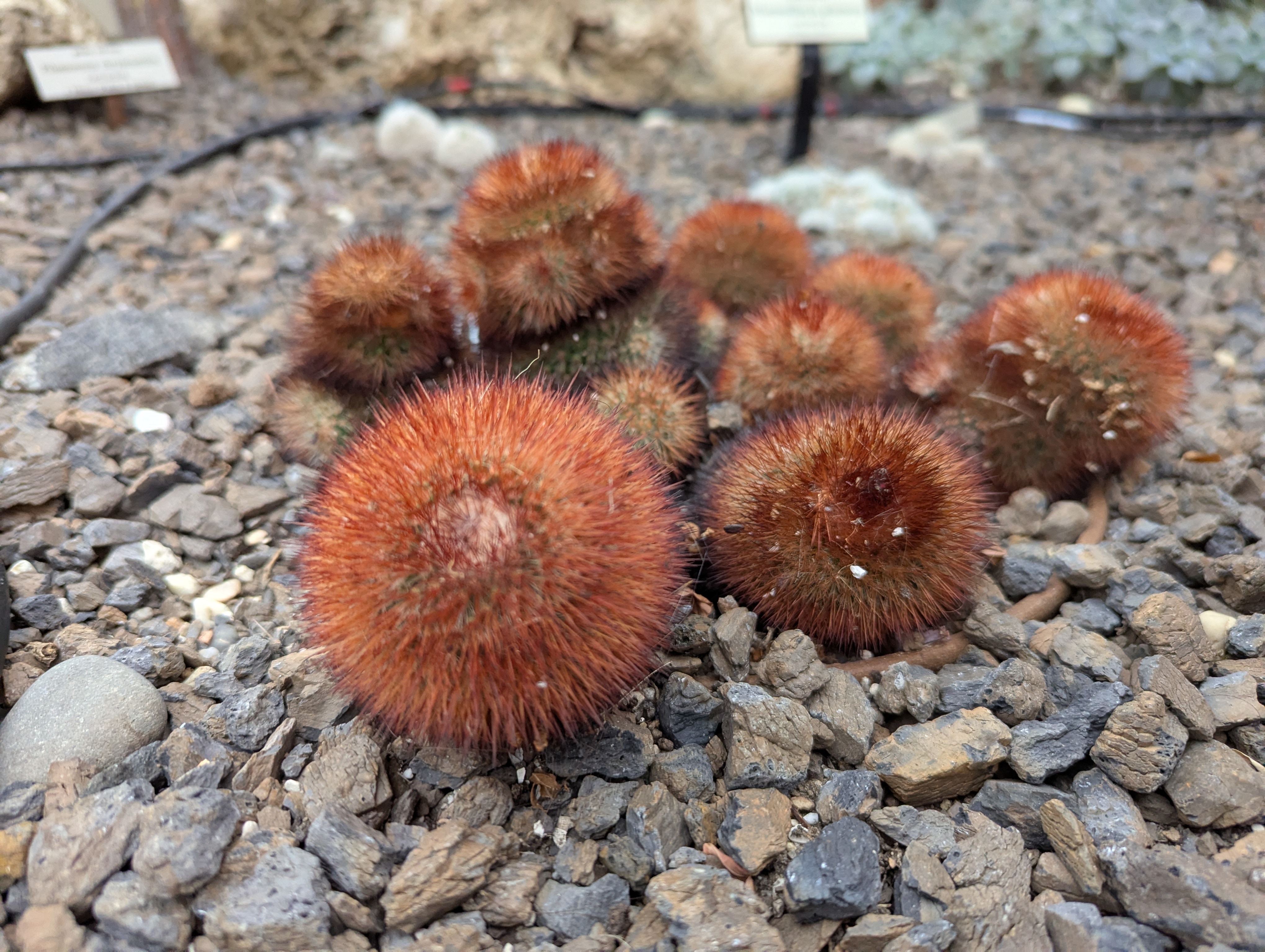
The stems are usually solitary and cylindrical, reaching up to 30cm tall and 10cm across, and are covered in bristly spines that come in red-brown or white centrals with cream radials. In season it produces carmine-pink flowers around 2cm long. Its habit is columnar and upright, with foliage that stays evergreen year round.
Source: RHS
Watch for mealybugs
This cactus may be susceptible to mealybugs, so it is worth checking the stem and spine clusters for their presence from time to time.
Source: RHS
Otherwise trouble-free
Beyond the occasional mealybug, this plant is generally disease-free, which reflects its undemanding nature once its light and watering rhythm is respected.
Source: RHS
Little upkeep needed
No pruning is required for this cactus. It reaches maturity slowly, over roughly five to ten years, and stays compact, with a maximum height of 0.1 to 0.5 metres and a spread under 0.1 metre, making it well suited to a patio or container.
Source: RHS
Care recipe
The species record — the baseline every cultivar inherits unless it says otherwise.
Care notes are early — not yet verified
- Light
- ai:claude-opus-4-8
- Water
- ai:claude-opus-4-8 (range 14-30d)
- Humidity
- ai:claude-opus-4-8
- Soil
- ai:claude-fable-5
- Care
- ai:claude-fable-5
Direct sun
≈ every 30 days
Low — average room
10–29 °C
Gritty, fast-draining cactus mix with extra pumice or perlite
Offsets separated and callused before potting
Dilute low-nitrogen cactus feed monthly in spring and summer
Slow
Pink crown of blooms in spring with a bright, cool winter rest
Not yet documented
This is where toxicity lives — every cultivar of this species inherits it and none can override it.
Reference images
Every image credited. Licenses link to their deeds.
PrimarySources: ai:claude-opus-4-8 · ai:claude-opus-4-8 (range 14-30d) · ai:claude-fable-5
Kept true by its growers
Every fact here carries its source. Grow Spiny Pincushion Cactus yourself? What you’ve observed — how it drinks, how it holds its color, a name that’s off — and a clear photo of your plant are exactly what keep this page honest. Contributions are reviewed before anything changes.
Sign in to add what you know →