Species · genus Mammillaria · Cactaceae
Mexican Pincushion
Mammillaria magnimamma Haw.
Also known as: Mexican Pincushion Cactus
Cultivars of M. magnimamma
The named forms growers keep — each with its own page, each honest about how much we know.
No named cultivars catalogued under M. magnimamma yet. When growers document a stable, named form, it earns its own page here.
Guide
The species-level account. Cultivar pages build on this and say where they differ.
A Tubby Mexican Pincushion
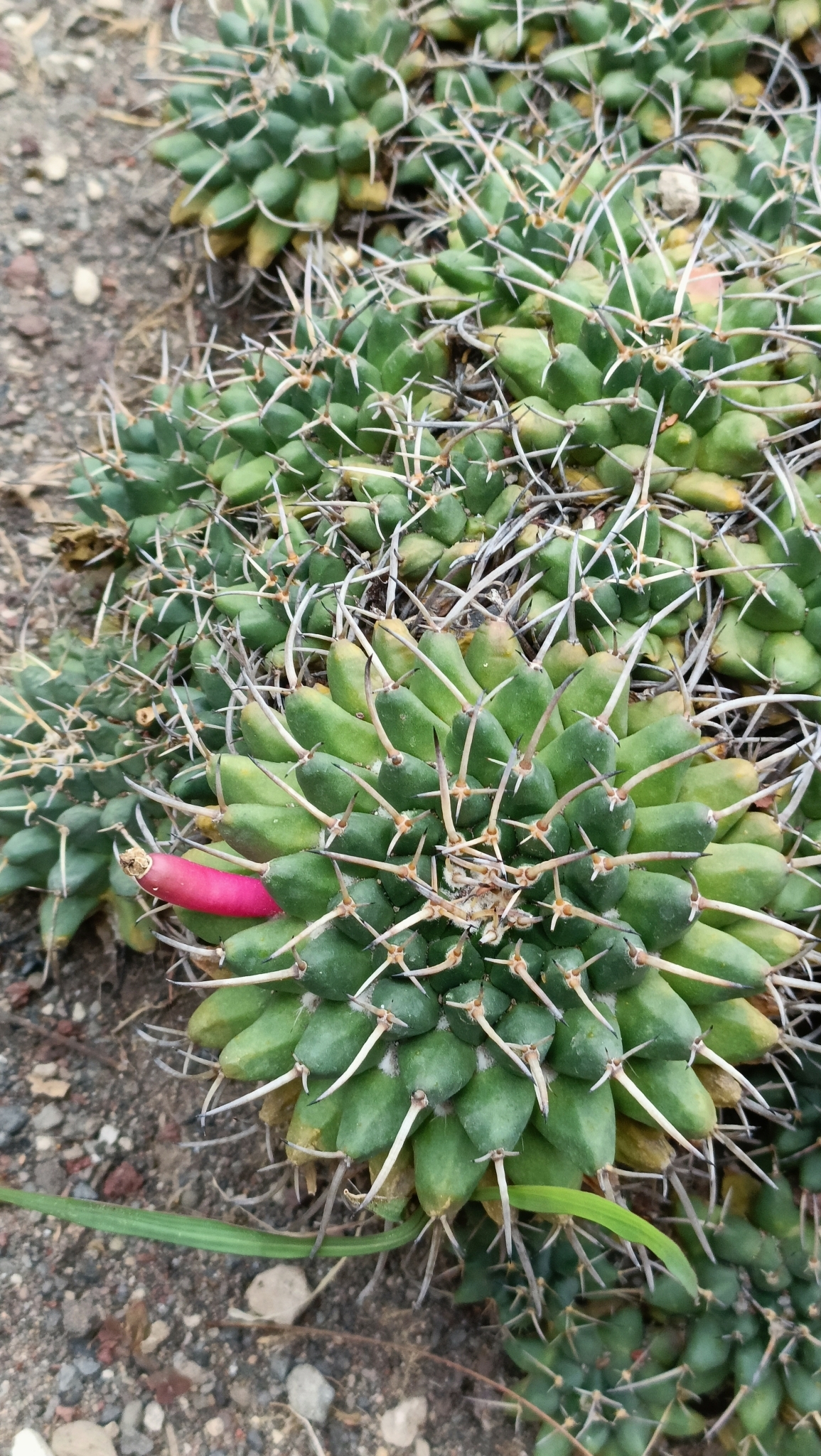
Mammillaria magnimamma, known commonly as the Mexican pincushion, is a clump-forming perennial cactus with tubby, spherical green stems. It carries an RHS Award of Garden Merit and is grown as a garden or container plant for its architectural, spiny form.
Source: RHS
Rooted in Central Mexico
This species is native to central Mexico, occurring across its central, gulf, northeast and southwest regions, where it grows in desert and dry shrubland. Kew records it as a succulent subshrub within that arid habitat, and it was first formally published under the name Mammillaria magnimamma in 1824.
Source: Kew
Sun, Drainage, Restraint
Give this cactus full sun, ideally a south-facing and sheltered spot, in a well-drained loam or sandy mix. It tolerates dry conditions well and only needs protection from temperatures below about 5°C, so it can spend summer outdoors before coming back under cover.
Source: RHS
Offsets or Seed
New plants can be raised by potting up the offsets the clump produces, or by sowing seed in spring or summer.
Source: RHS
Tubercles, Wool and Blooms
The stems, which can reach up to about 30cm in height, are studded with tubercles, white spines and tufts of wool, giving the plant its pincushion look. Small funnel-shaped flowers appear near the crowns in spring and sometimes again in late summer, usually pink but occasionally red or cream.
Source: RHS
Watch for Sap-Suckers
Mealybugs, glasshouse red spider mite and glasshouse whitefly are the pests most likely to trouble this cactus.
Source: RHS
Rot Comes from Wet
The main risk is rotting, which sharp drainage and keeping the plant completely dry over winter will prevent.
Source: RHS
Little Intervention Needed
No pruning is required for this species, which suits its billing as a low-maintenance plant for patios, containers and courtyard gardens. Left to its own devices, a plant takes roughly five to ten years to reach maturity.
Source: RHS
Care recipe
The species record — the baseline every cultivar inherits unless it says otherwise.
Care notes are early — not yet verified
- Light
- ai:claude-opus-4-8
- Water
- ai:claude-opus-4-8 (range 14-28d)
- Humidity
- ai:claude-opus-4-8
- Soil
- ai:claude-fable-5
- Care
- ai:claude-fable-5
Direct sun
≈ every 28 days
Low — average room
7–32 °C
Gritty, fast-draining cactus mix
Offsets separated and rooted after callusing
Dilute low-nitrogen cactus feed in spring and summer
Slow
Cream to pink flowers in spring
Not yet documented
This is where toxicity lives — every cultivar of this species inherits it and none can override it.
Reference images
Every image credited. Licenses link to their deeds.
PrimarySources: ai:claude-opus-4-8 · ai:claude-opus-4-8 (range 14-28d) · ai:claude-fable-5
Kept true by its growers
Every fact here carries its source. Grow Mexican Pincushion yourself? What you’ve observed — how it drinks, how it holds its color, a name that’s off — and a clear photo of your plant are exactly what keep this page honest. Contributions are reviewed before anything changes.
Sign in to add what you know →