Species · genus Liriope · Asparagaceae
Creeping Liriope
Liriope spicata Lour.
Also known as: Creeping Lilyturf
Cultivars of L. spicata
The named forms growers keep — each with its own page, each honest about how much we know.
No named cultivars catalogued under L. spicata yet. When growers document a stable, named form, it earns its own page here.
Guide
The species-level account. Cultivar pages build on this and say where they differ.
A Tough Little Grass-Look
Liriope, often called lilyturf or monkey grass, is an evergreen perennial prized as ground cover rather than as a showpiece. Its strap-like leaves give it the look of a grass, though it belongs to a different family entirely.
Source: Costa Farms
Named for a Nymph
The genus name honors Liriope, a woodland nymph of Greek myth and mother of Narcissus. Its common name lilyturf nods to its grass-like habit paired with lily-like flower spikes.
Source: RHS
Easy in Sun or Shade
Liriope is unfussy about light, managing in full sun or deep shade alike, and it tolerates both wet spots and dry stretches once established. It does best, though, in a sunny to lightly shaded spot with well-drained soil. Water needs stay low, and this is a plant grown for resilience rather than for feeding routines.
Source: Costa Farms
Strappy Leaves, Late Spikes
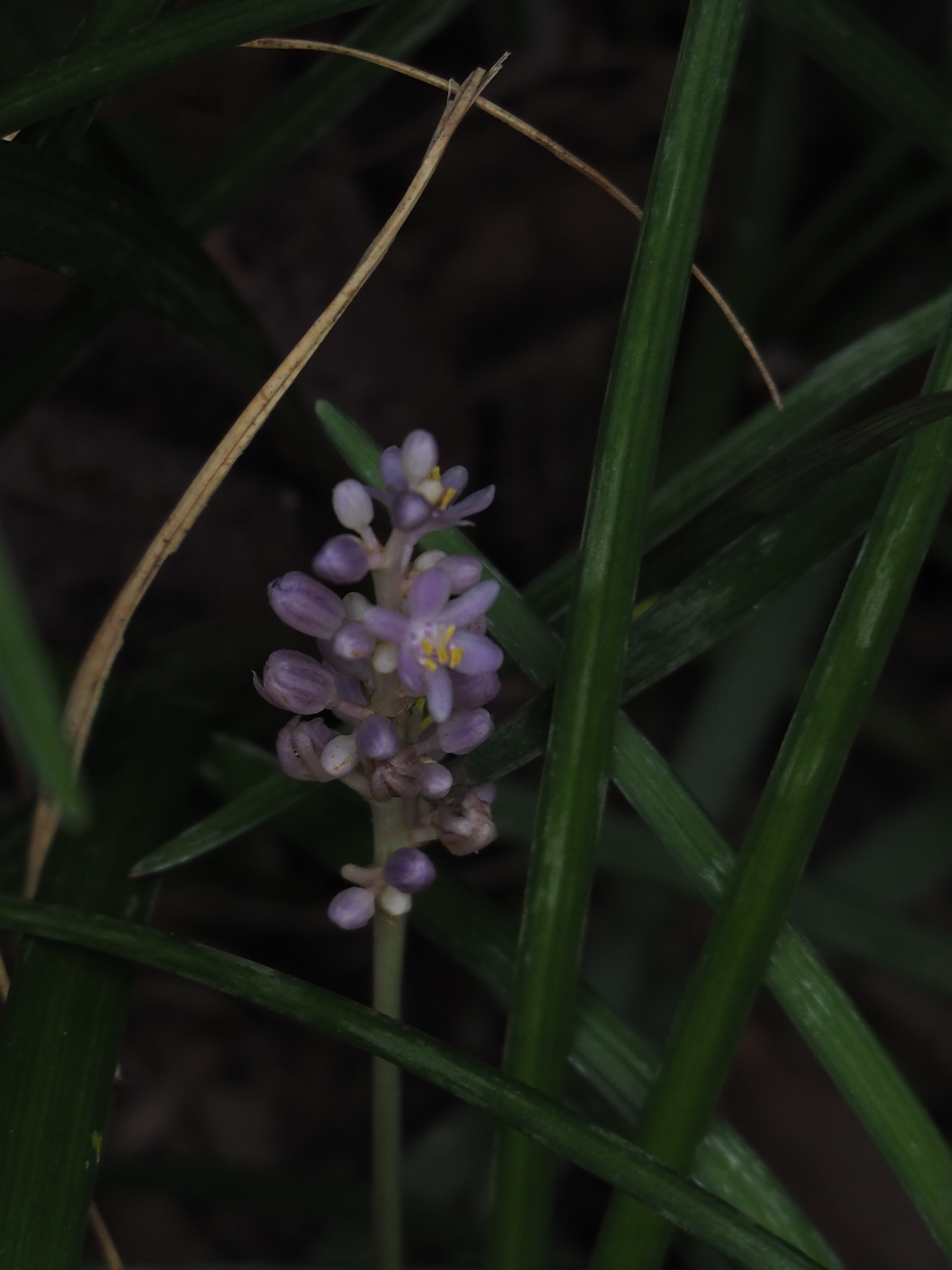
The foliage is strappy and arching, sometimes marked with white or cream, and it holds its green through the year. In late summer to autumn, dense upright spikes of small purple or white flowers rise above the leaves, followed by purple-black berries. Clump-forming types such as Liriope muscari stay tidy, while others like Liriope spicata spread gently as ground cover.
Source: RHS
Shade and Soil Limits
Planted in deep shade, liriope tends not to flower well, so a flower-focused planting wants at least some light. Very alkaline soils or heavy, poorly draining clay can also hold it back, and full sun paired with dry soil may damage the leaves.
Source: RHS
An Occasional Cutback
Because liriope is evergreen, it doesn't need seasonal tidying to survive, but many gardeners cut it back in late winter or early spring to bring on a fresh flush of foliage. Spacing plants 12 to 18 inches apart lets them knit together into a full ground cover over time.
Source: Costa Farms
Care recipe
The species record — the baseline every cultivar inherits unless it says otherwise.
Care notes are early — not yet verified
- Light
- ai:claude-opus-4-8
- Water
- ai:claude-opus-4-8 (range 7-14d)
- Humidity
- ai:claude-opus-4-8
- Soil
- ai:claude-fable-5
- Care
- ai:claude-fable-5
Medium light
≈ every 14 days
Medium
10–27 °C
Ordinary well-draining potting mix
Division of the spreading clumps
Balanced liquid feed monthly in spring and summer
Moderate
Slender lavender spikes, uncommon indoors
Not yet documented
This is where toxicity lives — every cultivar of this species inherits it and none can override it.
Reference images
Every image credited. Licenses link to their deeds.
PrimarySources: ai:claude-opus-4-8 · ai:claude-opus-4-8 (range 7-14d) · ai:claude-fable-5
Kept true by its growers
Every fact here carries its source. Grow Creeping Liriope yourself? What you’ve observed — how it drinks, how it holds its color, a name that’s off — and a clear photo of your plant are exactly what keep this page honest. Contributions are reviewed before anything changes.
Sign in to add what you know →