Species · genus Kalanchoe · Crassulaceae
Cathedral Bells
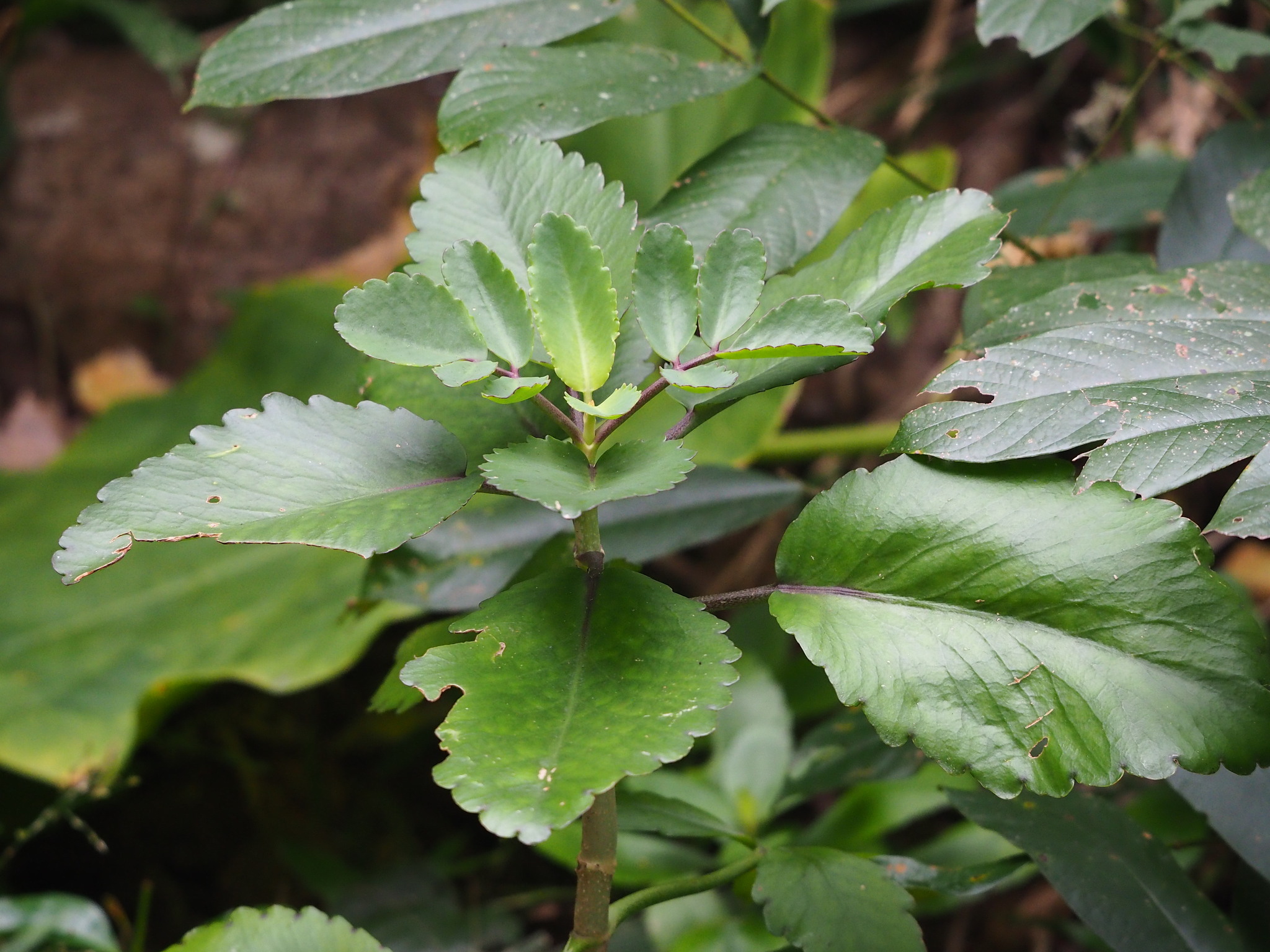
Kalanchoe pinnata (Lam.) Pers.
Also known as: Miracle Leaf · Airplant · Curtainplant · Floppers · Good-luck-leaf
Cultivars of K. pinnata
The named forms growers keep — each with its own page, each honest about how much we know.
No named cultivars catalogued under K. pinnata yet. When growers document a stable, named form, it earns its own page here.
Guide
The species-level account. Cultivar pages build on this and say where they differ.
A Widely Traveled Succulent
Kalanchoe pinnata is a succulent subshrub in the Crassulaceae, known in some circles by common names such as life plant, air plant, floppers, or sea leaf. It has drifted far from its origins, now found growing across a great many warm regions of the world.
Source: Kew
Madagascar Roots, Global Reach
This plant's native range traces back to Madagascar, where it grows in the seasonally dry tropical biome. From there it has been introduced into an extraordinary number of territories, from the Caribbean to the Pacific islands to continental Africa and Asia, and beyond its ornamental life it has been put to use as medicine, animal food, poison, and more.
Source: Kew
Light, Water, Rest
This kalanchoe wants bright, indirect light and average household temperatures, though it will tolerate outdoor life in warmer zones if kept out of harsh direct sun. Water it deeply, then let the soil dry out before the next drink, since it is far more likely to suffer from excess moisture than from drought. During spring and summer a balanced or phosphorous-leaning fertilizer, whether slow-release at season's start or a diluted liquid feed every other week, supports its growth and flowering.
Source: Epic Gardening
From Cutting to New Plant
Propagation is straightforward, done through stem cuttings, offsets, or occasionally seed, with cuttings typically rooting within fifteen to twenty days. The best time is spring or summer, taking a healthy, non-flowering stem with at least two leaves and letting the cut end callous over for one to three days before planting into fast-draining succulent soil. A humid, covered environment and bright indirect light afterward will help the new plant establish.
Source: Epic Gardening
Watch for Etiolation
This species is prone to etiolation, stretching leggy toward a light source when it isn't getting enough of it, which can be corrected by pinching back the affected growth. Overwatering is the more serious risk, as the plant is more likely to succumb to excess moisture than to dry soil.
Source: Epic Gardening
Care recipe
The species record — the baseline every cultivar inherits unless it says otherwise.
Care notes are early — not yet verified
- Light
- ai:claude-opus-4-8
- Water
- ai:claude-opus-4-8 (range 10-21d)
- Humidity
- ai:claude-opus-4-8
- Soil
- ai:claude-fable-5
- Care
- ai:claude-fable-5
Bright, indirect
≈ every 21 days
Low — average room
13–29 °C
Gritty, fast-draining cactus and succulent mix
Leaf-margin plantlets root wherever they land
Dilute succulent feed monthly in the growing season
Fast
Greenish-red hanging bells on tall stems when mature
Toxic to cats & dogs & humans
Crassulaceae of the Kalanchoe genus contain bufadienolide cardiac glycosides. This is where toxicity lives: every cultivar of this species inherits it and none can override it.
Reference images
Every image credited. Licenses link to their deeds.
PrimarySources: ai:claude-opus-4-8 · ai:claude-opus-4-8 (range 10-21d) · ai:claude-fable-5 · ai:claude-opus-4-8 (family inference)
Kept true by its growers
Every fact here carries its source. Grow Cathedral Bells yourself? What you’ve observed — how it drinks, how it holds its color, a name that’s off — and a clear photo of your plant are exactly what keep this page honest. Contributions are reviewed before anything changes.
Sign in to add what you know →