Species · genus Kalanchoe · Crassulaceae
Marnier's Kalanchoe
Kalanchoe marnieriana H.Jacobsen
Also known as: Marnier Kalanchoe
Cultivars of K. marnieriana
The named forms growers keep — each with its own page, each honest about how much we know.
No named cultivars catalogued under K. marnieriana yet. When growers document a stable, named form, it earns its own page here.
Guide
The species-level account. Cultivar pages build on this and say where they differ.
A Madagascan succulent
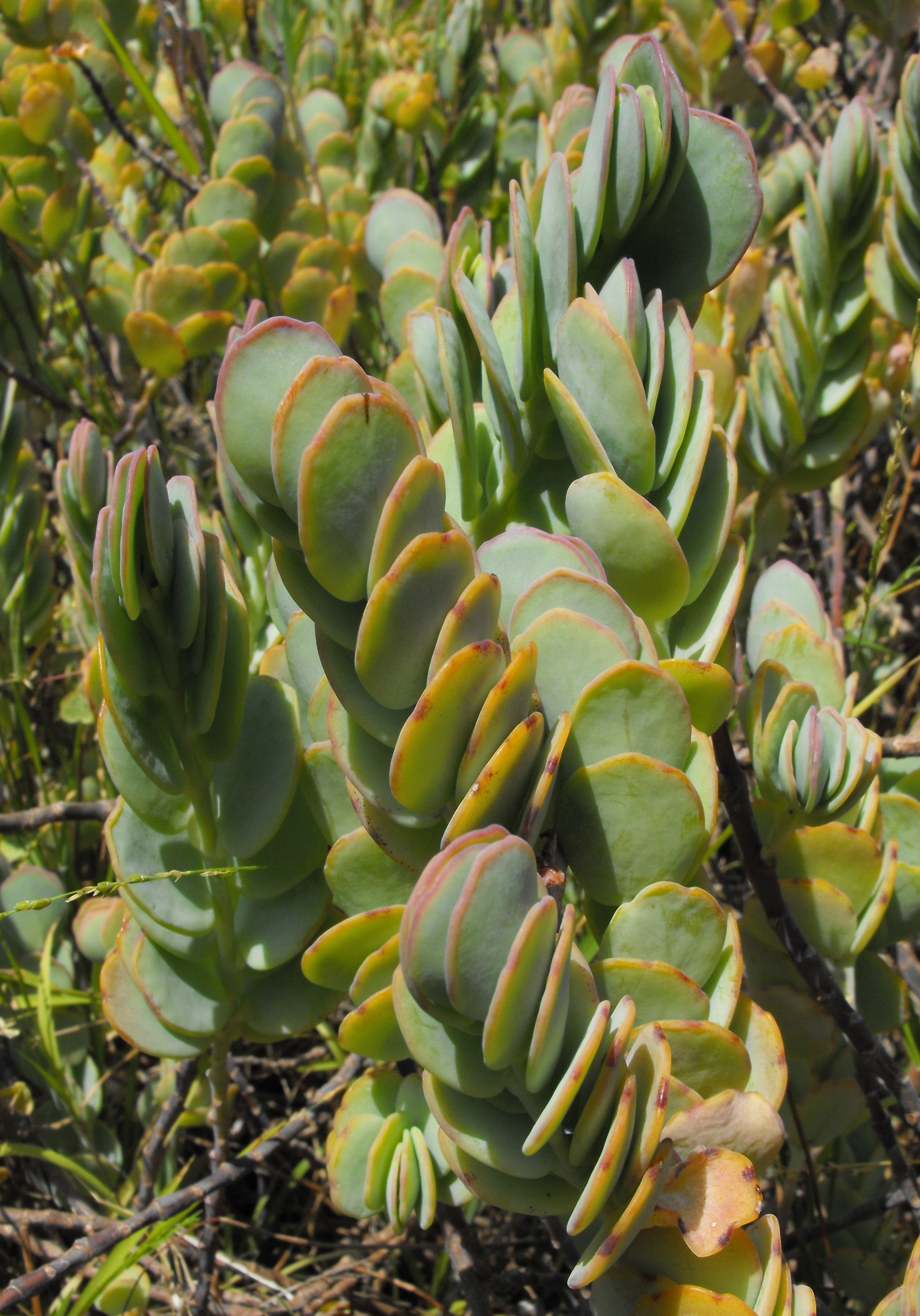
Kalanchoe marnieriana is a succulent subshrub in the Crassulaceae family, grown here alongside its better-known cousins for the same easy, water-wise character. It carries broad, fleshy foliage typical of the genus, and like other kalanchoes it can be coaxed into fresh plants with very little fuss.
Source: Kew
Native to Madagascar
This species comes from southwestern Madagascar, where it grows as a succulent subshrub in desert and dry shrubland habitats. It has also been introduced into Kenya. The name honors the plant's association with H. Jacobsen and L. Allorge, who first published it in a 1995 work on Madagascan kalanchoes.
Source: Kew
Light, water, and feeding
Kalanchoe wants bright, indirect light; too little and it stretches toward the sun in a lopsided way known as etiolation. Water deeply, then let the soil dry out before the next drink, since these succulents are far more likely to suffer from too much moisture than too little. Ordinary room temperatures suit it fine, and outdoors it can live in warmer zones as long as it is kept out of harsh direct sun. During spring and summer a balanced or phosphorous-leaning fertilizer, applied as a slow-release at the season's start or as a diluted liquid every couple of weeks, supports growth and flowering.
Source: Epic Gardening
Cuttings, offsets, or seed
New plants come easiest from stem cuttings or offsets, which typically root in fifteen to twenty days. Take a healthy, mature but non-flowering stem with at least two leaves in spring or summer, cut cleanly above a node, and let the wound callous over for one to three days before dipping it in rooting hormone and setting it into fast-draining cactus or succulent soil. A clear plastic bag with a few air holes helps hold humidity while roots establish, and the cutting should sit in bright indirect light and stay above 50°F (10°C) until active growth appears. Kalanchoe can also grow from seed, though that route is slower and less reliable.
Source: Epic Gardening
Overwatering and etiolation
The most common trouble with kalanchoe is overwatering, since the roots and soil are sensitive to sitting in moisture and this readily leads to rot. The other frequent issue is etiolation, where insufficient light causes leggy, unbalanced stretching. Pinching back that leggy growth doubles as a way to tidy the plant and supply fresh cutting material.
Source: Epic Gardening
Care recipe
The species record — the baseline every cultivar inherits unless it says otherwise.
Care notes are early — not yet verified
- Light
- ai:claude-opus-4-8
- Water
- ai:claude-opus-4-8 (range 10-21d)
- Humidity
- ai:claude-opus-4-8
- Soil
- ai:claude-fable-5
- Care
- ai:claude-fable-5
Direct sun
≈ every 21 days
Low — average room
13–27 °C
Gritty, fast-draining cactus and succulent mix
Stem cuttings root quickly in dry mix
Dilute succulent feed monthly in spring and summer
Moderate
Pendant pink bell flowers in late winter with good light
Toxic to cats & dogs
Kalanchoe (Crassulaceae) contains cardiac glycoside bufadienolides toxic to pets. This is where toxicity lives: every cultivar of this species inherits it and none can override it.
Reference images
Every image credited. Licenses link to their deeds.
PrimarySources: ai:claude-opus-4-8 · ai:claude-opus-4-8 (range 10-21d) · ai:claude-fable-5 · ai:claude-opus-4-8 (family inference)
Kept true by its growers
Every fact here carries its source. Grow Marnier's Kalanchoe yourself? What you’ve observed — how it drinks, how it holds its color, a name that’s off — and a clear photo of your plant are exactly what keep this page honest. Contributions are reviewed before anything changes.
Sign in to add what you know →