Species · genus Kalanchoe · Crassulaceae
Paddle Plant
Kalanchoe luciae Raym.-Hamet
Also known as: Flapjacks · Flapjack Plant · Paddle Kalanchoe · Desert Cabbage · Red Pancakes · Dog Tongue Plant
Cultivars of K. luciae
The named forms growers keep — each with its own page, each honest about how much we know.
No named cultivars catalogued under K. luciae yet. When growers document a stable, named form, it earns its own page here.
Guide
The species-level account. Cultivar pages build on this and say where they differ.
The Desert Cabbage
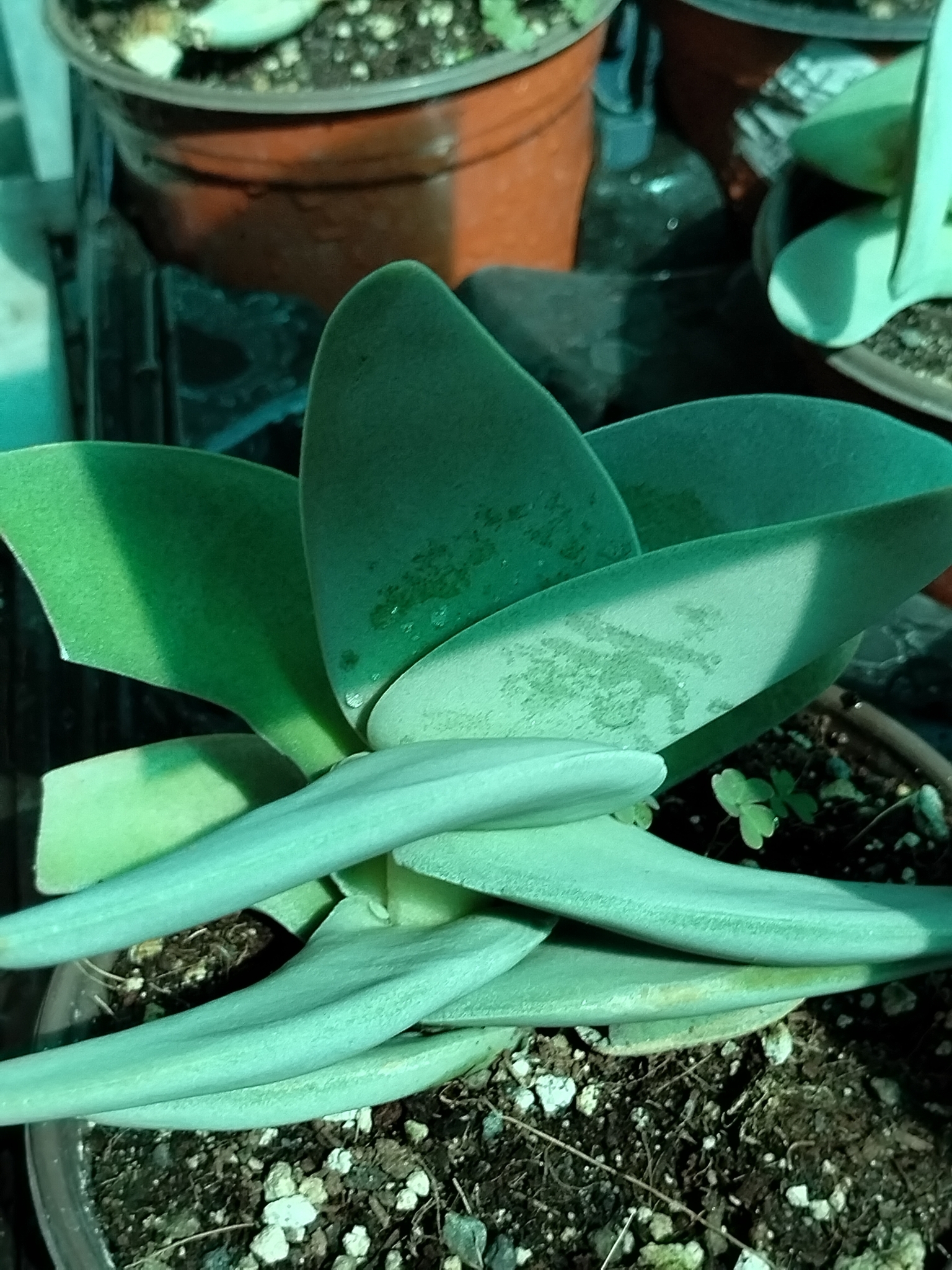
Kalanchoe luciae is a short-stemmed succulent perennial, sometimes called desert cabbage, flapjack, or red pancakes, that forms upright rosettes of thick, rounded leaves. It stays fairly compact, generally reaching no more than half a metre in height and spread.
Source: RHS
From Southern Africa
This plant's natural range lies in southeastern Africa, where it grows in arid conditions well suited to a succulent habit. It is closely related to, and often confused with, Kalanchoe thyrsiflora, with the two frequently sold under the same common names of paddle plant, flapjack, or desert cabbage.
Source: Epic Gardening
Light, Water, and Feed
Give this plant full light but shield it from the harshest summer sun, and pot it in a peat-free, loam-based mix with added grit for sharp drainage. Water moderately through the growing season, feeding three or four times with a balanced liquid fertiliser, then cut back to keeping the compost just moist over winter.
Source: RHS
Plantlets or Cuttings
The simplest route is to remove the small plantlets that form around the base of a mature rosette, or to take stem cuttings, doing either in spring or summer. Seed can also be sown at around 21°C in spring if you want to start from scratch.
Source: RHS
Rosettes, Colour, and a Final Bloom
The leaves are bright green, rigid, and fleshy, taking on a red flush when the plant gets good light. In early summer a mature rosette can send up a flower stalk to some sixty centimetres, crowded with small, scented, pale yellow blooms. That rosette dies once flowering finishes, but by then it has usually surrounded itself with small plantlets at its base to carry on.
Source: RHS
Mealybugs and Aphids
Keep an eye out for mealybugs and aphids, the two pests this plant is most likely to attract. Leaf spot disease is also something to watch for.
Source: RHS
Reading the Leaves
Drooping leaves usually point to a lighting or watering mismatch, so check whether the soil has gone soggy or bone dry before assuming the worst. Brown spots are typically sunburn from too much direct exposure and call for a shadier spot, while leaves that yellow, droop, then brown and die are a sign of root rot, at which point repotting into fresh, well-drained soil promptly gives the best chance of recovery.
Source: Epic Gardening
No Pruning Needed
This plant asks for no routine pruning. Left to its own habits, it will simply put up plantlets around its base as older rosettes finish their cycle.
Source: RHS
Care recipe
The species record — the baseline every cultivar inherits unless it says otherwise.
Care notes are early — not yet verified
- Light
- ai:claude-opus-4-8
- Water
- ai:claude-opus-4-8 (range 14-28d)
- Humidity
- ai:claude-opus-4-8
- Soil
- ai:claude-fable-5
- Care
- ai:claude-fable-5
Direct sun
≈ every 28 days
Low — average room
10–27 °C
Gritty, fast-draining cactus and succulent mix
Leaf cuttings or offsets rooted in dry mix
Light succulent feed a few times in spring and summer
Moderate
Tall pale flower spike after several years, then rosette dies back
Toxic to cats & dogs
Kalanchoe (Crassulaceae) contains bufadienolide cardiac glycosides toxic to pets. This is where toxicity lives: every cultivar of this species inherits it and none can override it.
Reference images
Every image credited. Licenses link to their deeds.
PrimarySources: ai:claude-opus-4-8 · ai:claude-opus-4-8 (range 14-28d) · ai:claude-fable-5 · ai:claude-opus-4-8 (family inference)
Kept true by its growers
Every fact here carries its source. Grow Paddle Plant yourself? What you’ve observed — how it drinks, how it holds its color, a name that’s off — and a clear photo of your plant are exactly what keep this page honest. Contributions are reviewed before anything changes.
Sign in to add what you know →