Species · genus Kalanchoe · Crassulaceae
Milky Widow's Thrill
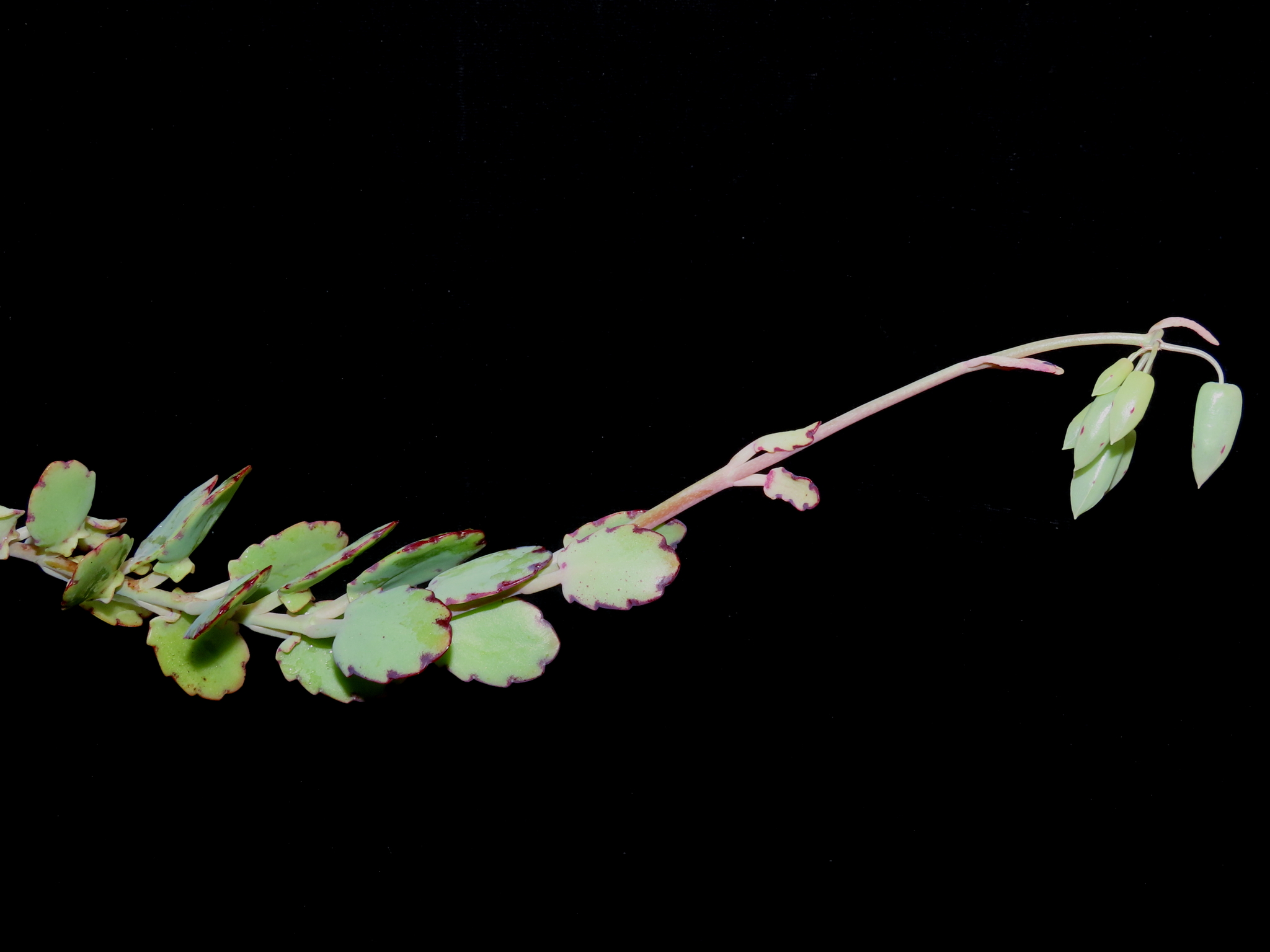
Kalanchoe laxiflora Baker
Cultivars of K. laxiflora
The named forms growers keep — each with its own page, each honest about how much we know.
No named cultivars catalogued under K. laxiflora yet. When growers document a stable, named form, it earns its own page here.
Guide
The species-level account. Cultivar pages build on this and say where they differ.
A Madagascan Succulent Shrub
Kalanchoe laxiflora is a succulent subshrub in the Crassulaceae family, also known under the older name Bryophyllum crenatum. It belongs to a genus whose members range from annuals to shrubs and trees, all sharing fleshy foliage and tubular, four-lobed flowers.
Source: RHS
Native to Madagascar
This plant's natural home is east-central Madagascar, where it grows in desert and dry shrubland settings. It was first described by Baker in 1887, and it has since spread beyond its native range, becoming established in places such as Réunion, Mauritius, Hawaii, Morocco, and parts of the Mediterranean.
Source: Kew
Succulent Subshrub Habit
As a succulent subshrub, Kalanchoe laxiflora carries the fleshy, water-storing character typical of its genus. Its wider family, Crassulaceae, is defined by this same succulence, paired here with the loosely arranged flower habit that gives the species its name, laxiflora.
Source: Kew
Care recipe
The species record — the baseline every cultivar inherits unless it says otherwise.
Care notes are early — not yet verified
- Light
- ai:claude-opus-4-8
- Water
- ai:claude-opus-4-8 (range 10-21d)
- Humidity
- ai:claude-opus-4-8
- Soil
- ai:claude-fable-5
- Care
- ai:claude-fable-5
Direct sun
≈ every 21 days
Low — average room
13–27 °C
Gritty, fast-draining cactus and succulent mix
Leaf-tip plantlets or stem cuttings root easily
Dilute succulent feed monthly in the growing season
Moderate
Coral bell-shaped blooms in late winter with bright light
Toxic to cats & dogs
Kalanchoe (Crassulaceae) contains bufadienolide cardiac glycosides. This is where toxicity lives: every cultivar of this species inherits it and none can override it.
Reference images
Every image credited. Licenses link to their deeds.
PrimarySources: ai:claude-opus-4-8 · ai:claude-opus-4-8 (range 10-21d) · ai:claude-fable-5 · ai:claude-opus-4-8 (family inference)
Kept true by its growers
Every fact here carries its source. Grow Milky Widow's Thrill yourself? What you’ve observed — how it drinks, how it holds its color, a name that’s off — and a clear photo of your plant are exactly what keep this page honest. Contributions are reviewed before anything changes.
Sign in to add what you know →