Species · genus Kalanchoe · Crassulaceae
Crenatodaigremontiana
Kalanchoe laetivirens Desc.
Also known as: Mother Of Thousands
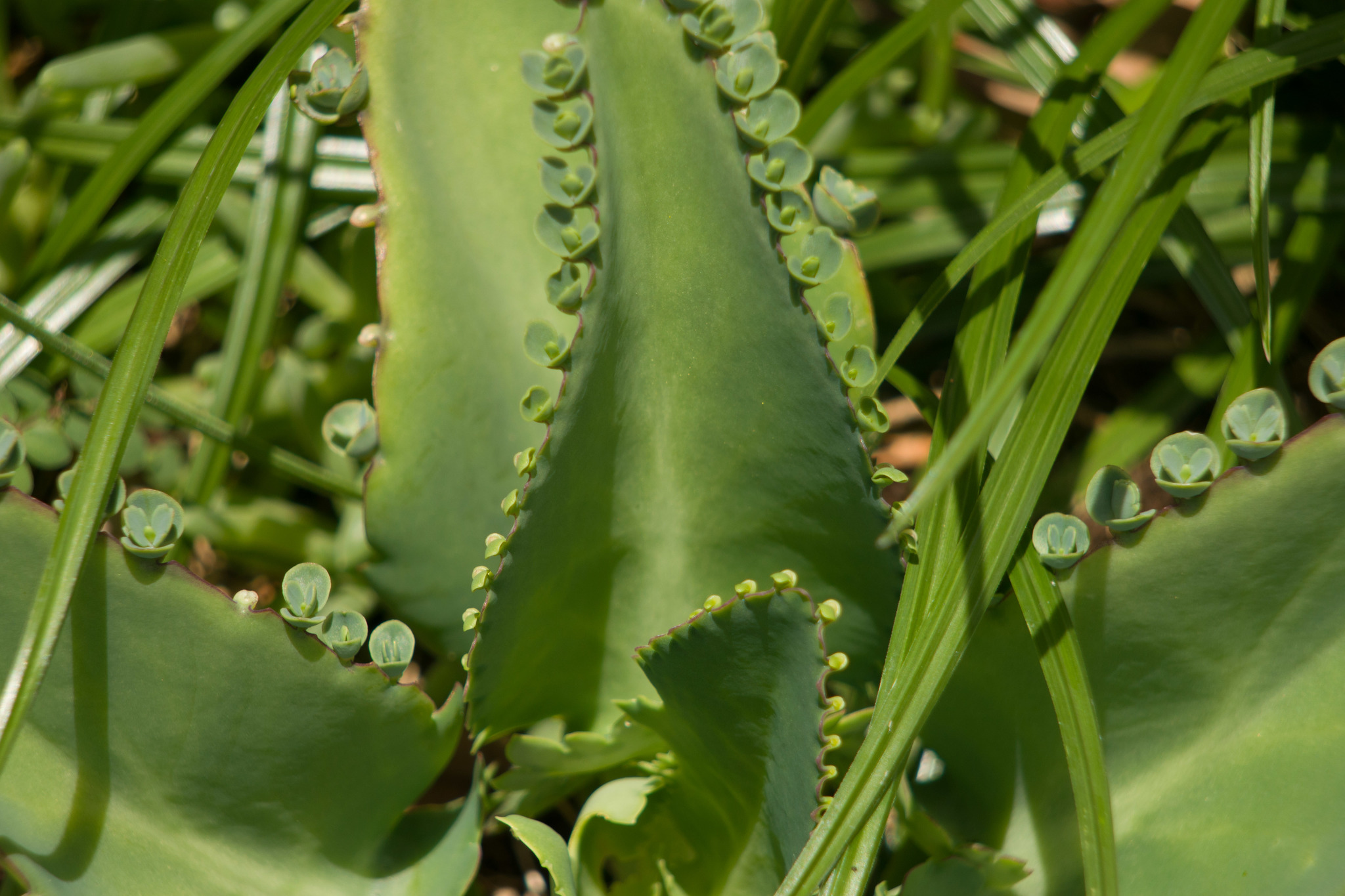
Cultivars of K. laetivirens
The named forms growers keep — each with its own page, each honest about how much we know.
No named cultivars catalogued under K. laetivirens yet. When growers document a stable, named form, it earns its own page here.
Guide
The species-level account. Cultivar pages build on this and say where they differ.
A Madagascan succulent
Kalanchoe laetivirens is a succulent biennial or subshrub, one of many species in the Crassulaceae family gathered under the Kalanchoe genus. It grows chiefly in seasonally dry tropical conditions, the kind of climate that shapes so many of this genus's thick, water-storing leaves.
Source: Kew
Native to the Isalo Massif
This plant's native range is Madagascar, specifically the Isalo Massif, and it has since been introduced to the Canary Islands, Cuba, and Senegal. It was first published under the name Kalanchoe laetivirens in 1997, though it is also known by the synonym Bryophyllum laetivirens.
Source: Kew
A genus of varied form
As a member of the Kalanchoe genus, this species belongs to a group that can take the form of annuals, biennials, perennials, shrubs, or even trees, all sharing succulent foliage that may be simple or pinnately lobed. Flowers across the genus tend toward a tubular or bell shape with four lobes.
Source: RHS
Scale and mealybugs
Kalanchoe as a genus tends to be hardy against pests and disease, with only two troublemakers appearing with any regularity: scale and mealybugs. Scale shows up as small brown or yellow insects clustered on tender growth, while mealybugs appear pale, fuzzy, and cottony, leaving behind a sticky honeydew that can invite mold. Both are usually brought in on new plants, so a quick inspection before bringing something home goes a long way.
Source: Epic Gardening
Little pruning required
Kalanchoe of this general type ask for very little upkeep beyond watering when the soil has dried out; pruning is not a regular necessity. Repotting only becomes worthwhile once a plant has outgrown its container. If a plant stretches and grows leggy from insufficient light, trimming the top just above a large leaf and moving it somewhere brighter will encourage a bushier, more branching habit.
Source: Epic Gardening
Care recipe
The species record — the baseline every cultivar inherits unless it says otherwise.
Care notes are early — not yet verified
- Light
- ai:claude-opus-4-8
- Water
- ai:claude-opus-4-8 (range 10-21d)
- Humidity
- ai:claude-opus-4-8
- Soil
- ai:claude-fable-5
- Care
- ai:claude-fable-5
Bright, indirect
≈ every 21 days
Low — average room
13–27 °C
Gritty, fast-draining cactus and succulent mix
Abundant leaf-edge plantlets, potted up once rooted
Dilute succulent feed monthly in spring and summer
Fast
Rarely flowers indoors; prized for its foliage
Toxic to cats & dogs & humans
Kalanchoe (Crassulaceae) contain bufadienolide cardiac glycosides This is where toxicity lives: every cultivar of this species inherits it and none can override it.
Reference images
Every image credited. Licenses link to their deeds.
Sources: ai:claude-opus-4-8 · ai:claude-opus-4-8 (range 10-21d) · ai:claude-fable-5 · ai:claude-opus-4-8 (family inference)
Kept true by its growers
Every fact here carries its source. Grow Crenatodaigremontiana yourself? What you’ve observed — how it drinks, how it holds its color, a name that’s off — and a clear photo of your plant are exactly what keep this page honest. Contributions are reviewed before anything changes.
Sign in to add what you know →