Species · genus Kalanchoe · Crassulaceae
Lavender Scallops
Kalanchoe fedtschenkoi Raym.-Hamet & H.Perrier
Cultivars of K. fedtschenkoi
The named forms growers keep — each with its own page, each honest about how much we know.
No named cultivars catalogued under K. fedtschenkoi yet. When growers document a stable, named form, it earns its own page here.
Guide
The species-level account. Cultivar pages build on this and say where they differ.
Lavender Scallops, Introduced
Kalanchoe fedtschenkoi, commonly called Lavender Scallops, is a perennial succulent in the Crassulaceae family. It is grown chiefly for its scalloped, colorful foliage rather than its flowers, and it is considered a low-maintenance choice suited to beginners and experienced growers alike.
Source: Epic Gardening
Out of Madagascar
This kalanchoe is native to the island of Madagascar, and like many of its relatives it has since spread into gardens and homes well beyond that range. The species name honors Boris Fedtschenko, a Russian botanist and plant pathologist, though he has no direct connection to the plant beyond its naming. It was formerly classified as Bryophyllum fedtschenkoi before being placed in the Kalanchoe genus, which itself holds more than 250 species.
Source: Epic Gardening
Sun, Water, Feed
Give Lavender Scallops bright, indirect light for most of the day, with variegated forms wanting a bit more sun to compensate for their reduced chlorophyll. Water only once the soil has dried out completely, roughly every one to two weeks indoors during the growing season and less often in cooler months, since kalanchoe roots resent staying wet. It prefers a dry climate and an ideal temperature range of about 64-68°F, and it does not need much feeding at all, taking at most a half-strength balanced fertilizer two to three times a year during the growing season only.
Source: Epic Gardening
Cuttings, Seed, Plantlets
Lavender Scallops propagates readily by leaf or stem cuttings: cut with a clean, diagonal blade, let the wound dry before potting into a sandy cactus mix, and roots should form within a couple of weeks. It can also be grown from seed collected after the rare flowering event, sown on top of moist mix in summer without covering. Most easily of all, the leaves drop tiny plantlets along their scalloped edges that root wherever they land, which is why the plant can turn invasive if planted directly in the ground.
Source: Epic Gardening
Scalloped, Color-Shifting Leaves
The plant's fleshy leaves are narrow at the base and flare outward, edged in a distinctive scalloped pattern that gives the plant its common name. Standard leaves are blue-green with purple margins, while the variegated form adds white splotches to that same blue-green base. Both forms blush more pink-purple the more sunlight they receive, since that coloring is the plant's response to light stress. It is monocarpic, meaning it flowers only once, after several years, before the parent plant dies back and leaves offsets in its place.
Source: Epic Gardening
Scale and Mealybugs
Lavender Scallops is fairly resistant to pests overall, but scale and mealybugs occasionally turn up, usually arriving on new plants brought into the home. Scale appears as small brown or yellow insects clustered on leaves and can be treated with neem oil sprayed directly on them, sometimes needing repeat treatments. Mealybugs look pale, fuzzy, and cottony, feeding on sap and leaving behind a sticky honeydew that invites mold; light infestations can be washed off, while heavier ones respond to wiping with an alcohol-soaked cotton swab.
Source: Epic Gardening
Legginess and Overwatering
The main growth problem to watch for is legginess, which happens when the plant is kept in low light and stretches toward whatever light it can find. This can be corrected by trimming the top just above a large leaf and moving the plant somewhere brighter, which encourages new, more branching growth. Overwatering, or prolonged high humidity, is the other main risk, since it can lead to root rot in this dry-climate succulent.
Source: Epic Gardening
Very Little Upkeep
This plant asks for almost no regular maintenance beyond watering when the soil is dry. Pruning and deadheading are unnecessary, since the plant drops its own spent flowers and dies back naturally after its one bloom. Repotting is only needed if the plant has outgrown its container and you want to let it keep spreading, and any damaged or dead leaves can simply be pinched off to keep things tidy.
Source: Epic Gardening
Care recipe
The species record — the baseline every cultivar inherits unless it says otherwise.
Care notes are early — not yet verified
- Light
- ai:claude-opus-4-8
- Water
- ai:claude-opus-4-8 (range 14-28d)
- Humidity
- ai:claude-opus-4-8
- Soil
- ai:claude-fable-5
- Care
- ai:claude-fable-5
Direct sun
≈ every 28 days
Low — average room
10–32 °C
Well-draining cactus and succulent mix
Leaf or stem cuttings callused then rooted
Dilute succulent feed once or twice in summer
Moderate
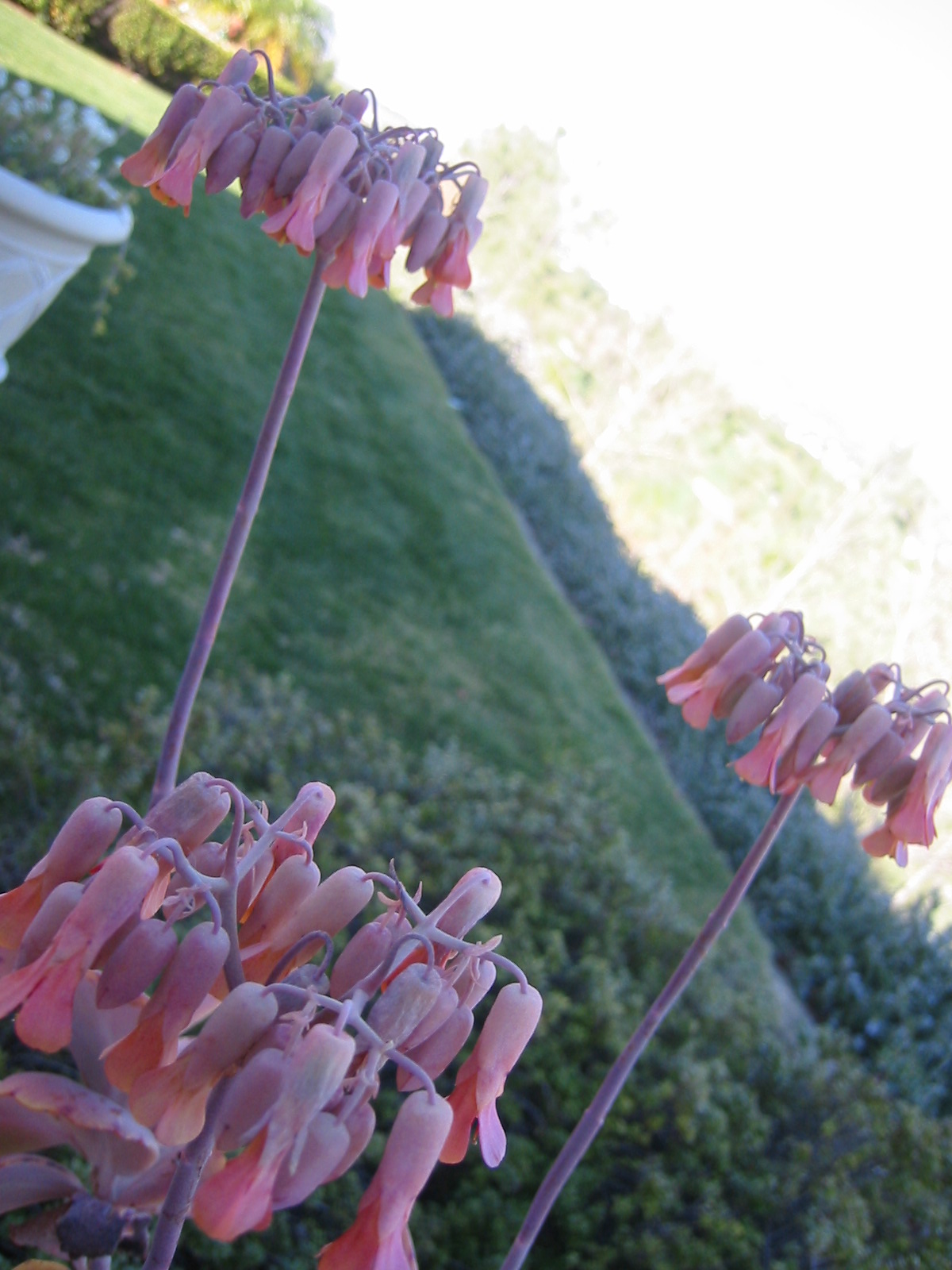
Small orange bells in late winter; grown for blue-grey leaves
Toxic to cats & dogs
Kalanchoe (Crassulaceae) contains bufadienolide cardiac glycosides toxic to cats and dogs. This is where toxicity lives: every cultivar of this species inherits it and none can override it.
Reference images
Every image credited. Licenses link to their deeds.
PrimarySources: ai:claude-opus-4-8 · ai:claude-opus-4-8 (range 14-28d) · ai:claude-fable-5 · ai:claude-opus-4-8 (family inference)
Kept true by its growers
Every fact here carries its source. Grow Lavender Scallops yourself? What you’ve observed — how it drinks, how it holds its color, a name that’s off — and a clear photo of your plant are exactly what keep this page honest. Contributions are reviewed before anything changes.
Sign in to add what you know →