Species · genus Kalanchoe · Crassulaceae
Devil's Backbone
Kalanchoe daigremontiana Raym.-Hamet & H.Perrier
Also known as: Mother-of-Millions · Alligator Plant · Mother Of Thousands
Cultivars of K. daigremontiana
The named forms growers keep — each with its own page, each honest about how much we know.
No named cultivars catalogued under K. daigremontiana yet. When growers document a stable, named form, it earns its own page here.
Guide
The species-level account. Cultivar pages build on this and say where they differ.
A Prolific Succulent
Mother of thousands, botanically Kalanchoe daigremontiana, is a succulent grown both as a houseplant and in xeriscape beds. Its common name comes from the countless tiny plantlets that line its leaf edges, each one capable of becoming a new plant. The broad, fleshy leaves are the main draw here, not the flowers.
Source: Epic Gardening
A Madagascar Native
This plant hails from Madagascar, and its naming has shifted over time between Bryophyllum daigremontianum and its current accepted name, Kalanchoe daigremontiana. Both names still circulate, which can cause some confusion among growers. It belongs to the Crassulaceae family, related to jade and other familiar succulents.
Source: Epic Gardening
Sun, Sparse Water, Sandy Soil
Give this plant full sun to bright indirect light, since its leaves can scorch under intense direct exposure, and keep it in well-drained sandy or loam-based soil with added grit or sand. Water moderately through the growing season and cut back further in winter, letting the soil dry out several inches down between waterings. Feed with a diluted liquid fertilizer a couple of times during active growth, and skip fertilizing altogether once the plant slows for the cooler months.
Source: Epic Gardening
Plantlets Do the Work
The easiest way to propagate mother of thousands is simply to use the plantlets it sheds along its leaf edges, since seed isn't practical for this species. As the plant slows toward winter it naturally drops offsets, or a gentle touch will free any that are ready. Lay these on moistened potting mix, keep it lightly damp, and they will root themselves without further help.
Source: Epic Gardening
Leaves That Make Babies
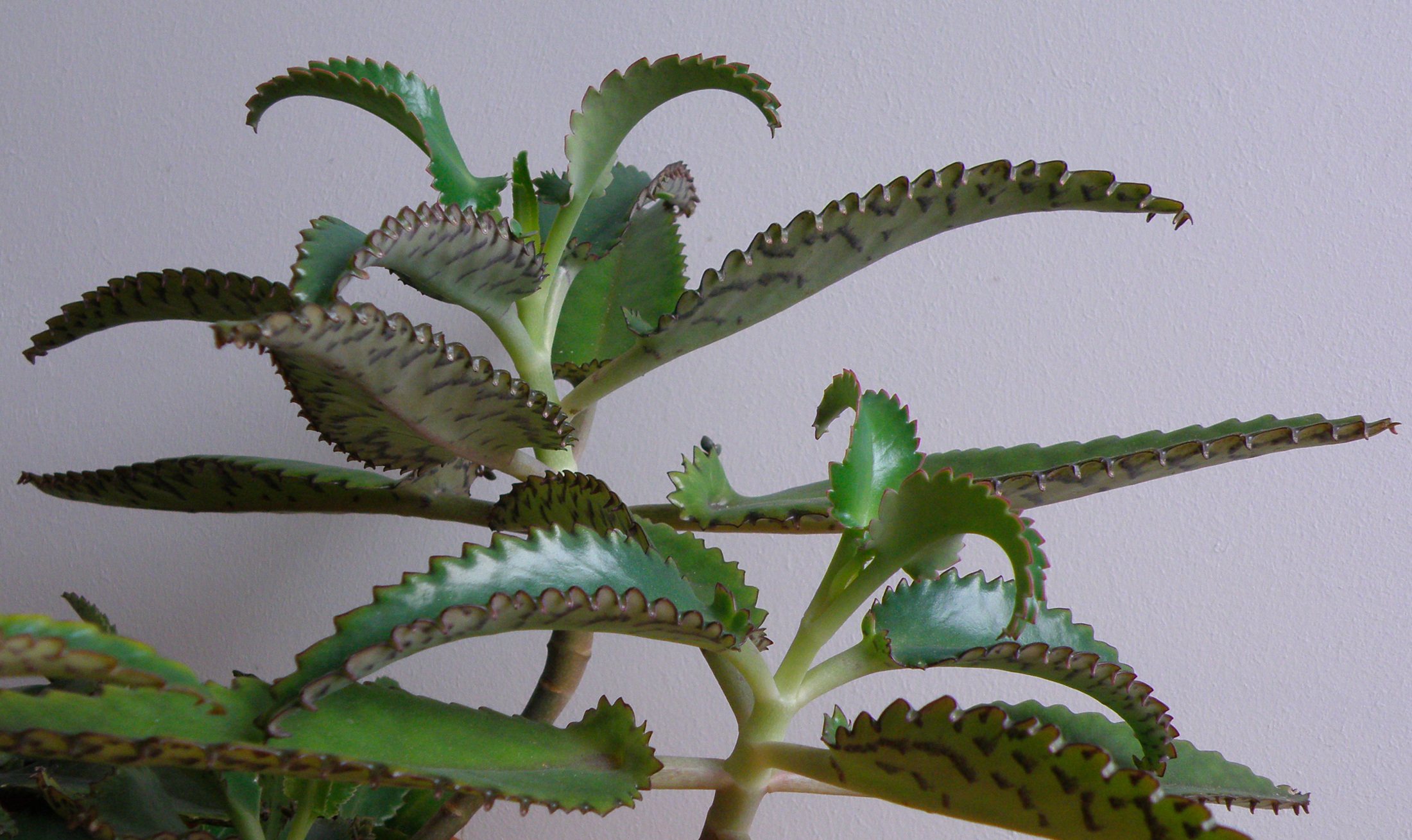
The plant grows upright with grey-green, triangular to lance-shaped leaves, often marked with brown spotting, arranged in staggered pairs so each new leaf catches good light. A row of plantlets forms along every leaf edge, tiny clones ready to drop and root on their own. In winter it may produce pendent, tubular greyish-pink flowers around two centimeters long, though the foliage remains the star of the show rather than the blooms.
Source: RHS
Sap-Suckers to Watch
Mealybugs and aphids are the pests most likely to trouble this plant, drawn in as opportunistic sap-suckers to its thick, juicy leaves. Regular neem oil applications help keep them in check, and stubborn scale can be dabbed away with rubbing alcohol on a cotton swab.
Source: Epic Gardening
Watch the Watering
This succulent is drought-tolerant and reacts poorly to excess moisture, going limp when overwatered, so let the soil dry well below the surface before watering again. The more common headache, though, is simply too many babies: fallen plantlets root wherever they land, and outdoors this self-sowing can turn invasive if left unchecked.
Source: Epic Gardening
Little Upkeep Needed
Mother of thousands asks for very little maintenance and generally needs no pruning at all. Repotting is rarely necessary, only becoming worthwhile once dropped plantlets start to crowd the container, at which point they can be lifted into their own pots with good drainage.
Source: Epic Gardening
Care recipe
The species record — the baseline every cultivar inherits unless it says otherwise.
Care notes are early — not yet verified
- Light
- ai:claude-opus-4-8
- Water
- ai:claude-opus-4-8 (range 14-28d)
- Humidity
- ai:claude-opus-4-8
- Soil
- ai:claude-fable-5
- Care
- ai:claude-fable-5
Direct sun
≈ every 28 days
Low — average room
10–32 °C
Gritty, fast-draining succulent mix
Plantlets form along leaf margins and root on contact
Dilute succulent feed sparingly in the growing season
Fast
Greyish-pink bells atop tall stalks in winter
Toxic to cats & dogs & humans
Crassulaceae such as Kalanchoe contain bufadienolide cardiac glycosides This is where toxicity lives: every cultivar of this species inherits it and none can override it.
Reference images
Every image credited. Licenses link to their deeds.
Sources: ai:claude-opus-4-8 · ai:claude-opus-4-8 (range 14-28d) · ai:claude-fable-5 · ai:claude-opus-4-8 (family inference)
Kept true by its growers
Every fact here carries its source. Grow Devil's Backbone yourself? What you’ve observed — how it drinks, how it holds its color, a name that’s off — and a clear photo of your plant are exactly what keep this page honest. Contributions are reviewed before anything changes.
Sign in to add what you know →