Species · genus Kalanchoe · Crassulaceae
Madagascar Widow's Thrill
Kalanchoe blossfeldiana Poelln.
Also known as: Flaming Katy · Christmas Kalanchoe · Florist Kalanchoe
Cultivars of K. blossfeldiana
The named forms growers keep — each with its own page, each honest about how much we know.
No named cultivars catalogued under K. blossfeldiana yet. When growers document a stable, named form, it earns its own page here.
Guide
The species-level account. Cultivar pages build on this and say where they differ.
A Winter-Blooming Succulent
Kalanchoe blossfeldiana is a compact, evergreen succulent grown for its long-lasting, colorful flower clusters. It goes by several names, including Christmas Kalanchoe, Widow's Thrill, and Florist Kalanchoe, the last a nod to how heavily it blooms.
Source: Epic Gardening
From Madagascar to Nurseries
This species comes originally from Madagascar, part of a genus of roughly 250 plants. It carries the name of German botanist and hybridizer Robert Blossfeld, who brought it into cultivation in 1932.
Source: Epic Gardening
Light, Water, and Rest
Give this plant bright but indirect light for much of the day, since strong direct sun can bleach and dehydrate the foliage. Water an indoor plant roughly every two to three weeks in active growth and less often once flowering ends and it slips into dormancy, always favoring well-drained, sandy soil in a pot with good drainage. Feed sparingly, if at all, with a diluted balanced fertilizer just a few times during the growing season, since this succulent draws what it needs from its soil efficiently.
Source: Epic Gardening
Cuttings, Offsets, or Seed
Stem cuttings are the most reliable route: a diagonal cut is left to callus over before being set stem-down in barely damp cactus mix, with roots typically forming in two to three weeks. This plant also throws off plentiful offsets that can simply be potted up once removed from the parent. Growing from seed works too but is the slowest path, needing warmth, long daylight hours, and a bit of patience under a humid cover until seedlings appear.
Source: Epic Gardening
Scalloped Leaves, Rose-like Blooms
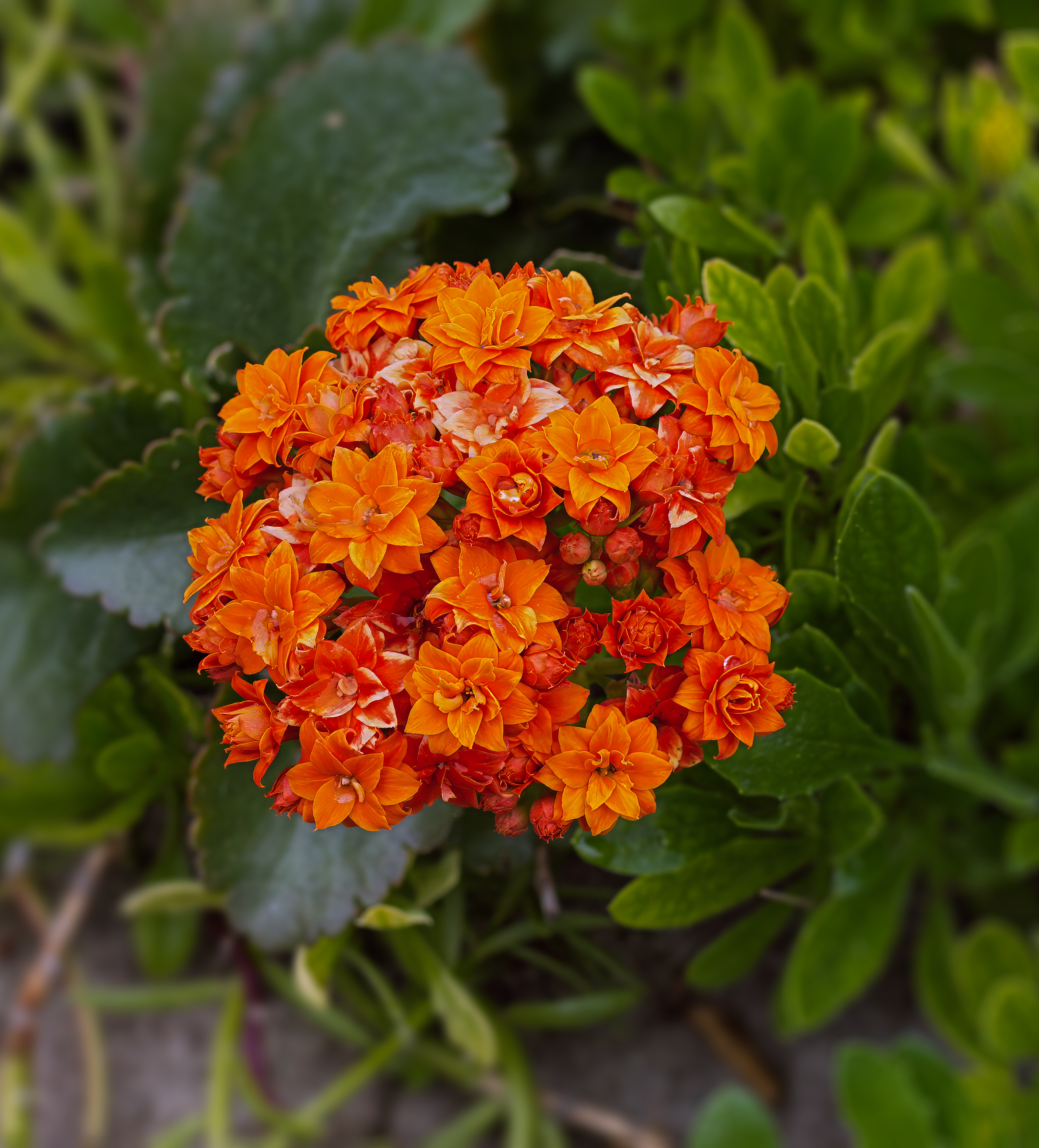
The leaves are bright green, ovate, and fleshy with gently scalloped edges, and tend to blush red under strong light. Flowers arrive in clusters atop the stems and come in three forms: simple star-shaped singles, doubles with extra inner petals, and full rose-form blooms that mimic a miniature open rose.
Source: Epic Gardening
Watch for Sap Feeders
Scale, mealybugs, and aphids are the pests most likely to turn up, generally feeding on tender new growth and leaving behind a sticky honeydew residue. Small infestations can often be washed off with a stream of water or wiped away with an alcohol-dipped cotton swab, while persistent cases call for an insecticidal oil like neem.
Source: Epic Gardening
Rot, Scald, and Mildew
Overwatering or prolonged high humidity is the usual root of fungal rot in this plant, whether it shows up in the roots, leaves, or crown, and the fix is a drier spot plus fresh soil and pruning of affected tissue. Too much direct sun can scald the leaves, softening them and opening the door to further fungal trouble, while honeydew left by sap-feeding pests can develop into powdery mildew that needs to be wiped away by hand.
Source: Epic Gardening
Deadhead and Renew
This plant needs little routine upkeep beyond pinching or snipping off spent blooms to encourage fresh flower clusters, and removing any dead or ailing leaves along the way. Left in low light for too long it tends to stretch and grow leggy, in which case cutting the main stem back above its larger leaves and moving it into brighter light will spur bushier new growth.
Source: Epic Gardening
Care recipe
The species record — the baseline every cultivar inherits unless it says otherwise.
Care notes are early — not yet verified
- Light
- ai:claude-opus-4-8
- Water
- ai:claude-opus-4-8 (range 10-18d)
- Humidity
- ai:claude-opus-4-8
- Soil
- ai:claude-fable-5
- Care
- ai:claude-fable-5
Bright, indirect
≈ every 18 days
Low — average room
10–29 °C
Well-draining cactus and succulent mix
Stem or leaf cuttings callused then rooted
Dilute balanced feed monthly in spring and summer
Moderate
Long-lasting clustered blooms with short-day cool triggering
Toxic to cats & dogs
Crassulaceae in the genus Kalanchoe contain cardiac glycosides (bufadienolides) This is where toxicity lives: every cultivar of this species inherits it and none can override it.
Reference images
Every image credited. Licenses link to their deeds.
PrimarySources: ai:claude-opus-4-8 · ai:claude-opus-4-8 (range 10-18d) · ai:claude-fable-5 · ai:claude-opus-4-8 (family inference)
Kept true by its growers
Every fact here carries its source. Grow Madagascar Widow's Thrill yourself? What you’ve observed — how it drinks, how it holds its color, a name that’s off — and a clear photo of your plant are exactly what keep this page honest. Contributions are reviewed before anything changes.
Sign in to add what you know →