Species · genus Justicia · Acanthaceae
Warer Willow
Justicia gendarussa Burm.fil.
Also known as: Daun Rusa · Gandarusa · White Justicia · Willow-leaved Justicia
Cultivars of J. gendarussa
The named forms growers keep — each with its own page, each honest about how much we know.
No named cultivars catalogued under J. gendarussa yet. When growers document a stable, named form, it earns its own page here.
Guide
The species-level account. Cultivar pages build on this and say where they differ.
A Shrub of Tropical Asia
Justicia gendarussa is a subshrub or shrub in the Acanthaceae family, native to tropical Asia. It grows primarily within the seasonally dry tropical biome, and belongs to a genus of evergreen perennials and shrubs known for tubular, two-lipped flowers with conspicuous bracts.
Source: Kew
Cultivated Across Asia
This species is widespread through India and Southeast Asia, where it is usually found under cultivation and has naturalised in many places. Within its range it has long been grown as a hedge plant, sometimes lingering on in abandoned gardens and fields at low elevations of roughly 20 to 200 metres.
Source: Kew
Purple Stems, Two-Lipped Blooms
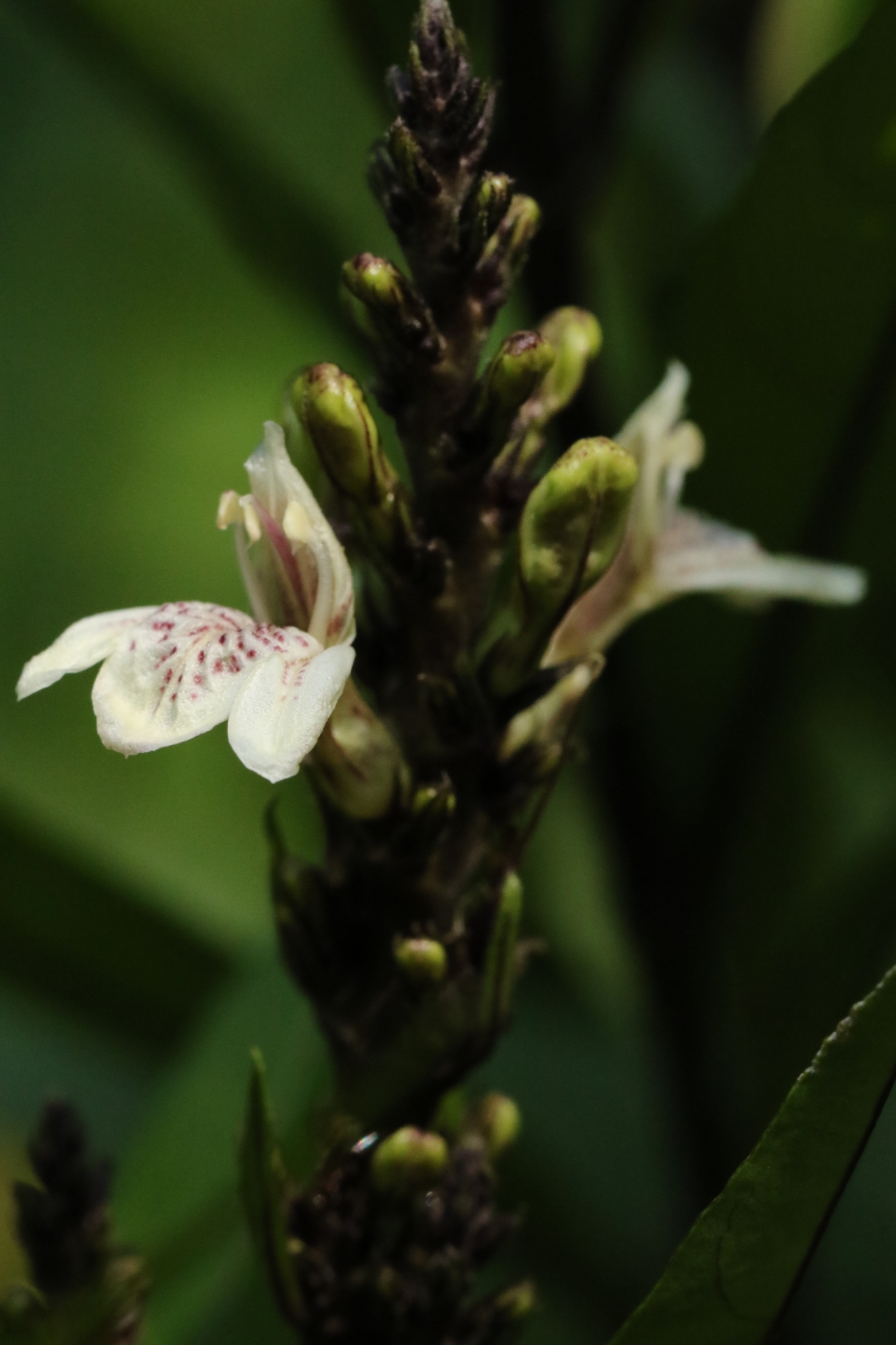
This is a shrubby herb or shrub reaching up to about 1.5 metres, occasionally to 3 metres, with young branches that are purple and largely hairless. Its leaves are narrowly ovate to elliptic, glabrous, and taper at the base without running down the stem. Flowers appear in small clustered cymes forming racemes up to 12 centimetres long, with a corolla in shades of white to purple, marked darker on the deeply three-lobed lower lip. The fruit is a small capsule whose placentae spring elastically away from the outer wall as it matures.
Source: Kew
Care recipe
The species record — the baseline every cultivar inherits unless it says otherwise.
Care notes are early — not yet verified
- Light
- ai:claude-opus-4-8
- Water
- ai:claude-opus-4-8 (range 5-10d)
- Humidity
- ai:claude-opus-4-8
- Soil
- ai:claude-fable-5
- Care
- ai:claude-fable-5
Bright, indirect
≈ every 10 days
Medium
16–32 °C
Fertile, well-draining loamy mix
Stem cuttings root very readily
Balanced liquid feed monthly in the growing season
Fast
Small white-to-pink flowers; grown mainly for foliage
Not yet documented
This is where toxicity lives — every cultivar of this species inherits it and none can override it.
Reference images
Every image credited. Licenses link to their deeds.
PrimarySources: ai:claude-opus-4-8 · ai:claude-opus-4-8 (range 5-10d) · ai:claude-fable-5
Kept true by its growers
Every fact here carries its source. Grow Warer Willow yourself? What you’ve observed — how it drinks, how it holds its color, a name that’s off — and a clear photo of your plant are exactly what keep this page honest. Contributions are reviewed before anything changes.
Sign in to add what you know →