Species · genus Justicia · Acanthaceae
Beloperone
Justicia californica (Benth.) D.N.Gibson
Also known as: Chuparosa-honeysuckle
Cultivars of J. californica
The named forms growers keep — each with its own page, each honest about how much we know.
No named cultivars catalogued under J. californica yet. When growers document a stable, named form, it earns its own page here.
Guide
The species-level account. Cultivar pages build on this and say where they differ.
A Desert Honeysuckle Shrub
Justicia californica, also called chuparosa honeysuckle, is a shrub in the Acanthaceae family, closely related to the many tubular-flowered Justicia species grown as ornamentals. It carries the older synonym Beloperone californica, a name still occasionally seen on labels.
Source: RHS
Native to the Desert Southwest
This species comes from California through to northwest Mexico, including Arizona, where it grows as a subshrub or shrub in desert and dry shrubland habitat. It is a plant shaped by arid, sun-baked ground rather than the shaded understories many houseplants hail from.
Source: Kew
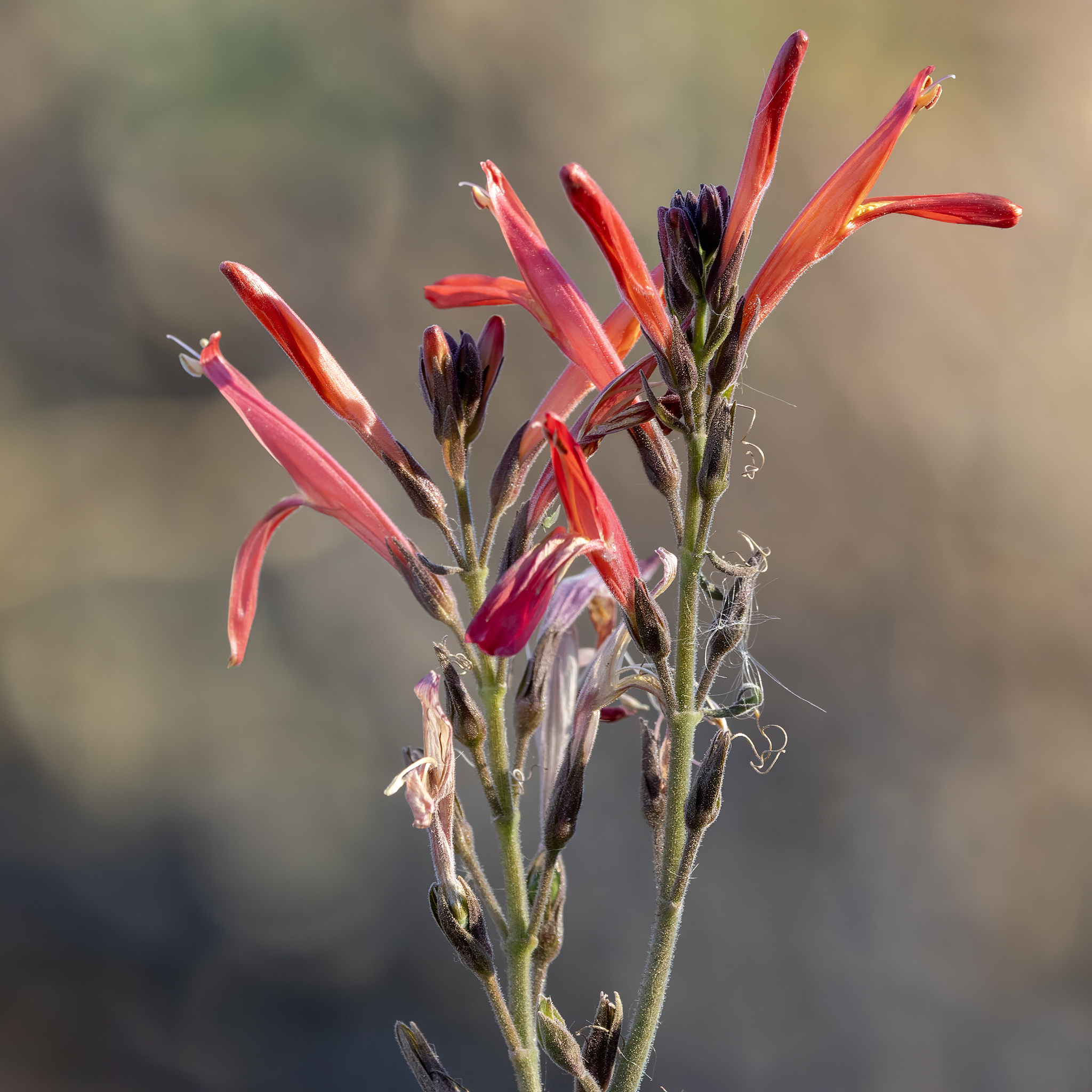
Tubular Flowers, Bracted Spikes
As a member of the genus Justicia, it shares the family trait of two-lipped, tubular flowers held in spikes or clusters, often set off by conspicuous bracts. The genus as a whole is known for this kind of showy, bract-framed bloom on evergreen perennials or shrubs with simple leaves.
Source: RHS
Care recipe
The species record — the baseline every cultivar inherits unless it says otherwise.
Care notes are early — not yet verified
- Light
- ai:claude-opus-4-8
- Water
- ai:claude-opus-4-8 (range 10-21d)
- Humidity
- ai:claude-opus-4-8
- Soil
- ai:claude-fable-5
- Care
- ai:claude-fable-5
Direct sun
≈ every 21 days
Low — average room
10–32 °C
Gritty, sharply draining sandy mix
Seed or semi-hardwood cuttings
Light feed once or twice in the growing season
Slow
Red tubular blooms in bright, dry warmth
Not yet documented
This is where toxicity lives — every cultivar of this species inherits it and none can override it.
Reference images
Every image credited. Licenses link to their deeds.
Sources: ai:claude-opus-4-8 · ai:claude-opus-4-8 (range 10-21d) · ai:claude-fable-5
Kept true by its growers
Every fact here carries its source. Grow Beloperone yourself? What you’ve observed — how it drinks, how it holds its color, a name that’s off — and a clear photo of your plant are exactly what keep this page honest. Contributions are reviewed before anything changes.
Sign in to add what you know →