Species · genus Justicia · Acanthaceae
Shrimp Plant
Justicia brandegeeana Wassh. & L.B.Sm.
Also known as: Shrimpplant · False Hop · Honolulu-salvia · Mexican Shrimp-plant · Shrimpbush
Cultivars of J. brandegeeana
The named forms growers keep — each with its own page, each honest about how much we know.
No named cultivars catalogued under J. brandegeeana yet. When growers document a stable, named form, it earns its own page here.
Guide
The species-level account. Cultivar pages build on this and say where they differ.
The shrimp plant
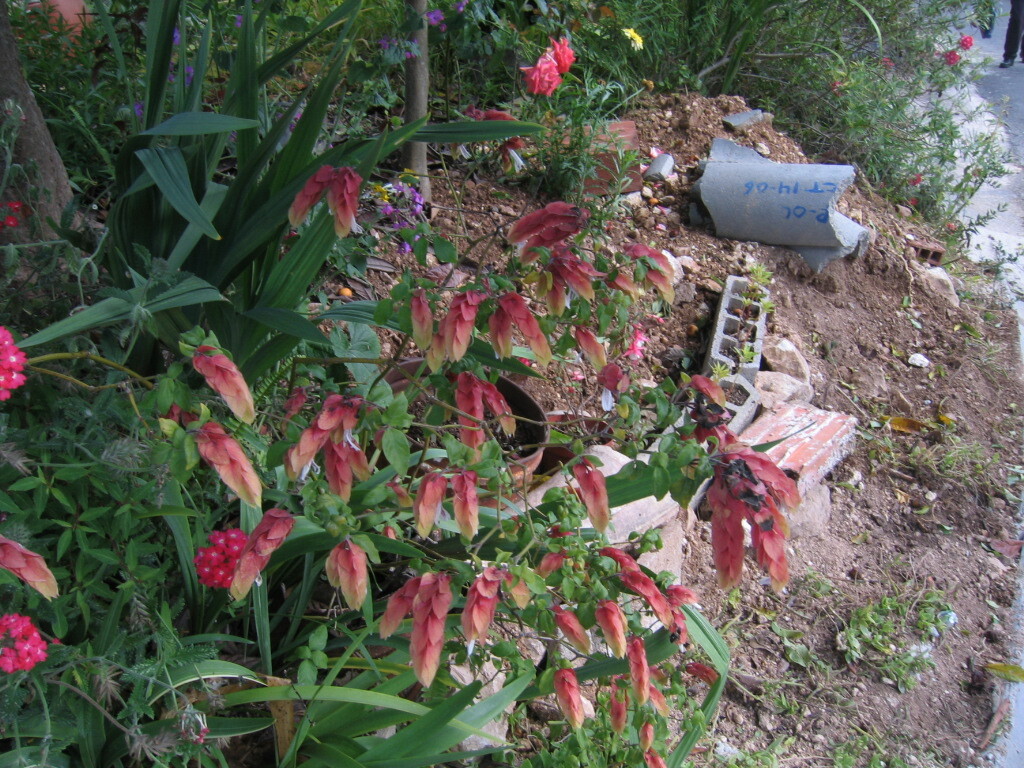
Justicia brandegeeana is a lax, evergreen shrub grown for its arching spikes of overlapping pink to red bracts, which shelter small tubular white flowers over a long season. It belongs to the Acanthaceae family and carries the common names shrimp plant or shrimp bush for the way those bract spikes curl and taper like a shrimp's body.
Source: RHS
A Mexican native
This plant is native to Mexico, where in its natural habitat it can sprawl and sucker into a shrub reaching some five feet tall. The genus name honours James Justice, an eighteenth-century Scottish horticulturist, while the species name commemorates Townsend Stith Brandegee, an American engineer who studied the flora of California and Mexico.
Source: Missouri Botanical Garden
Light, soil, and water
Give it partial shade, or full sun to part shade with some shelter from hot afternoon sun, since strong sun tends to bleach out the colour of those flower bracts. It tolerates chalk, clay, loam, or sand as long as the soil is moist but well-drained, and it takes acid, neutral, or alkaline conditions alike. Water at a medium, steady rhythm, and treat it as a sheltered, frost-free plant, whether that means a container on a patio in summer or a spot under glass.
Source: RHS
Cuttings or seed
Shrimp plant is propagated by seed, or by taking softwood or semi-hardwood cuttings.
Source: RHS
Shrimp-shaped bract spikes
The plant carries drooping, arching terminal spikes of white flowers wrapped in overlapping red to pink-bronze bracts, each spike some three to six inches long and faintly resembling a shrimp. It blooms in summer and holds its evergreen leaves through the year, keeping a bushy, sprawling habit.
Source: Missouri Botanical Garden
Whitefly and spider mite
Watch for glasshouse red spider mite and glasshouse whitefly, especially on plants kept indoors or under glass.
Source: RHS
Leaf drop and leaf spot
Leaves tend to drop when the soil swings too wet or too dry, so a steady watering hand matters more than any single fixed schedule. The plant is also susceptible to leaf spot, and indoor specimens should be checked regularly for whitefly and spider mite.
Source: Missouri Botanical Garden
Pinching and replacing
Pinch out the growing tips to keep the plant compact, and prune stems back to shape and encourage bushiness; this falls under pruning group nine. Shrimp plants tend to become leggy with age, and the RHS suggests it is often best simply to replace them once they reach that stage, while containers can also be overwintered as houseplants or pushed into dormancy with much-reduced watering in a cool, dark, dry spot.
Source: RHS
Care recipe
The species record — the baseline every cultivar inherits unless it says otherwise.
Care notes are early — not yet verified
- Light
- ai:claude-opus-4-8
- Water
- ai:claude-opus-4-8 (range 5-10d)
- Humidity
- ai:claude-opus-4-8
- Soil
- ai:claude-fable-5
- Care
- ai:claude-fable-5
Bright, indirect
≈ every 10 days
Medium
16–27 °C
Loose, well-draining peat-based potting mix
Softwood stem cuttings root readily in water or mix
Balanced liquid feed every 2-4 weeks while growing
Fast
Shrimp-like bracts nearly year-round in good light
Not yet documented
This is where toxicity lives — every cultivar of this species inherits it and none can override it.
Reference images
Every image credited. Licenses link to their deeds.
Sources: ai:claude-opus-4-8 · ai:claude-opus-4-8 (range 5-10d) · ai:claude-fable-5
Kept true by its growers
Every fact here carries its source. Grow Shrimp Plant yourself? What you’ve observed — how it drinks, how it holds its color, a name that’s off — and a clear photo of your plant are exactly what keep this page honest. Contributions are reviewed before anything changes.
Sign in to add what you know →