Species · genus Justicia · Acanthaceae
Malabar Nut
Justicia adhatoda L.
Also known as: Malabar Nut Tree · Pavettia
Cultivars of J. adhatoda
The named forms growers keep — each with its own page, each honest about how much we know.
No named cultivars catalogued under J. adhatoda yet. When growers document a stable, named form, it earns its own page here.
Guide
The species-level account. Cultivar pages build on this and say where they differ.
Malabar Nut, Named
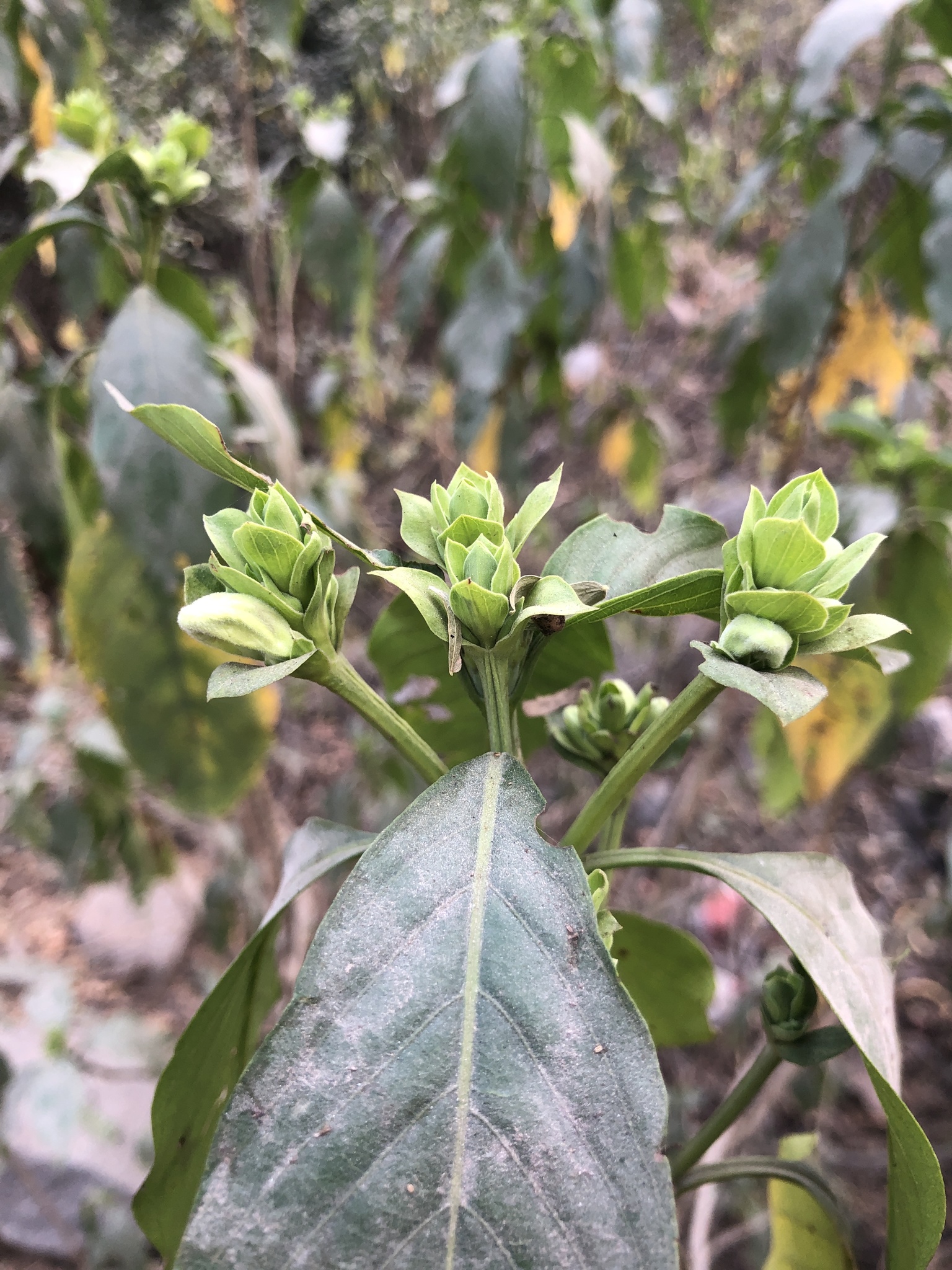
Justicia adhatoda, also called adhatoda or malabar nut, is a shrub in the Acanthaceae family. It carries the older synonym Adhatoda vasica in some references, a name still seen on older labels and in the literature.
Source: RHS
A Native of Dry Tropics
This shrub or small tree is native across a broad stretch from Afghanistan through the Indian subcontinent and Himalaya to Indo-China, including Pakistan, Nepal, India, Bangladesh, Myanmar, Laos and Vietnam. It grows primarily in the seasonally dry tropical biome, the kind of climate with a marked wet and dry season. Beyond its native range it has been introduced and now grows in places such as Algeria, Ethiopia, Madagascar, Cuba and Jamaica.
Source: Kew
Shrub or Small Tree
Justicia adhatoda takes the form of a shrub or tree rather than a compact houseplant habit. As a member of the genus Justicia, it belongs to a group generally recognised for simple leaves and spikes or clusters of tubular, two-lipped flowers, often set off by conspicuous bracts.
Source: RHS
Care recipe
The species record — the baseline every cultivar inherits unless it says otherwise.
Care notes are early — not yet verified
- Light
- ai:claude-opus-4-8
- Water
- ai:claude-opus-4-8 (range 7-12d)
- Humidity
- ai:claude-opus-4-8
- Soil
- ai:claude-fable-5
- Care
- ai:claude-fable-5
Bright, indirect
≈ every 12 days
Medium
13–30 °C
Well-draining loamy mix with organic matter
Semi-ripe stem cuttings rooted in warm mix
Balanced feed monthly during active growth
Moderate
White flowers with purple veining in dense spikes
Not yet documented
This is where toxicity lives — every cultivar of this species inherits it and none can override it.
Reference images
Every image credited. Licenses link to their deeds.
PrimarySources: ai:claude-opus-4-8 · ai:claude-opus-4-8 (range 7-12d) · ai:claude-fable-5
Kept true by its growers
Every fact here carries its source. Grow Malabar Nut yourself? What you’ve observed — how it drinks, how it holds its color, a name that’s off — and a clear photo of your plant are exactly what keep this page honest. Contributions are reviewed before anything changes.
Sign in to add what you know →