Species · genus Jasminum · Oleaceae
Pink Jasmine
Jasminum polyanthum Franch.
Also known as: Jasmine
Cultivars of J. polyanthum
The named forms growers keep — each with its own page, each honest about how much we know.
No named cultivars catalogued under J. polyanthum yet. When growers document a stable, named form, it earns its own page here.
Guide
The species-level account. Cultivar pages build on this and say where they differ.
A Fragrant Climbing Genus
Jasmine, genus Jasminum, gathers together a range of woody climbers and shrubs grown for their often richly scented flowers. Some are hardy garden plants, others are tender and better suited to a warm room or conservatory. Jasminum polyanthum, the many-flowered jasmine covered here, is one of the tender kinds, prized indoors for its abundant white, sweetly perfumed blooms.
Source: RHS
Out of Southwest China
Jasminum polyanthum comes originally from southwest China, in the Oleaceae family alongside the wider jasmine clan. It is a vigorous evergreen twining climber, capable of reaching four to eight metres given the room, though far more modest when kept in a pot indoors. In cooler climates it is grown chiefly under glass or as a houseplant, since it will not tolerate frost.
Source: RHS
Light, Warmth, Moisture
Give this jasmine full sun to partial shade with plenty of bright, indirect light, ideally six to eight hours a day, and keep it away from direct sun and cold draughts alike. It favours warmth, doing best in daytime temperatures in the eighties Fahrenheit and nights in the seventies, which suits most centrally heated homes reasonably well. Check the top two inches of soil and water at the base when it has dried, and support humidity around fifty percent with misting or a nearby humidifier, since this is by origin an understorey plant of warm, humid regions. Feed with a diluted liquid fertiliser, monthly in warmth or every six weeks once temperatures dip below seventy degrees, easing off through late summer and into winter.
Source: Epic Gardening
Cuttings or Layering
The RHS recommends propagating this jasmine from semi-ripe cuttings taken in summer, or by layering in autumn. Indoors, cuttings from the previous season's growth work well: trim a length below a leaf node, strip away all but the top three leaves and any flower buds, then dip it in water and rooting hormone before setting it in potting mix out of direct light. New growth within a couple of weeks signals success.
Source: RHS
Pink Buds, White Blooms
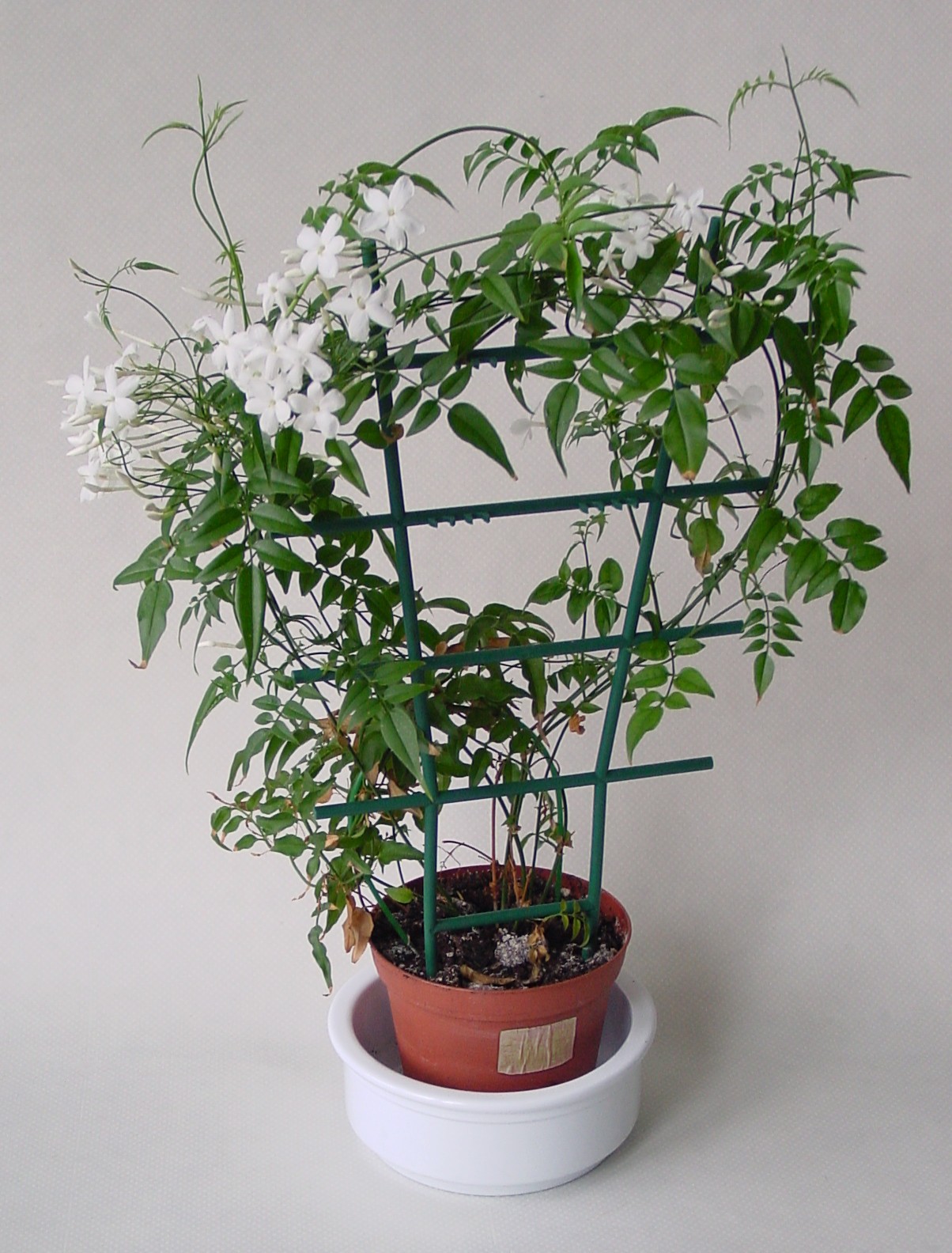
This is a vigorous, evergreen twiner with dark green leaves made up of as many as seven lance-shaped leaflets. Its real draw is the flower: long-tubed white blooms about two centimetres across, opening from pink buds in clusters up to ten centimetres long. Outdoors in frost-free climates these appear from late spring, but in a warm greenhouse or conservatory they can open earlier in the year.
Source: RHS
Watch for Sap Feeders
Grown under glass or indoors, this jasmine can attract aphids, scale insects and mealybugs, all sap-feeding pests worth checking for regularly since early spotting makes treatment easier. Mealybugs in particular can be wiped off by hand with a cotton swab dipped in rubbing alcohol, followed by continued monitoring in case any are hiding elsewhere on the plant.
Source: RHS
Few Blooms, Stressed Leaves
A plant with plenty of dark leaves but few flowers usually points to a fertiliser too high in nitrogen relative to potassium and phosphorus, so switching to a bloom-friendly feed is the usual fix. Both under- and over-watering bring on stress that leaves the plant open to disease, so let the top two inches of soil guide watering, and if leaves are drying out from low humidity, step up misting.
Source: Epic Gardening
Thin After Flowering
Once flowering has finished, thin out overcrowded growth, and under glass it may need a bit of restrictive pruning to keep it in bounds. It is grown in a container with peat-free, loam-based compost, positioned in bright filtered light, and can be moved outdoors in frost-free areas with shelter and full sun or part shade.
Source: RHS
Care recipe
The species record — the baseline every cultivar inherits unless it says otherwise.
Care notes are early — not yet verified
- Light
- ai:claude-opus-4-8
- Water
- ai:claude-opus-4-8 (range 5-10d)
- Humidity
- ai:claude-opus-4-8
- Soil
- ai:claude-fable-5
- Care
- ai:claude-fable-5
Bright, indirect
≈ every 10 days
Medium
8–24 °C
Rich, well-draining mix kept consistently moist
Semi-ripe stem cuttings under warmth
Balanced feed monthly; ease off after flowering
Fast
Profuse fragrant white flowers in late winter and spring
Not yet documented
This is where toxicity lives — every cultivar of this species inherits it and none can override it.
Reference images
Every image credited. Licenses link to their deeds.
PrimarySources: ai:claude-opus-4-8 · ai:claude-opus-4-8 (range 5-10d) · ai:claude-fable-5
Kept true by its growers
Every fact here carries its source. Grow Pink Jasmine yourself? What you’ve observed — how it drinks, how it holds its color, a name that’s off — and a clear photo of your plant are exactly what keep this page honest. Contributions are reviewed before anything changes.
Sign in to add what you know →