Species · genus Jasminum · Oleaceae
Japanese Jasmine
Jasminum mesnyi Hance
Also known as: Primrose Jasmine · Yellow Jasmine
Cultivars of J. mesnyi
The named forms growers keep — each with its own page, each honest about how much we know.
No named cultivars catalogued under J. mesnyi yet. When growers document a stable, named form, it earns its own page here.
Guide
The species-level account. Cultivar pages build on this and say where they differ.
A Scrambling Yellow Jasmine
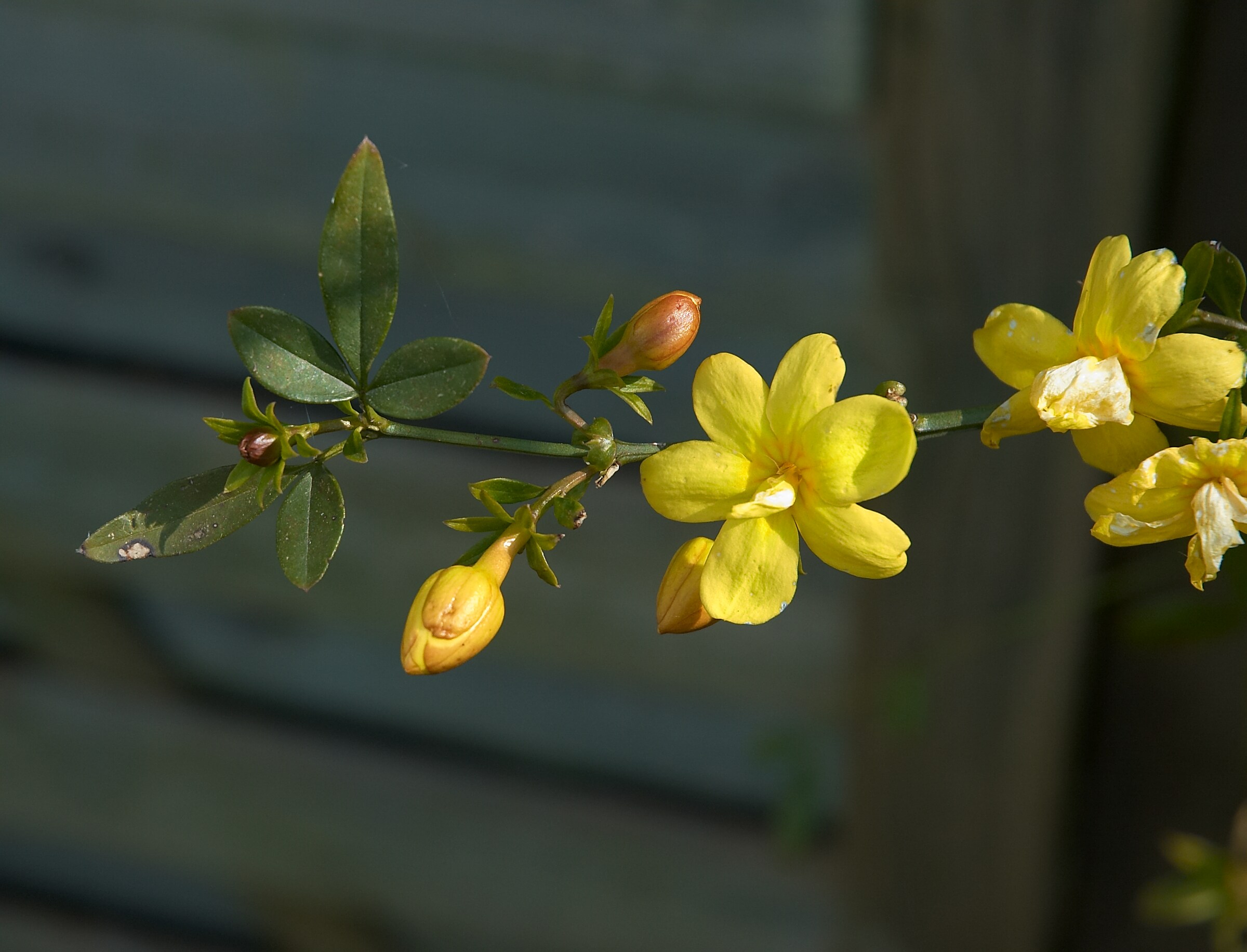
Primrose jasmine is a large, scrambling evergreen shrub, its leaves made of three oval leaflets and its pale yellow, semi-double flowers reaching about four centimetres across. It is grown as a climber, wall shrub, or conservatory plant, and it carries the RHS Award of Garden Merit.
Source: RHS
Roots in Central China
This jasmine's native ground is south-central China through to Vietnam, where it grows as a scrambling shrub in subtropical conditions. It has since been introduced well beyond that range, turning up from Florida and Alabama to India, Pakistan, and parts of Argentina and Mexico. Its older name, Jasminum primulinum, still surfaces occasionally, but Jasminum mesnyi is the accepted one.
Source: Kew
Sun, Shelter, Good Drainage
Grow it outdoors in well-drained soil in a sheltered, frost-free spot with full sun or partial shade, or under glass in peat-free, loam-based compost with bright filtered light. It tolerates chalk, loam, or sandy soils across acid, alkaline, or neutral pH, so long as drainage is reliable. It suits a south- or west-facing aspect but wants shelter from harsh exposure.
Source: RHS
Cuttings or Layering
Increase this jasmine by taking semi-hardwood cuttings, or by layering, both done in autumn.
Source: RHS
Sap-Suckers to Watch
Outdoors this jasmine may draw aphids, scale insects, and mealybugs, and under glass it can also pick up glasshouse red spider mite. Honey fungus is a possible disease, though the RHS notes it is rare.
Source: RHS
Pruning Group Two
This shrub falls into pruning group two, the regime used for early-flowering shrubs. Left to itself it reaches one and a half to two and a half metres in height and one to one and a half metres in spread, taking ten to twenty years to reach that full size.
Source: RHS
Care recipe
The species record — the baseline every cultivar inherits unless it says otherwise.
Care notes are early — not yet verified
- Light
- ai:claude-opus-4-8
- Water
- ai:claude-opus-4-8 (range 7-12d)
- Humidity
- ai:claude-opus-4-8
- Soil
- ai:claude-fable-5
- Care
- ai:claude-fable-5
Direct sun
≈ every 12 days
Medium
7–24 °C
Loamy, well-draining mix with steady moisture
Semi-ripe cuttings or layering
Balanced feed monthly through the growing season
Fast
Bright yellow flowers in late winter and spring
Not yet documented
This is where toxicity lives — every cultivar of this species inherits it and none can override it.
Reference images
Every image credited. Licenses link to their deeds.
Sources: ai:claude-opus-4-8 · ai:claude-opus-4-8 (range 7-12d) · ai:claude-fable-5
Kept true by its growers
Every fact here carries its source. Grow Japanese Jasmine yourself? What you’ve observed — how it drinks, how it holds its color, a name that’s off — and a clear photo of your plant are exactly what keep this page honest. Contributions are reviewed before anything changes.
Sign in to add what you know →