Species · genus Iresine · Amaranthaceae
Bloodleaf
Iresine lindenii VanHoutte
Also known as: Lindens Bloodleaf
Cultivars of I. lindenii
The named forms growers keep — each with its own page, each honest about how much we know.
No named cultivars catalogued under I. lindenii yet. When growers document a stable, named form, it earns its own page here.
Guide
The species-level account. Cultivar pages build on this and say where they differ.
The blood leaf plant
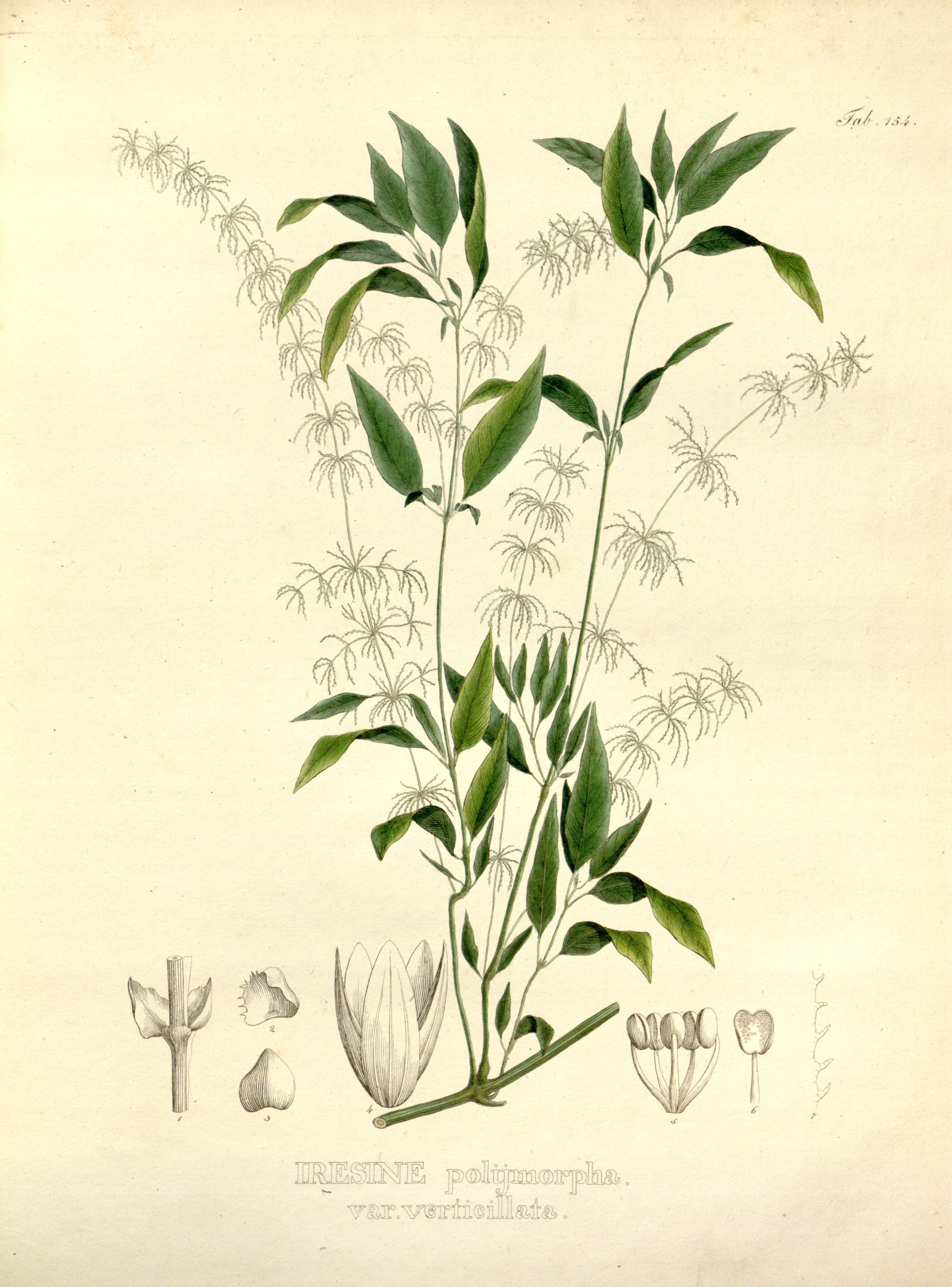
Iresine lindenii, commonly called blood leaf, is a bushy evergreen perennial grown for its deep red foliage. It belongs to the Amaranthaceae family and is often kept under glass or as a container plant.
Source: RHS
Origins in Ecuador
This species comes from Ecuador, part of a genus, Iresine, that spans annuals and evergreen perennials known for brightly coloured or patterned leaves. The genus produces only insignificant, whitish flower spikes in summer, so it is the foliage that carries the plant's appeal.
Source: RHS
Light, water, and feeding
Grown under glass, it wants a loam-based, peat-free compost and full light, though shade from hot sun is worth providing. Water freely through the growing season and feed monthly with a balanced liquid fertiliser, then cut back to keeping the compost just moist over winter. It can spend summer outdoors in moderately fertile soil, so long as it is sheltered from cold, drying winds, and it suits a sunny spot with moist but well-drained conditions.
Source: RHS
Softwood cuttings
Blood leaf is propagated from softwood cuttings taken in late winter or early spring.
Source: RHS
Blood-red, veined leaves
Blood leaf earns its name from ovate to lance-shaped foliage in a deep blood-red, with veining that runs lighter or darker than the leaf itself. It grows as a bushy evergreen reaching up to about 90cm, with a spread and height typically in the 0.5–1 metre range.
Source: RHS
Whitefly and red spider mite
Under glass, this plant can attract glasshouse whitefly and glasshouse red spider mite, so it is worth checking leaves and stems regularly for early signs of either.
Source: RHS
Powdery mildew risk
Powdery mildew is the main disease noted for this species, so good air movement and avoiding overly damp, stagnant conditions are sensible precautions.
Source: RHS
Low upkeep, no pruning
Blood leaf needs no routine pruning and is considered a low-maintenance plant, suiting patio and container growing. Its main seasonal shift is simply easing off water in winter after a freer-flowing growing season.
Source: RHS
Care recipe
The species record — the baseline every cultivar inherits unless it says otherwise.
Care notes are early — not yet verified
- Light
- ai:claude-opus-4-8
- Water
- ai:claude-opus-4-8 (range 5-9d)
- Humidity
- ai:claude-opus-4-8
- Soil
- ai:claude-fable-5
- Care
- ai:claude-fable-5
Bright, indirect
≈ every 9 days
Medium
16–27 °C
Rich, well-draining potting mix kept lightly moist
Stem cuttings root easily in water or soil
Balanced liquid feed monthly during active growth
Fast
Rarely flowers indoors; prized for red-veined leaves
Not yet documented
This is where toxicity lives — every cultivar of this species inherits it and none can override it.
Reference images
Every image credited. Licenses link to their deeds.
Sources: ai:claude-opus-4-8 · ai:claude-opus-4-8 (range 5-9d) · ai:claude-fable-5
Kept true by its growers
Every fact here carries its source. Grow Bloodleaf yourself? What you’ve observed — how it drinks, how it holds its color, a name that’s off — and a clear photo of your plant are exactly what keep this page honest. Contributions are reviewed before anything changes.
Sign in to add what you know →