Species · genus Iresine · Amaranthaceae
Juba's Bush
Iresine diffusa Humb. & Bonpl. ex Willd.
Cultivars of I. diffusa
The named forms growers keep — each with its own page, each honest about how much we know.
No named cultivars catalogued under I. diffusa yet. When growers document a stable, named form, it earns its own page here.
Guide
The species-level account. Cultivar pages build on this and say where they differ.
Herbst's Bloodleaf
Iresine herbstii, also called beefsteak plant or chicken gizzard, is an erect, bushy annual or short-lived perennial grown chiefly as a foliage plant. It carries an RHS Award of Garden Merit and is prized for leaves splashed in deep red, orange, yellow or green rather than for its flowers.
Source: RHS
A South American Native
This plant traces back to Peru, part of the wider range of its relative Iresine diffusa across tropical and subtropical America. In cultivation it is most often used in summer bedding schemes rather than left to naturalise.
Source: RHS
Light, Water, Feeding
Under glass, this plant wants a loam-based, peat-free compost, full light with shade from the hottest sun, and generous watering with a monthly balanced liquid feed while it is actively growing. In winter, keep it just moist rather than wet. Grown outdoors it can spend summer in moderately fertile soil, provided it is sheltered from cold, drying winds, as it favours full sun and moist but well-drained conditions.
Source: RHS
Softwood Cuttings
Propagation is by softwood cuttings, taken in late winter or early spring.
Source: RHS
Colour in the Foliage
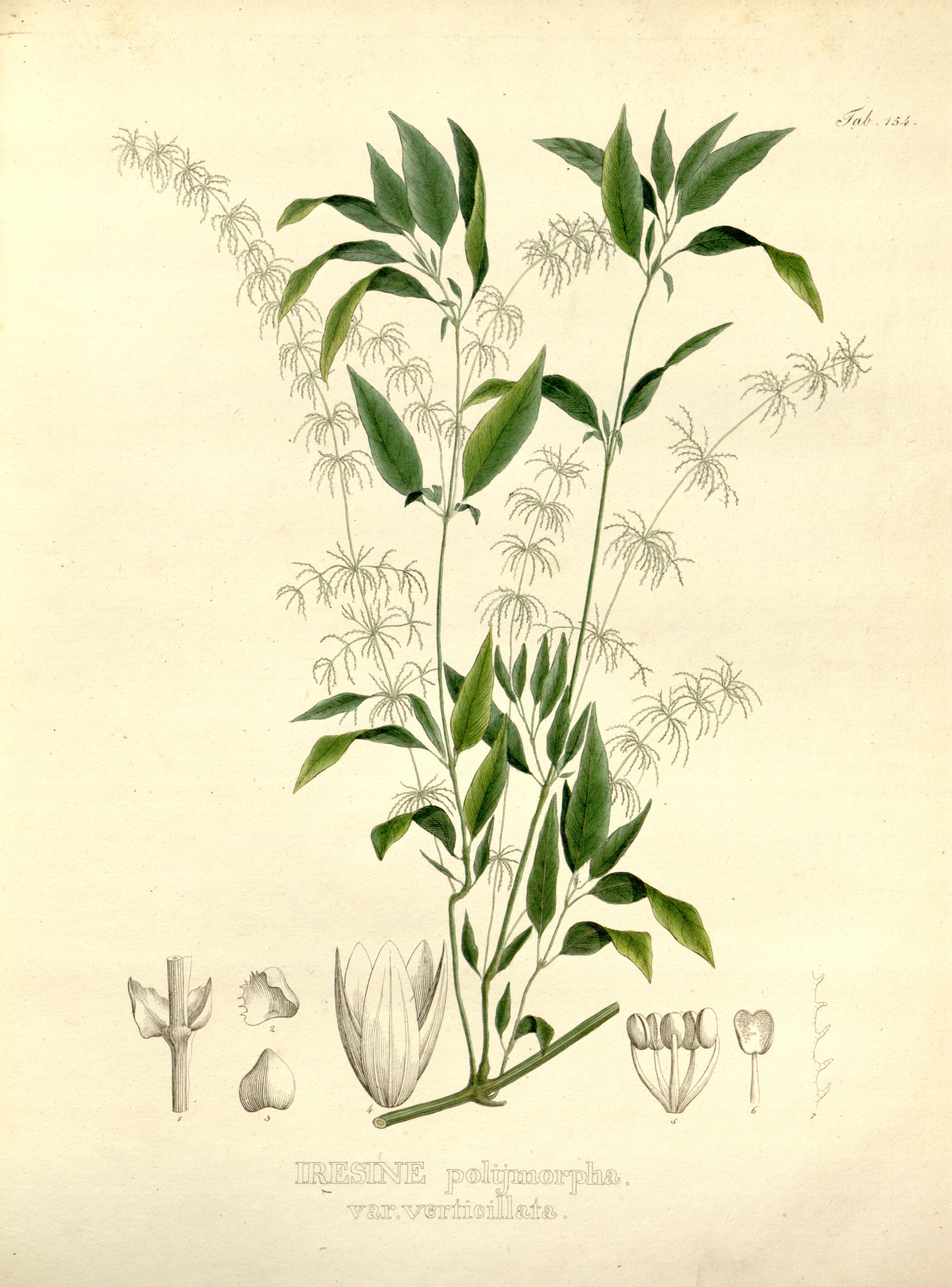
The waxy, ovate leaves reach about 8cm long and come variegated in mid-green, yellow, deep red or orange, often with veins that stand out sharply against the leaf colour. These leaves sit on stems that can themselves be green, red or purple, and the whole plant builds into a bushy habit up to 1.5 metres tall.
Source: RHS
Aphids and Red Spider Mite
Watch for aphids and glasshouse red spider mite, both common visitors to this plant.
Source: RHS
Powdery Mildew Risk
Powdery mildew is the main disease concern noted for this plant.
Source: RHS
Little Pruning Needed
No pruning is required for this plant, which keeps its care fairly hands-off once its light and watering rhythm is established.
Source: RHS
Care recipe
The species record — the baseline every cultivar inherits unless it says otherwise.
Care notes are early — not yet verified
- Light
- ai:claude-opus-4-8
- Water
- ai:claude-opus-4-8 (range 5-10d)
- Humidity
- ai:claude-opus-4-8
- Soil
- ai:claude-fable-5
- Care
- ai:claude-fable-5
Bright, indirect
≈ every 10 days
Medium
15–27 °C
Fertile, moisture-retentive well-draining mix
Stem cuttings root readily in water
Balanced liquid feed monthly in spring and summer
Fast
Insignificant; grown for its colorful foliage
Not yet documented
This is where toxicity lives — every cultivar of this species inherits it and none can override it.
Reference images
Every image credited. Licenses link to their deeds.
Sources: ai:claude-opus-4-8 · ai:claude-opus-4-8 (range 5-10d) · ai:claude-fable-5
Kept true by its growers
Every fact here carries its source. Grow Juba's Bush yourself? What you’ve observed — how it drinks, how it holds its color, a name that’s off — and a clear photo of your plant are exactly what keep this page honest. Contributions are reviewed before anything changes.
Sign in to add what you know →