Species · genus Hypoestes · Acanthaceae
Polkadot-Plant
Hypoestes phyllostachya Baker
Also known as: Flamingo Plant · Freckle-face · Measlesplant · Pink-dot · Polka-dot-plant
Cultivars of H. phyllostachya
The named forms growers keep — each with its own page, each honest about how much we know.
No named cultivars catalogued under H. phyllostachya yet. When growers document a stable, named form, it earns its own page here.
Guide
The species-level account. Cultivar pages build on this and say where they differ.
A Speckled Tropical Charmer
Hypoestes phyllostachya, the polka dot plant, is a compact tropical foliage plant grown for leaves splashed with pink, red or white rather than for its flowers. It forms low, bushy clumps and is a common choice for terrariums, bottle gardens and humid windowsills.
Source: RHS
Out of Madagascar
This species traces its origins mainly to Madagascar, with populations also native to South Africa and East Asia. It has since naturalised in tropical parts of North and South America and India. It is the best known of a genus of over two hundred Hypoestes species, most sharing that same freckled leaf habit, and it has earned the RHS Award of Garden Merit.
Source: Epic Gardening
Light, Water, Warmth Together
Give it bright but indirect light, out of direct summer sun, in warmth of roughly 18-27°C. Let the top of the compost dry a little between waterings, and keep the air humid by misting, standing the pot on damp pebbles, or placing it in a steamy bathroom or terrarium. Feed every two to three weeks through the growing season with a liquid houseplant fertiliser, and hold off feeding in winter.
Source: RHS
Cuttings, Seed or Division
Softwood stem-tip cuttings taken in spring and summer, about 5cm long and cut just below a leaf pair, root readily in moist compost or water kept humid. Seed can also be sown in spring onto moist compost, left uncovered since light aids germination, though colour patterning from seed-grown plants varies. A large clump can also be divided by hand in spring, so long as each division keeps three or more stems.
Source: RHS
Freckled, Soft-Leaved Foliage
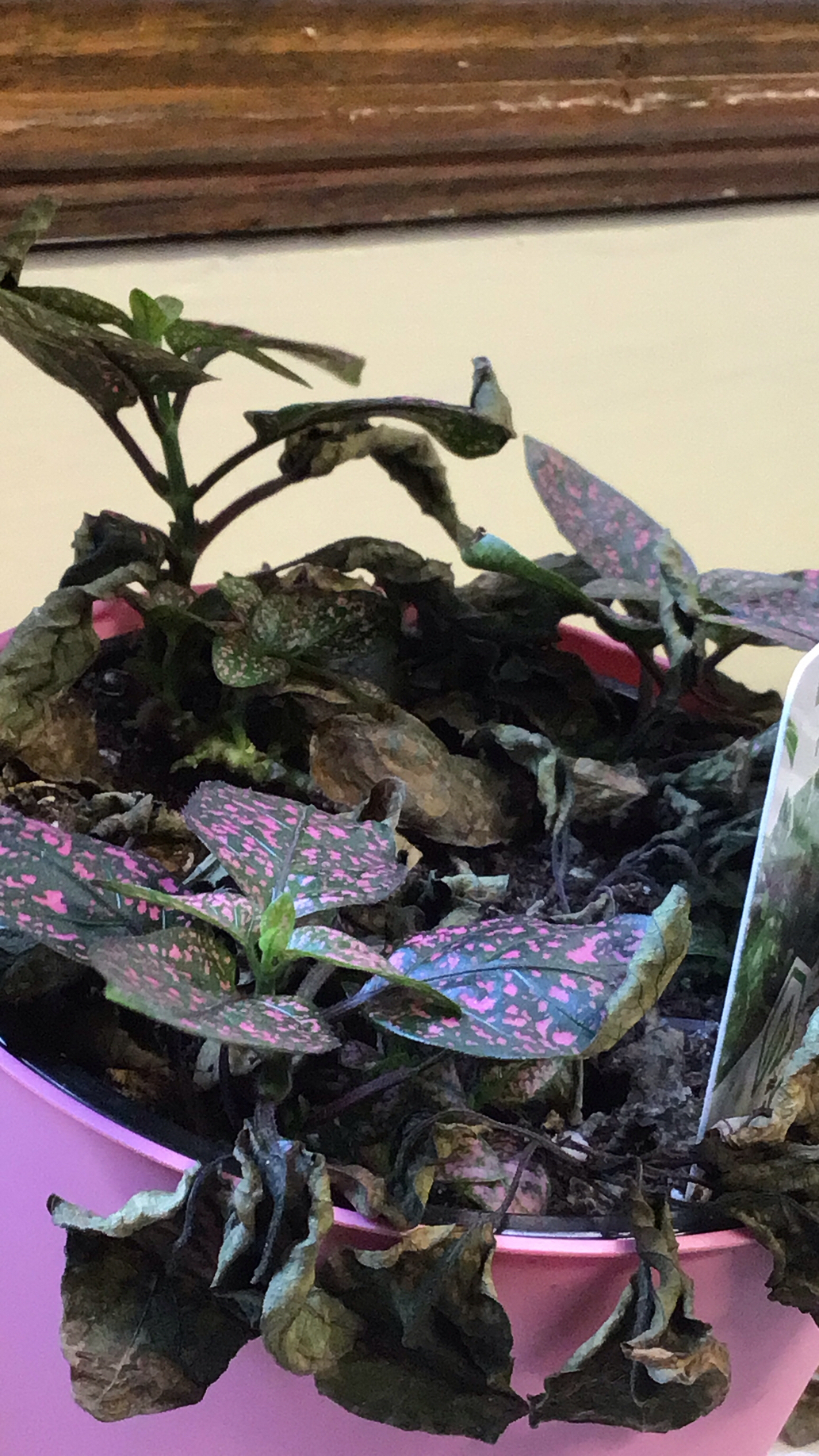
The defining trait here is the leaf: soft, slightly hairy, and irregularly spotted or almost entirely washed with pink, red or white against green. Left unchecked plants can reach around 30 inches, though as houseplants they usually stay a modest six to eight inches. In summer and autumn small tubular purple flowers appear, tucked under bracts, which is where the genus name comes from - hypo for under, estia for house.
Source: Epic Gardening
Watch for Sap-Suckers
These plants are generally trouble free, but sap-sucking insects such as mealybugs, aphids and red spider mites can turn up. Stress from poor light, erratic watering or cold tends to make a plant more vulnerable, so steady care is the best prevention.
Source: RHS
Reading the Leaves
Yellowing and leaf drop usually trace back to over- or underwatering, while leaves turning plain green point to reversion or too little light, and faded colour to too much sun. Browning at the tips and margins signals low humidity, and spindly, weak growth means the plant wants more bright, indirect light. Powdery mildew tends to appear when a plant has been kept too dry.
Source: RHS
Pinch to Keep it Bushy
Trim off any browning or dead leaves and stems as you spot them. When growth turns tall and spindly, pinch out the shoot tips and any flowers to push the plant back into a bushier shape, and repot every two or three years once roots fill the container.
Source: RHS
Care recipe
The species record — the baseline every cultivar inherits unless it says otherwise.
Care notes are early — not yet verified
- Light
- ai:claude-opus-4-8
- Water
- ai:claude-opus-4-8 (range 4-9d)
- Humidity
- ai:claude-opus-4-8
- Soil
- ai:claude-fable-5
- Care
- ai:claude-fable-5
Bright, indirect
≈ every 9 days
Medium
16–27 °C
Light, peat-based mix that stays evenly moist
Stem cuttings root quickly in water or soil
Diluted balanced feed every two weeks in growing season
Fast
Small lilac flowers; grown for its pink-spotted leaves
Non-toxic to cats & dogs
Polka-dot plant (Hypoestes phyllostachya) — ASPCA non-toxic to cats and dogs. This is where toxicity lives: every cultivar of this species inherits it and none can override it.
Reference images
Every image credited. Licenses link to their deeds.
PrimarySources: ai:claude-opus-4-8 · ai:claude-opus-4-8 (range 4-9d) · ai:claude-fable-5 · ASPCA
Kept true by its growers
Every fact here carries its source. Grow Polkadot-Plant yourself? What you’ve observed — how it drinks, how it holds its color, a name that’s off — and a clear photo of your plant are exactly what keep this page honest. Contributions are reviewed before anything changes.
Sign in to add what you know →