Species · genus Homalomena · Araceae
Red Shield Homalomena
Homalomena rubescens (Roxb.) Kunth
Also known as: Maggie · Queen of Hearts · Pink Homalomena
Cultivars of H. rubescens
The named forms growers keep — each with its own page, each honest about how much we know.
No named cultivars catalogued under H. rubescens yet. When growers document a stable, named form, it earns its own page here.
Guide
The species-level account. Cultivar pages build on this and say where they differ.
A Perennial Aroid
Homalomena rubescens is a perennial or subshrub in the arum family, Araceae. It belongs to a genus of tropical foliage plants that spend their lives low and leafy rather than climbing.
Source: Kew
From Sikkim to Myanmar
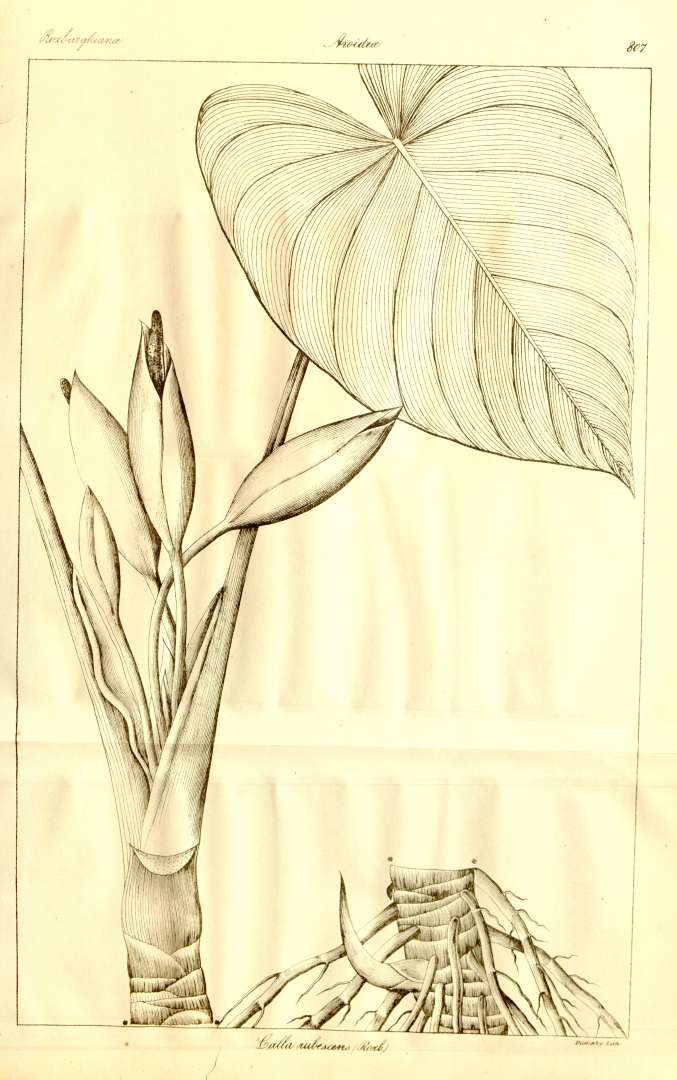
This species is native to a stretch running from Sikkim through to Myanmar, with confirmed native populations in Assam, Bangladesh, the East Himalaya region, and Myanmar. It was first described by Roxburgh as Calla rubescens before later being placed in Homalomena by Kunth in 1841. It grows primarily within the wet tropical biome, the humid forest floors typical of that range.
Source: Kew
A Named Cultivar
The cultivar known as 'Maggy' is a recognised, accepted form of this species grown as a houseplant. It belongs to the same Araceae family as its wild relatives, but is distinguished as a selected garden variety rather than a wild-collected type.
Source: RHS
Care recipe
The species record — the baseline every cultivar inherits unless it says otherwise.
Care notes are early — not yet verified
- Light
- ai:claude-opus-4-8
- Water
- ai:claude-opus-4-8 (range 7-12d)
- Humidity
- ai:claude-opus-4-8
- Soil
- ai:claude-fable-5
- Care
- ai:claude-fable-5
Bright, indirect
≈ every 12 days
High
16–29 °C
Loose, well-draining aroid mix rich in organic matter
Division of the rhizome clump
Balanced liquid feed monthly in the growing season
Moderate
Rarely flowers indoors; grown for its red-flushed foliage
Toxic to cats & dogs & humans
Araceae typically contain insoluble calcium oxalate crystals, which irritate the mouth and digestive tract if chewed. This is where toxicity lives: every cultivar of this species inherits it and none can override it.
Reference images
Every image credited. Licenses link to their deeds.
PrimarySources: ai:claude-opus-4-8 · ai:claude-opus-4-8 (range 7-12d) · ai:claude-fable-5 · ai:claude-opus-4-8 (family inference)
Kept true by its growers
Every fact here carries its source. Grow Red Shield Homalomena yourself? What you’ve observed — how it drinks, how it holds its color, a name that’s off — and a clear photo of your plant are exactly what keep this page honest. Contributions are reviewed before anything changes.
Sign in to add what you know →