Species · genus Hippeastrum · Amaryllidaceae
Striped Barbados Lily
Hippeastrum striatum (Lam.) H.E.Moore
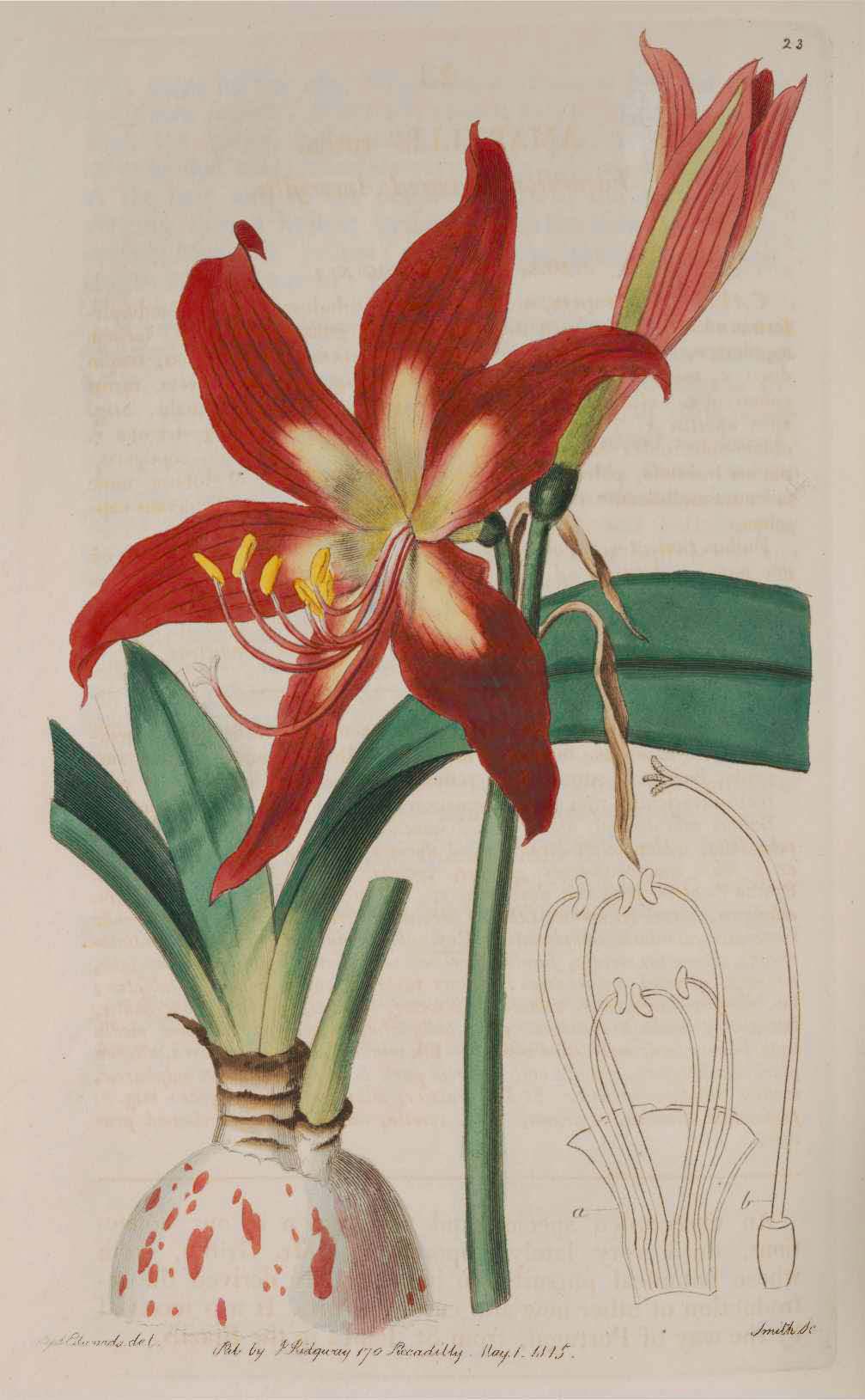
Cultivars of H. striatum
The named forms growers keep — each with its own page, each honest about how much we know.
No named cultivars catalogued under H. striatum yet. When growers document a stable, named form, it earns its own page here.
Guide
The species-level account. Cultivar pages build on this and say where they differ.
A Brazilian Bulb
Hippeastrum striatum is a bulbous species in the amaryllis family, one of over a hundred accepted species in its genus. It carries the name given by H.E. Moore, built on Lamarck's earlier description of it as an Amaryllis.
Source: Kew
Native to Brazil
This species comes from eastern and southern Brazil, where it grows as a bulbous geophyte in the seasonally dry tropical biome. It has since been introduced beyond its home range, turning up in the Caroline Islands and Hawaii. Its genus as a whole is native across Central and South Tropical America, from Argentina and Bolivia up through Venezuela and the Guianas.
Source: Kew
Bulb, Leaves, Umbels
As a member of the genus Hippeastrum, it shares the family habit of being a deciduous bulbous perennial with slightly fleshy, strap-shaped leaves. Its flowers are large and funnel-shaped, held in umbels atop a stout, leafless stem, typically opening in winter or spring.
Source: RHS
Care recipe
The species record — the baseline every cultivar inherits unless it says otherwise.
Care notes are early — not yet verified
- Light
- ai:claude-opus-4-8
- Water
- ai:claude-opus-4-8 (range 7-14d)
- Humidity
- ai:claude-opus-4-8
- Soil
- ai:claude-fable-5
- Care
- ai:claude-fable-5
Bright, indirect
≈ every 14 days
Medium
13–27 °C
Rich, well-draining bulb mix with grit
Offset bulblets separated from the parent bulb
Feed every 2 weeks after flowering to rebuild the bulb
Moderate
Striped red-and-white trumpets after a rest period
Toxic to cats & dogs & humans
Amaryllidaceae contain phenanthridine alkaloids (e.g. lycorine), concentrated in the bulb. This is where toxicity lives: every cultivar of this species inherits it and none can override it.
Reference images
Every image credited. Licenses link to their deeds.
Sources: ai:claude-opus-4-8 · ai:claude-opus-4-8 (range 7-14d) · ai:claude-fable-5 · ai:claude-opus-4-8 (family inference)
Kept true by its growers
Every fact here carries its source. Grow Striped Barbados Lily yourself? What you’ve observed — how it drinks, how it holds its color, a name that’s off — and a clear photo of your plant are exactly what keep this page honest. Contributions are reviewed before anything changes.
Sign in to add what you know →