Species · genus Hippeastrum · Amaryllidaceae
Barbados Lily
Hippeastrum puniceum (Lam.) Voss
Also known as: Easter Lily · Cacao Lily · Amaryllis Lily
Cultivars of H. puniceum
The named forms growers keep — each with its own page, each honest about how much we know.
No named cultivars catalogued under H. puniceum yet. When growers document a stable, named form, it earns its own page here.
Guide
The species-level account. Cultivar pages build on this and say where they differ.
The Barbados Lily
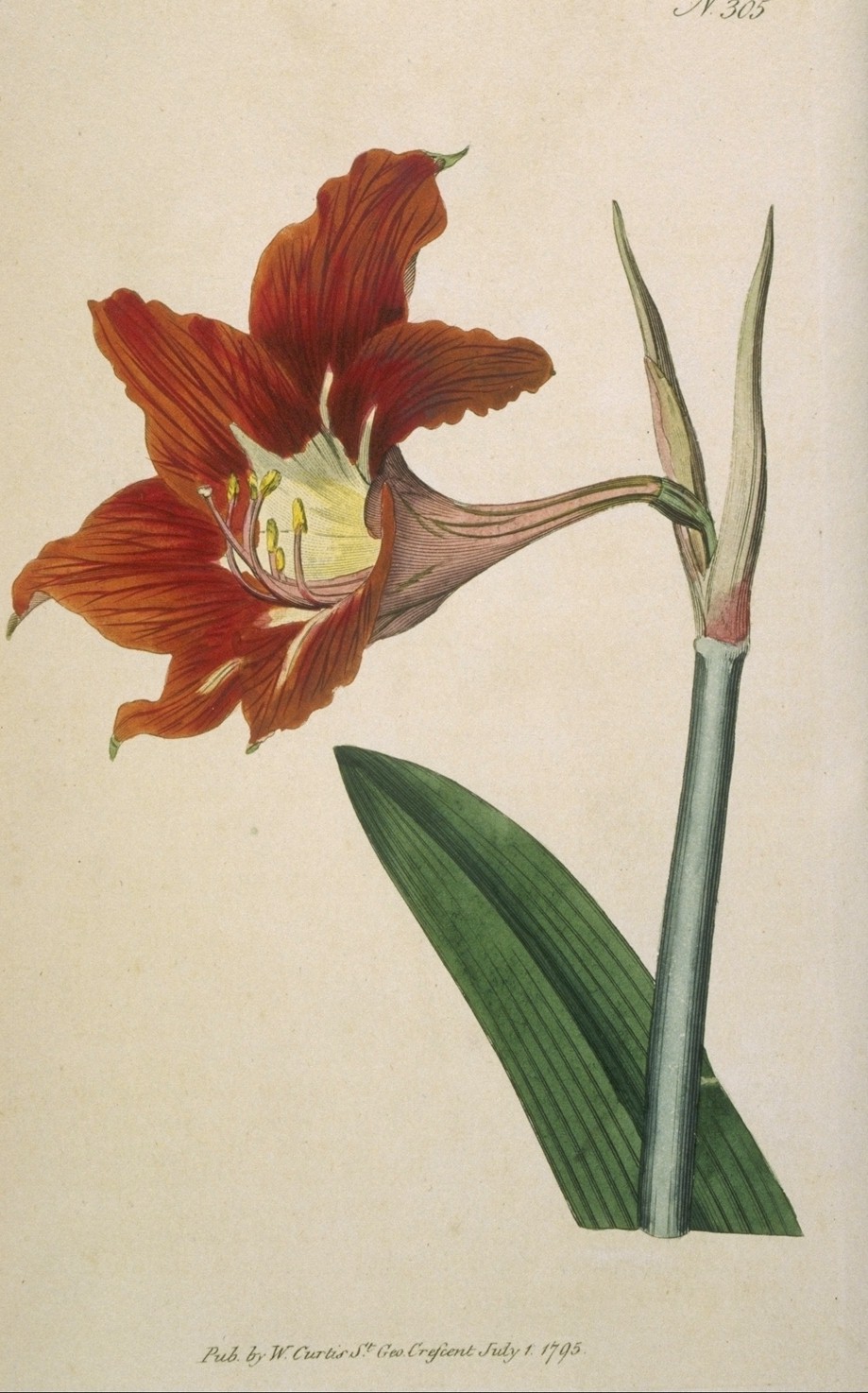
Hippeastrum puniceum, also called the Barbados lily or fire lily, is a bulbous perennial in the Amaryllidaceae family. Like others in its genus, it carries strap-shaped leaves and a leafless stem topped with an umbel of large, funnel-shaped flowers, typically appearing in winter or spring.
Source: RHS
A Tropical American Native
This species is native to a wide swath of South Tropical America, including Bolivia, Brazil, Colombia, Ecuador, Peru, Venezuela, and the Guianas. It has since been introduced far beyond that range, turning up in places as scattered as Hawaii, the Caribbean, Sri Lanka, and parts of Africa. In the wild it grows as a bulbous geophyte in seasonally dry tropical habitats, and it has also seen use as a poison and a medicine.
Source: Kew
Bulb, Strap Leaves, Umbels
As a member of the genus Hippeastrum, this plant is deciduous and bulbous, with slightly fleshy, strap-shaped foliage. Its flowering stems are stout and leafless, rising up to bear an umbel of large, funnel-shaped blooms rather than a single flower.
Source: RHS
Care recipe
The species record — the baseline every cultivar inherits unless it says otherwise.
Care notes are early — not yet verified
- Light
- ai:claude-opus-4-8
- Water
- ai:claude-opus-4-8 (range 7-14d)
- Humidity
- ai:claude-opus-4-8
- Soil
- ai:claude-fable-5
- Care
- ai:claude-fable-5
Bright, indirect
≈ every 14 days
Medium
13–27 °C
Rich, well-draining bulb mix with grit
Offset bulblets separated from the parent bulb
Feed every 2 weeks after flowering to rebuild the bulb
Moderate
Reliable trumpet blooms after a dry rest period
Toxic to cats & dogs & humans
Amaryllidaceae contain phenanthridine alkaloids (e.g. lycorine), concentrated in the bulb. This is where toxicity lives: every cultivar of this species inherits it and none can override it.
Reference images
Every image credited. Licenses link to their deeds.
Sources: ai:claude-opus-4-8 · ai:claude-opus-4-8 (range 7-14d) · ai:claude-fable-5 · ai:claude-opus-4-8 (family inference)
Kept true by its growers
Every fact here carries its source. Grow Barbados Lily yourself? What you’ve observed — how it drinks, how it holds its color, a name that’s off — and a clear photo of your plant are exactly what keep this page honest. Contributions are reviewed before anything changes.
Sign in to add what you know →