Species · genus Hibiscus · Malvaceae
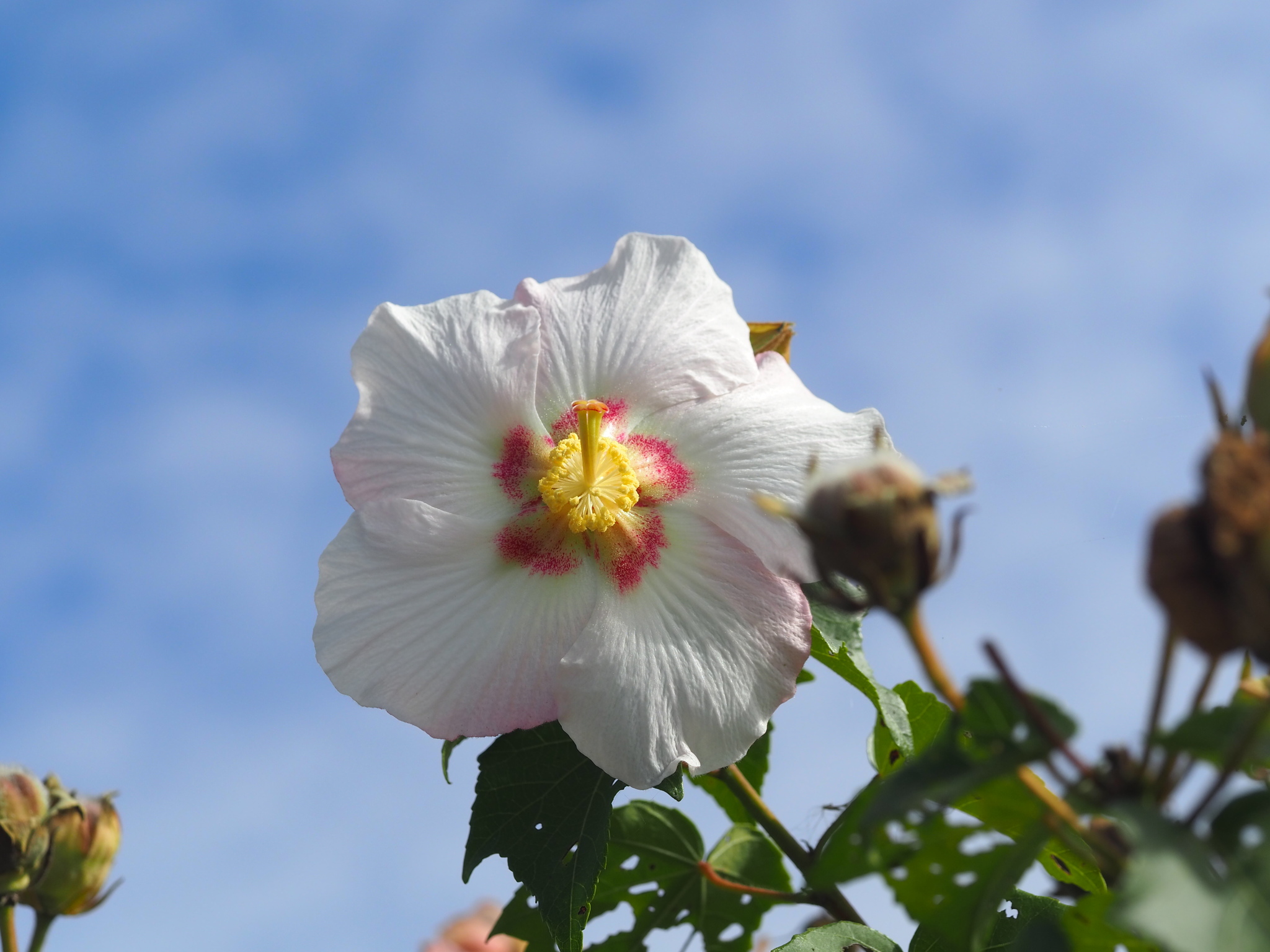
Taiwan Cotton Rose
Hibiscus taiwanensis S.Y.Hu
Cultivars of H. taiwanensis
The named forms growers keep — each with its own page, each honest about how much we know.
No named cultivars catalogued under H. taiwanensis yet. When growers document a stable, named form, it earns its own page here.
Guide
The species-level account. Cultivar pages build on this and say where they differ.
A Taiwanese hibiscus
Hibiscus taiwanensis is a woody member of the mallow family, growing as a shrub or small tree. It belongs to the same genus that gives us the familiar garden and tropical hibiscuses, though this particular species has a much narrower, mountain homeland.
Source: Kew
Native to Alishan
This species comes from Taiwan, specifically the Alishan area, and is found nowhere else as a native plant. It grows there in a subtropical setting, fitting the pattern of many hibiscus relatives that favor warm, humid climates. The name was published by S.Y. Hu in 1955, in the Flora of the People's Republic of China.
Source: Kew
General hibiscus rhythm
Hibiscus shrubs in general ask for as much sun as can be given, with some relief from harsh afternoon heat where summers run intense. Water should be generous but never left standing, since soggy roots invite trouble, and established plants settle into a steadier, more drought-tolerant rhythm. Soil that is loamy, slightly acidic, and enriched with organic matter suits them, and regular feeding during the growing and blooming months keeps the display going, tapering off entirely in winter.
Source: Epic Gardening
Sap-suckers to watch
Hibiscus plants draw a familiar crowd of pests: aphids clustering on new growth and buds, spider mites spinning fine webbing on the interior of the plant, whiteflies scattering from the underside of leaves when disturbed, and thrips hiding in the flower's center. Most of these announce themselves through shriveled or stippled foliage, sticky honeydew, or sooty mold, and a plant kept well fed and watered has the best chance of shrugging off an infestation.
Source: Epic Gardening
Root rot and viral spotting
Overwatering is the usual culprit behind armillaria root rot, which shows up as discoloration, cankers, branch dieback, and sometimes small mushrooms at the base of the plant, and once established there is no cure beyond removing rotten tissue and repotting into clean, well-drained soil. Botrytis, or gray mold, causes discolored, dropping foliage and is best managed by pruning away affected branches and clearing debris. Hibiscus chlorotic ringspot virus mottles and discolors the leaves; it isn't treatable, but it isn't fatal either, and the plant carries on with just its foliage and flowers marked.
Source: Epic Gardening
Pruning and deadheading
Hardy hibiscus types benefit from a spring pruning to clear dead wood and set up the next flush of growth, done as early as possible after the last frost so the greatest number of buds is preserved. A lighter tidy in late summer is fine, but heavy pruning late in the season pushes weak new growth that struggles through winter. Deadheading spent blooms redirects the plant's energy and lets light and air reach the unopened buds, though many gardeners simply let the flowers drop on their own.
Source: Epic Gardening
Care recipe
The species record — the baseline every cultivar inherits unless it says otherwise.
Care notes are early — not yet verified
- Light
- ai:claude-opus-4-8
- Water
- ai:claude-opus-4-8 (range 5-10d)
- Humidity
- ai:claude-opus-4-8
- Soil
- ai:claude-fable-5
- Care
- ai:claude-fable-5
Direct sun
≈ every 10 days
Medium
13–30 °C
Rich, well-draining loamy potting mix
Softwood stem cuttings rooted in moist mix
Balanced liquid feed every 2-3 weeks in the growing season
Fast
Can bloom indoors in bright light, though shrubby and large
Not yet documented
This is where toxicity lives — every cultivar of this species inherits it and none can override it.
Reference images
Every image credited. Licenses link to their deeds.
PrimarySources: ai:claude-opus-4-8 · ai:claude-opus-4-8 (range 5-10d) · ai:claude-fable-5
Kept true by its growers
Every fact here carries its source. Grow Taiwan Cotton Rose yourself? What you’ve observed — how it drinks, how it holds its color, a name that’s off — and a clear photo of your plant are exactly what keep this page honest. Contributions are reviewed before anything changes.
Sign in to add what you know →