Species · genus Hibiscus · Malvaceae
Scarlet Rose-mallow
Hibiscus coccineus (Medik.) Walter
Also known as: Scarlet Rosemallow
Cultivars of H. coccineus
The named forms growers keep — each with its own page, each honest about how much we know.
No named cultivars catalogued under H. coccineus yet. When growers document a stable, named form, it earns its own page here.
Guide
The species-level account. Cultivar pages build on this and say where they differ.
A Scarlet Swamp Mallow
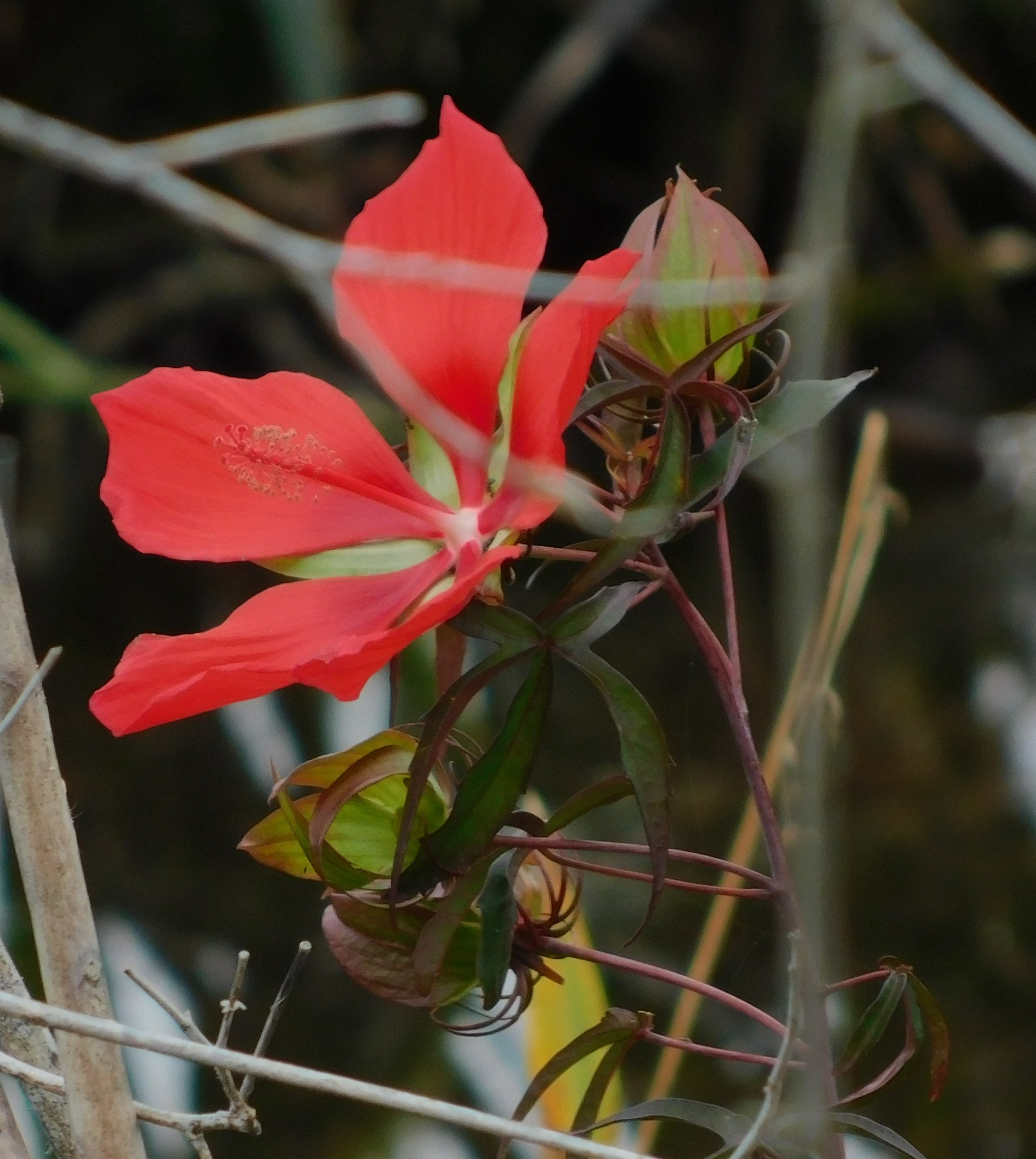
Hibiscus coccineus, known as scarlet rose mallow or American scarlet rose mallow, is a herbaceous perennial in the mallow family. It is grown for its tall, upright habit and its striking scarlet, hollyhock-like flowers produced through summer.
Source: Missouri Botanical Garden
Native to Southern Wetlands
This species comes from the southeastern United States, where it grows wild in marshes and swamps across Alabama, Georgia, and Florida. That boggy origin is why it also goes by the common name swamp hibiscus. Its genus name is the old Greek and Latin word for mallow, and its species name simply means scarlet.
Source: Missouri Botanical Garden
Sun, Water, and Soil
Grow this plant in average to wet soil, in full sun to part shade, with full sun or light shade giving the best results. Keep the soil consistently moist through the growing season, as it tolerates summer heat and humidity well but not dryness. In too much shade it tends to grow leggy and flower less.
Source: Missouri Botanical Garden
Height, Bloom, and Leaf
This is a vigorous, sturdy, woody-based perennial reaching 3 to 6 feet tall with a spread of 2 to 3 feet. From June to September it carries showy, five-petaled, deep scarlet flowers 3 to 5 inches across, each with a prominent central staminal column, set in the upper leaf axils. The deep green leaves are hemp-like and palmately compound, running 5 to 6 inches wide, and the flowers in turn draw in hummingbirds and butterflies.
Source: Missouri Botanical Garden
Watch for These Visitors
Aphids, scale, whiteflies, and Japanese beetle are the pests most likely to trouble this plant.
Source: Missouri Botanical Garden
Hardiness and Common Ailments
It is only reliably winter hardy to USDA Zone 6, so in cooler areas it needs a sheltered spot and a good winter mulch. It shows some susceptibility to blight, canker, rust, and leaf spots, and taller stems may need staking to stay upright.
Source: Missouri Botanical Garden
Care recipe
The species record — the baseline every cultivar inherits unless it says otherwise.
Care notes are early — not yet verified
- Light
- ai:claude-opus-4-8
- Water
- ai:claude-opus-4-8 (range 2-5d)
- Humidity
- ai:claude-opus-4-8
- Soil
- ai:claude-fable-5
- Care
- ai:claude-fable-5
Direct sun
≈ every 5 days
Medium
13–32 °C
Rich, moisture-retentive mix that never dries out
Seed or stem cuttings
Regular balanced feed every 2-4 weeks in growing season
Fast
Large scarlet flowers given strong light and steady moisture
Not yet documented
This is where toxicity lives — every cultivar of this species inherits it and none can override it.
Reference images
Every image credited. Licenses link to their deeds.
PrimarySources: ai:claude-opus-4-8 · ai:claude-opus-4-8 (range 2-5d) · ai:claude-fable-5
Kept true by its growers
Every fact here carries its source. Grow Scarlet Rose-mallow yourself? What you’ve observed — how it drinks, how it holds its color, a name that’s off — and a clear photo of your plant are exactly what keep this page honest. Contributions are reviewed before anything changes.
Sign in to add what you know →