Species · genus Heptapleurum · Araliaceae
Common Schefflera
Heptapleurum heptaphyllum (L.) Y.F.Deng
Also known as: Ivy Tree
Cultivars of H. heptaphyllum
The named forms growers keep — each with its own page, each honest about how much we know.
No named cultivars catalogued under H. heptaphyllum yet. When growers document a stable, named form, it earns its own page here.
Guide
The species-level account. Cultivar pages build on this and say where they differ.
An Umbrella Tree Genus
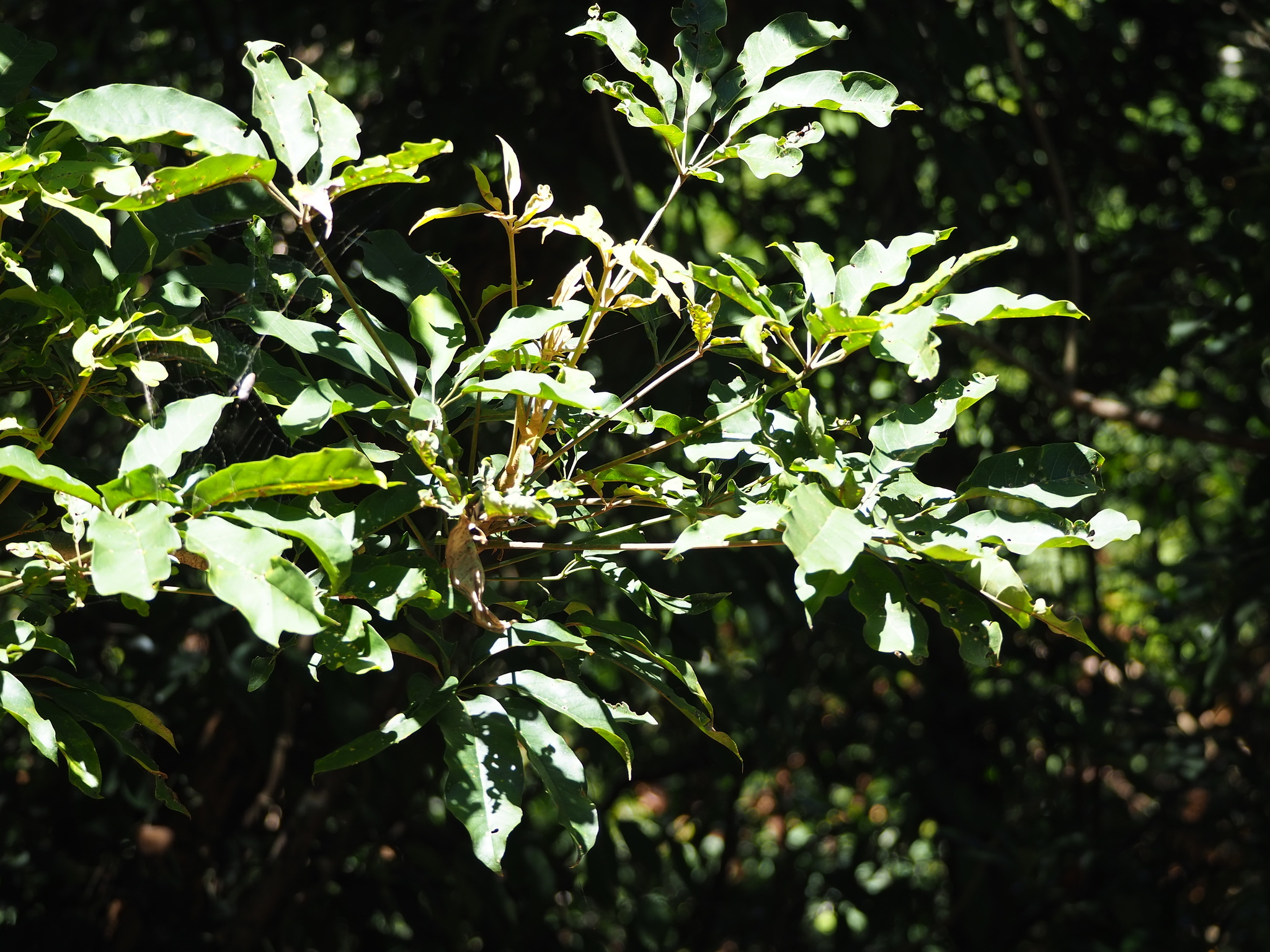
Heptapleurum is the genus behind what many still know as Schefflera, a group of evergreen, tropical and subtropical trees and shrubs from Asia. This particular species, Heptapleurum heptaphyllum, grows as a shrub or tree with the palmately compound, long-stalked leaves typical of its relatives.
Source: RHS
Native To East Asia
Heptapleurum heptaphyllum comes from a broad native range stretching from Japan through south-central and southeast China, Taiwan, Tibet, and down through Indo-China and the Philippines, where it grows chiefly in subtropical conditions. It has also become established outside its native range in Hawaii. The plant carries a long taxonomic history, having been shuffled through names like Schefflera heptaphylla and Aralia heptaphylla before settling under Heptapleurum.
Source: Kew
Light, Feed, Water
A related large-leaved species in this genus prefers a bright spot out of direct sun, in moist but well-drained soil, and if placed outdoors it wants shelter against a south-facing wall in dappled light. Feeding is best kept to the growing season, easing off once temperatures drop or the plant slows down, and overwatering is worth avoiding.
Source: RHS
Cuttings Or Seed
Propagation across this genus can be done from seed or by semi-hardwood cuttings, as with the Queensland umbrella tree relative. In the large-leaved species, propagation instead relies on removing growing tips as cuttings in spring, though this is described as difficult and something worth persevering with.
Source: RHS
Leaflets And Habit
Within this genus, the Queensland umbrella tree relative shows leathery leaves made of five or more radiating oblong leaflets that can reach up to 30cm long, held on an evergreen, bushy shrub or small tree. It produces erect panicles of small dull red flowers followed by black fruit. Juvenile plants carry fewer, smaller leaflets than the adult foliage.
Source: RHS
Scale, Mites, Mealybugs
Members of this genus are noted to be susceptible to soft scale, thrips, and mealybugs, while the large-leaved relative can also draw aphids and red spider mite. One of these species is otherwise described as generally disease-free, while the other may be prone to a leaf spot.
Source: RHS
Little Pruning Needed
Neither of these relatives asks for regular pruning. On the large-leaved species, though, pinching out upward-facing shoots can encourage bushier, more compact growth lower down the plant.
Source: RHS
Care recipe
The species record — the baseline every cultivar inherits unless it says otherwise.
Care notes are early — not yet verified
- Light
- ai:claude-opus-4-8
- Water
- ai:claude-opus-4-8 (range 7-14d)
- Humidity
- ai:claude-opus-4-8
- Soil
- ai:claude-fable-5
- Care
- ai:claude-fable-5
Bright, indirect
≈ every 14 days
Medium
13–27 °C
Well-draining, peat-based potting mix
Stem cuttings or air layering
Balanced liquid feed monthly in the growing season
Moderate
Does not flower indoors
Toxic to cats & dogs & humans
Araliaceae commonly contain irritant saponins and calcium oxalate-type compounds that can cause oral and gastrointestinal irritation. This is where toxicity lives: every cultivar of this species inherits it and none can override it.
Reference images
Every image credited. Licenses link to their deeds.
PrimarySources: ai:claude-opus-4-8 · ai:claude-opus-4-8 (range 7-14d) · ai:claude-fable-5 · ai:claude-opus-4-8 (family inference)
Kept true by its growers
Every fact here carries its source. Grow Common Schefflera yourself? What you’ve observed — how it drinks, how it holds its color, a name that’s off — and a clear photo of your plant are exactly what keep this page honest. Contributions are reviewed before anything changes.
Sign in to add what you know →