Species · genus Heptapleurum · Araliaceae
Dwarf Umbrella Tree
Heptapleurum arboricola Hayata
Also known as: Hawaiian-elf · Miniature Schefflera · Miniature Umbrella Tree · Parasol-plant
Cultivars of H. arboricola
The named forms growers keep — each with its own page, each honest about how much we know.
No named cultivars catalogued under H. arboricola yet. When growers document a stable, named form, it earns its own page here.
Guide
The species-level account. Cultivar pages build on this and say where they differ.
An Undemanding Umbrella Tree
Heptapleurum arboricola, long known to many by its old name Schefflera arboricola, is a tender evergreen shrub grown as a houseplant for its glossy, hand-shaped foliage. Its long-stalked leaves are made up of seven to nine leaflets, giving it an easy, undemanding presence indoors.
Source: RHS
Native to Hainan and Taiwan
This species comes from Hainan and Taiwan, where it grows as a scrambling shrub within the wet tropical biome. It has since travelled well beyond that native range, becoming established in places such as Bermuda, Florida, Hawaii, Jamaica and the Nansei-shoto islands. Botanically it was first described by Hayata in 1916, and for a long stretch it was cultivated and sold under the synonym Schefflera arboricola.
Source: Kew
Bright Indirect Light Suits It
Grow this plant in standard houseplant compost, in bright but indirect light, with a partially shaded position suiting it well. Water moderately through the growing season and feed monthly with a balanced liquid fertiliser, cutting back to sparing watering once winter arrives.
Source: RHS
Cuttings, Seed, or Air-Layering
The species can be raised from seed, from semi-ripe cuttings, or by air-layering. The variegated Gold Capella cultivar is propagated specifically from semi-hardwood cuttings.
Source: RHS
Palmate, Glossy Leaflets
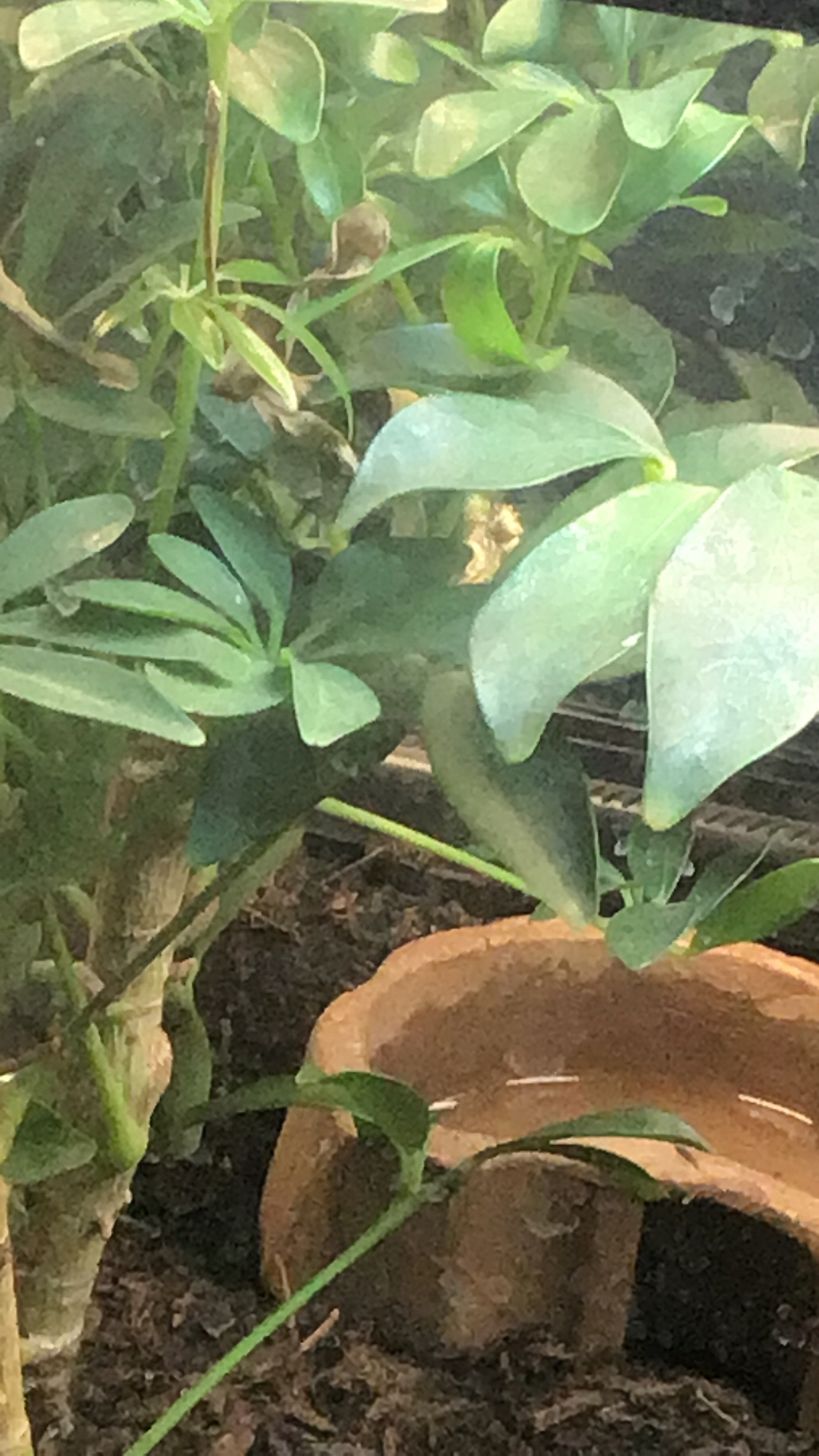
The species carries leathery, glossy leaves divided palmately into seven to nine stalked leaflets on long petioles, held in a bushy, evergreen habit. The cultivar Gold Capella keeps that same rounded, palmate leaf shape but each leaf broadens to about 20cm across and carries a light yellow margin around the green; it flowers only rarely, and those flowers are insignificant.
Source: RHS
Watch for Sap-Suckers
Glasshouse red spider mite, mealybugs and scale insects are the pests most likely to trouble this plant. Under glass, thrips can also appear, particularly on the Gold Capella cultivar.
Source: RHS
Light Pruning, Little Fuss
This plant falls into pruning group one, meaning it needs only light, straightforward pruning to keep its bushy shape. It is otherwise generally free of disease, which is part of what makes it such a low-maintenance houseplant.
Source: RHS
Care recipe
The species record — the baseline every cultivar inherits unless it says otherwise.
Care notes are early — not yet verified
- Light
- ai:claude-opus-4-8
- Water
- ai:claude-opus-4-8 (range 7-14d)
- Humidity
- ai:claude-opus-4-8
- Soil
- ai:claude-fable-5
- Care
- ai:claude-fable-5
Bright, indirect
≈ every 14 days
Medium
13–27 °C
Well-draining, peat-based potting mix
Stem cuttings rooted in soil or water
Balanced liquid feed monthly in spring and summer
Moderate
Rarely flowers indoors
Toxic to cats & dogs & humans
Araliaceae often contain saponins and oxalate-like irritants causing oral and digestive irritation. This is where toxicity lives: every cultivar of this species inherits it and none can override it.
Reference images
Every image credited. Licenses link to their deeds.
PrimarySources: ai:claude-opus-4-8 · ai:claude-opus-4-8 (range 7-14d) · ai:claude-fable-5 · ai:claude-opus-4-8 (family inference)
Kept true by its growers
Every fact here carries its source. Grow Dwarf Umbrella Tree yourself? What you’ve observed — how it drinks, how it holds its color, a name that’s off — and a clear photo of your plant are exactly what keep this page honest. Contributions are reviewed before anything changes.
Sign in to add what you know →