Species · genus Hedera · Araliaceae
English Ivy
Hedera helix L.
Also known as: Ivy · European Ivy · Common Ivy · Needlepoint Ivy · Ripple Ivy
Cultivars of H. helix
The named forms growers keep — each with its own page, each honest about how much we know.
No named cultivars catalogued under H. helix yet. When growers document a stable, named form, it earns its own page here.
Guide
The species-level account. Cultivar pages build on this and say where they differ.
A Heart-Leaved Climber
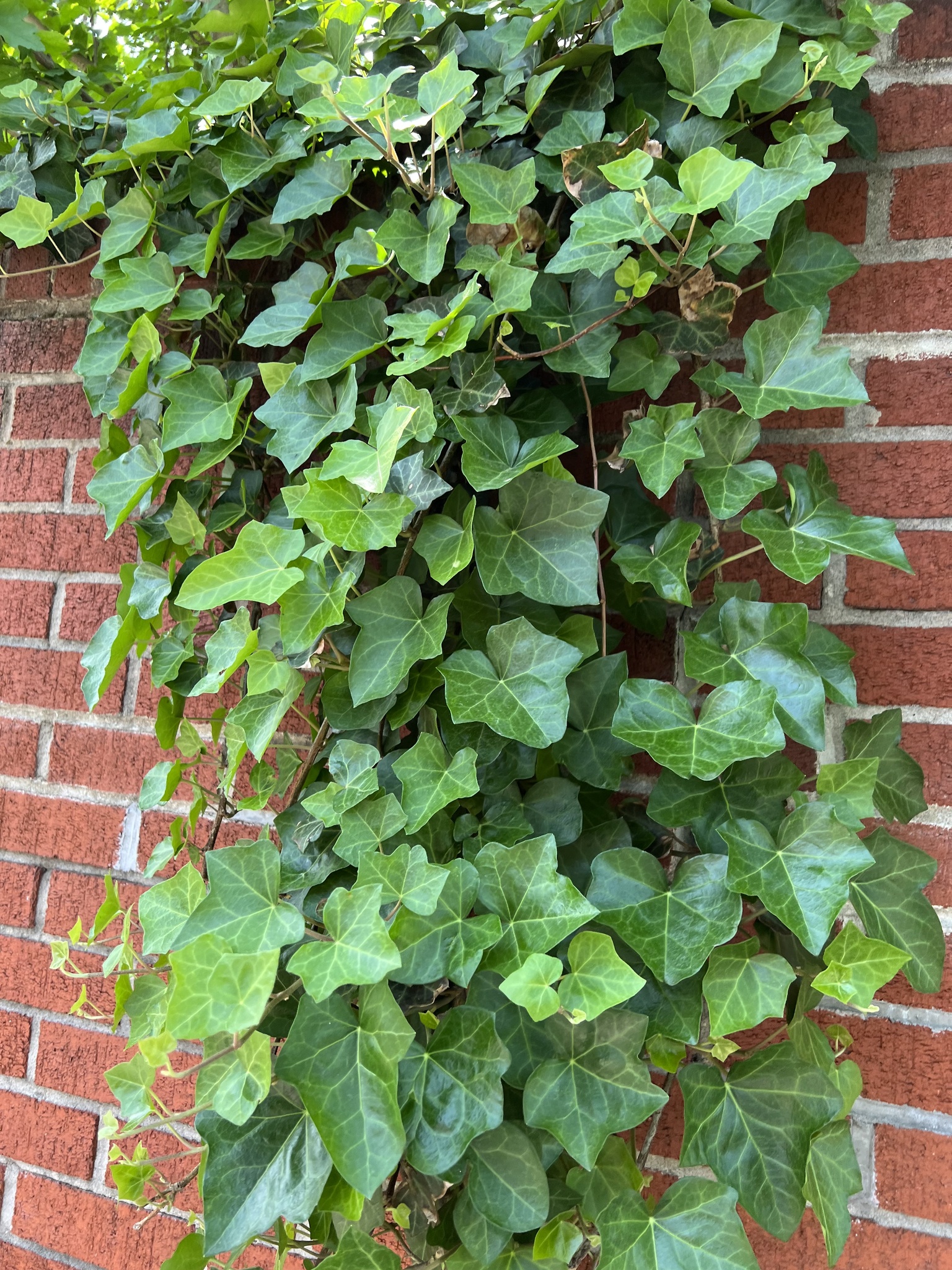
English ivy, Hedera helix, is an evergreen vine known for its lobed, heart-shaped leaves in shades from deep green to variegated cream and gold. It climbs by clinging rootlets and, left unchecked outdoors, spreads aggressively enough to be considered invasive in many regions. Kept in a container indoors, though, it settles into a well-mannered houseplant, trailing from baskets or climbing a small support.
Source: Costa Farms
A European Traveler
This ivy is native to central and northern Europe, not to North America, where it arrived with colonial settlers. Botanically its name comes from the Greek word for twist or turn, a nod to how the vines spiral as they climb. Wild populations fall into three subspecies with distinct native ranges across Europe, Turkey, the Balkans, and parts of southeastern Asia, along with southeastern Spain.
Source: Epic Gardening
Light, Water, and Cool Air
Indoors, English ivy prefers medium to bright, indirect light; it can limp along in low light but won't hold up as well, and variegated forms want less direct sun than solid-green ones since pale leaf tissue scorches more easily. Let the top inch or so of soil dry before watering again, since ivy would rather be slightly dry than sitting in wet mix, and always use a pot with drainage. It also appreciates moist air, which a pebble tray of water beneath the pot can help provide, and it does best in cool rooms between roughly 50 and 70°F.
Source: Costa Farms
Rooting From Cuttings
English ivy is propagated most reliably from stem cuttings taken from healthy young growth, cut into segments an inch or so long with leaves attached. Dipping the cut end in rooting hormone and setting it in moistened sand, then covering the pot with plastic to hold humidity, encourages new roots to form in about six to eight weeks. It can also be grown from seed found in the berries, though the berries themselves are poisonous and should be handled with care.
Source: Epic Gardening
Two Faces, One Vine
Ivy shows two distinct growth phases: a juvenile stage of long climbing stems with lobed leaves that hold on with root-like growths from the stem, and, after roughly a decade of establishment, an adult phase with shrubbier growth, unlobed leaves, and autumn flowers followed by berries. Many cultivars are kept permanently juvenile by regular pruning, while a few, such as 'Arborescens' and 'Ice Cream', are selected to stay in the flowering adult form. Leaf color ranges from plain deep green to bold variegation in cream, gold, or grey-green depending on cultivar.
Source: RHS
Watch for Spider Mites
A dry, stressed ivy is the one most likely to draw pests, and spider mites are the main culprit indoors, especially in winter when furnace air is dry. Fine webbing on the undersides of leaves and tiny dark specks are the telltale signs, and the mites can multiply into a full infestation quickly. Rinsing them off with water or treating with neem oil brings them under control.
Source: Costa Farms
Brown Edges, Wet Roots
Browning, drying leaf edges on ivy usually point to overwatering rather than underwatering, even though the symptom looks like thirst. Roots sitting in soggy mix essentially drown and lose the ability to take up water or nutrients, so the fix is to let the plant run drier rather than wetter. Dry indoor air can cause similar browning, which is why raising humidity with a pebble tray or humidifier helps, and too much fertilizer or hard water can add to leaf browning as well.
Source: Epic Gardening
Trimming and Repotting
Indoors, ivy vines can turn leggy over time, so pinching or snipping growth back just above a leaf keeps the plant fuller and tidier. Repotting is generally needed about once a year, or whenever the plant dries out unusually fast, becomes root-bound, or grows top-heavy; choose a pot only slightly larger than the current root ball to avoid excess moisture sitting in the soil.
Source: Epic Gardening
Care recipe
The species record — the baseline every cultivar inherits unless it says otherwise.
Care notes are early — not yet verified
- Light
- ai:claude-opus-4-8
- Water
- ai:claude-opus-4-8 (range 5-10d)
- Humidity
- ai:claude-opus-4-8
- Soil
- ai:claude-fable-5
- Care
- ai:claude-fable-5
Bright, indirect
≈ every 10 days
Medium
7–24 °C
Rich, well-draining general potting mix
Stem cuttings root readily in water or soil
Balanced liquid feed monthly during active growth
Fast
Juvenile indoor ivy does not flower
Toxic to cats & dogs & humans
Araliaceae contains saponins (and the foliage triterpenoid falcarinol), which can irritate the mouth and gut and cause contact dermatitis. This is where toxicity lives: every cultivar of this species inherits it and none can override it.
Reference images
Every image credited. Licenses link to their deeds.
PrimarySources: ai:claude-opus-4-8 · ai:claude-opus-4-8 (range 5-10d) · ai:claude-fable-5 · ai:claude-opus-4-8 (family inference)
Kept true by its growers
Every fact here carries its source. Grow English Ivy yourself? What you’ve observed — how it drinks, how it holds its color, a name that’s off — and a clear photo of your plant are exactly what keep this page honest. Contributions are reviewed before anything changes.
Sign in to add what you know →