Species · genus Hedera · Araliaceae
Canary Ivy
Hedera canariensis Willd.
Also known as: Canary Island Ivy · Madeira Ivy · Algerian Ivy · Canary Islands Ivy
Cultivars of H. canariensis
The named forms growers keep — each with its own page, each honest about how much we know.
No named cultivars catalogued under H. canariensis yet. When growers document a stable, named form, it earns its own page here.
Guide
The species-level account. Cultivar pages build on this and say where they differ.
Canary Ivy, Briefly
Hedera canariensis, Canary ivy, is an evergreen climbing member of the Araliaceae family, related to and often confused with English ivy. It is grown both as a garden climber and, in one selected form, as the ornamental cultivar 'Spanish Canary'. Beyond its ornamental use, Kew notes it also has environmental and medicinal applications.
Source: Kew
A Canary Islands Native
This species is native to the Canary Islands, growing there as a climber within the temperate biome. It has since been introduced beyond its native range to places including Italy, northwest Mexico, New South Wales, and the South Island of New Zealand. Formally described by Willdenow in 1808, it has since accumulated a long list of synonyms and varietal names, including forms once sold under names like Hedera grandifolia and Hedera sevillana.
Source: Kew
Conditions It Prefers
'Spanish Canary' tolerates a range of soils and conditions but does best in fertile, humus-rich, well-drained alkaline soil in a sheltered position, taking full sun or partial shade. It suits patio containers as readily as a wall or trellis. Its hardiness rating suggests it can withstand most UK winters short of the most severe cold.
Source: RHS
Cuttings, Layering, Grafting
Propagation can be done through softwood cuttings taken at any time, or through semi-ripe or hardwood cuttings from late summer through late winter. Layering or grafting are also viable methods and, like softwood cuttings, can be attempted at any time of year.
Source: RHS
Vigorous Climbing Habit
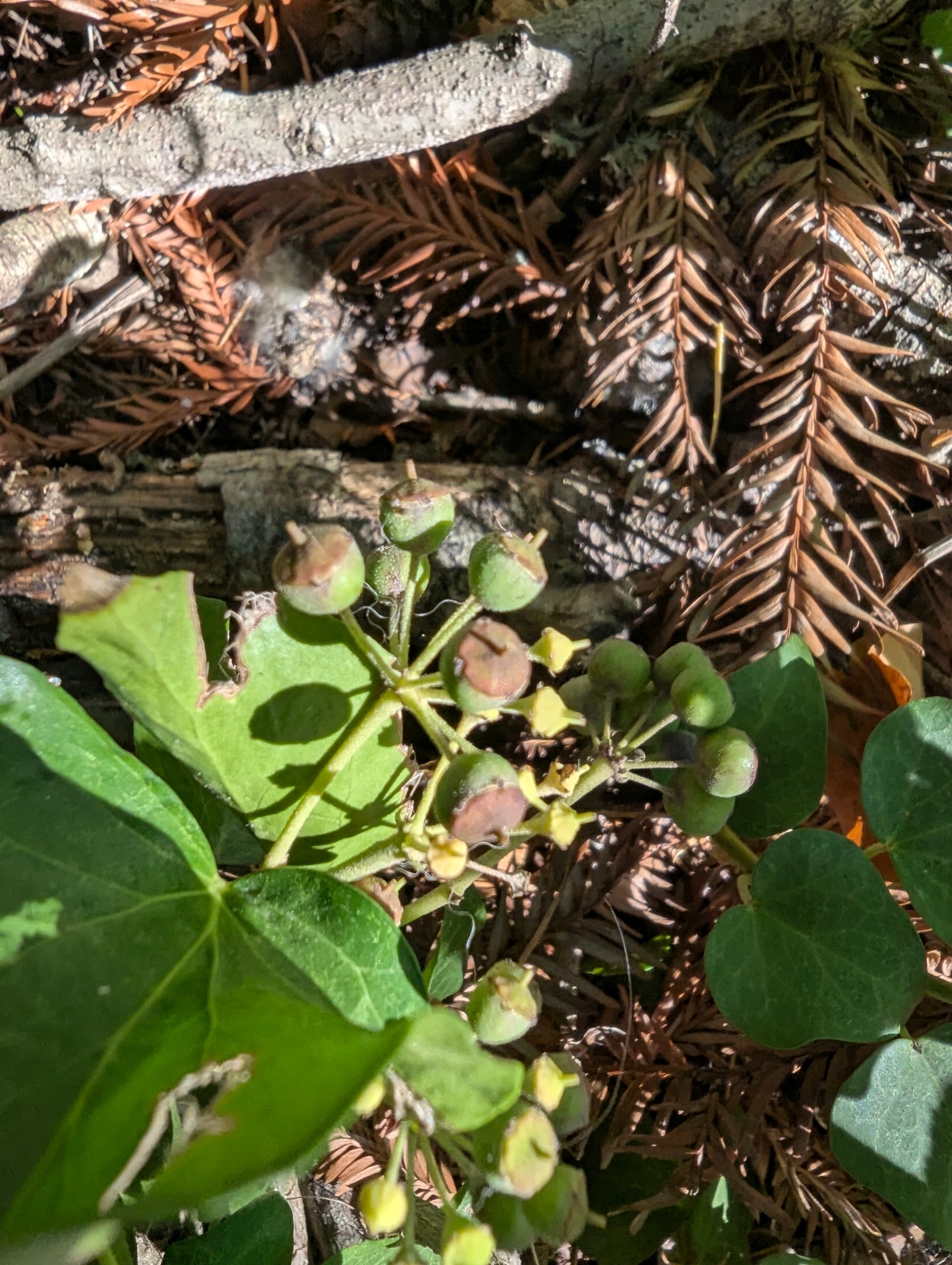
The cultivar 'Spanish Canary' is a fast-growing evergreen climber reaching around five metres, with reddish stems and large, glossy, pale green five-lobed leaves that darken with age. Between late summer and late winter it produces small greenish flowers held in umbels, which develop into globular black fruits ripening the following spring or early summer on mature growth. Epic Gardening notes that Canarian ivy is closely related to Irish ivy, sharing a similar growth habit though with differently shaped leaves.
Source: RHS
Watch For Mites And Scale
The RHS lists red spider mites, scale insects, and aphids as the pests most likely to trouble this ivy. Occasionally it may also succumb to honey fungus or a leaf spot disease, though the RHS notes honey fungus is rare.
Source: RHS
Pruning And Handling
This ivy falls into pruning group eleven, meaning it can be cut back at any time of year as needed. Take care when handling it, as the RHS notes it can be harmful if eaten and may act as a skin irritant or allergen, so gloves and protective equipment are worth wearing during pruning or propagation work.
Source: RHS
Care recipe
The species record — the baseline every cultivar inherits unless it says otherwise.
Care notes are early — not yet verified
- Light
- ai:claude-opus-4-8
- Water
- ai:claude-opus-4-8 (range 7-12d)
- Humidity
- ai:claude-opus-4-8
- Soil
- ai:claude-fable-5
- Care
- ai:claude-fable-5
Bright, indirect
≈ every 12 days
Medium
7–24 °C
Rich, well-draining general potting mix
Stem cuttings rooted in water or soil
Balanced liquid feed monthly in the growing season
Moderate
Rarely flowers indoors
Toxic to cats & dogs & humans
Araliaceae; Hedera contains saponins (hederagenin glycosides) that irritate skin and the gut if ingested This is where toxicity lives: every cultivar of this species inherits it and none can override it.
Reference images
Every image credited. Licenses link to their deeds.
Sources: ai:claude-opus-4-8 · ai:claude-opus-4-8 (range 7-12d) · ai:claude-fable-5 · ai:claude-opus-4-8 (family inference)
Kept true by its growers
Every fact here carries its source. Grow Canary Ivy yourself? What you’ve observed — how it drinks, how it holds its color, a name that’s off — and a clear photo of your plant are exactly what keep this page honest. Contributions are reviewed before anything changes.
Sign in to add what you know →