Species · genus Haworthiopsis · Asphodelaceae
Fasciated Haworthia
Haworthiopsis fasciata (Willd.) G.D.Rowley
Also known as: Gamtoos Haworthia · Zebra Haworthia · Zebra-plant
Cultivars of H. fasciata
The named forms growers keep — each with its own page, each honest about how much we know.
No named cultivars catalogued under H. fasciata yet. When growers document a stable, named form, it earns its own page here.
Guide
The species-level account. Cultivar pages build on this and say where they differ.
A Little Striped Succulent
Haworthiopsis fasciata, commonly called little zebra or zebra haworthia, is a small rosette-forming succulent known for the white banding on its dark green leaves. It belongs to the Asphodelaceae family and was formerly classified under the genus Haworthia. It is often grown as a houseplant or, in warm climates, outdoors, and is considered a good starting point for those new to succulents.
Source: Epic Gardening
Out of the Eastern Cape
This plant hails from the dry, sandy regions of South Africa's Eastern Cape Province, a dry continental climatic zone. In the wild it grows in gritty, acidic soils, often tucked into the shade of rocks alongside other succulents such as aloes. The genus Haworthiopsis was split from Haworthia in 2013 once differences in leaf structure were recognized, and the RHS lists the plant's range simply as South Africa's Cape.
Source: Epic Gardening
A Rhythm of Neglect
Give this succulent full light with some protection from the harshest sun, and keep humidity low with good ventilation around the leaves. Water moderately while it is in active growth, always letting the compost dry out between soakings, and keep it nearly dry through winter. A half-strength, low-nitrogen liquid feed once or twice during the growing season is enough; cactus compost with sharp drainage suits it well.
Source: RHS
Offsets and Leaf Cuttings
Little zebra can be grown from seed sown at 21-24°C in spring, or increased by separating rooted offsets, or by taking leaf cuttings in spring and summer. Offsets are the more straightforward route: once a pup has visible roots of its own, it can be detached from the parent and potted separately. Leaf cuttings are slower, needing time to callus before rooting, but they are a rewarding way to watch a new rosette form from scratch.
Source: RHS
Zebra Stripes and Rosettes
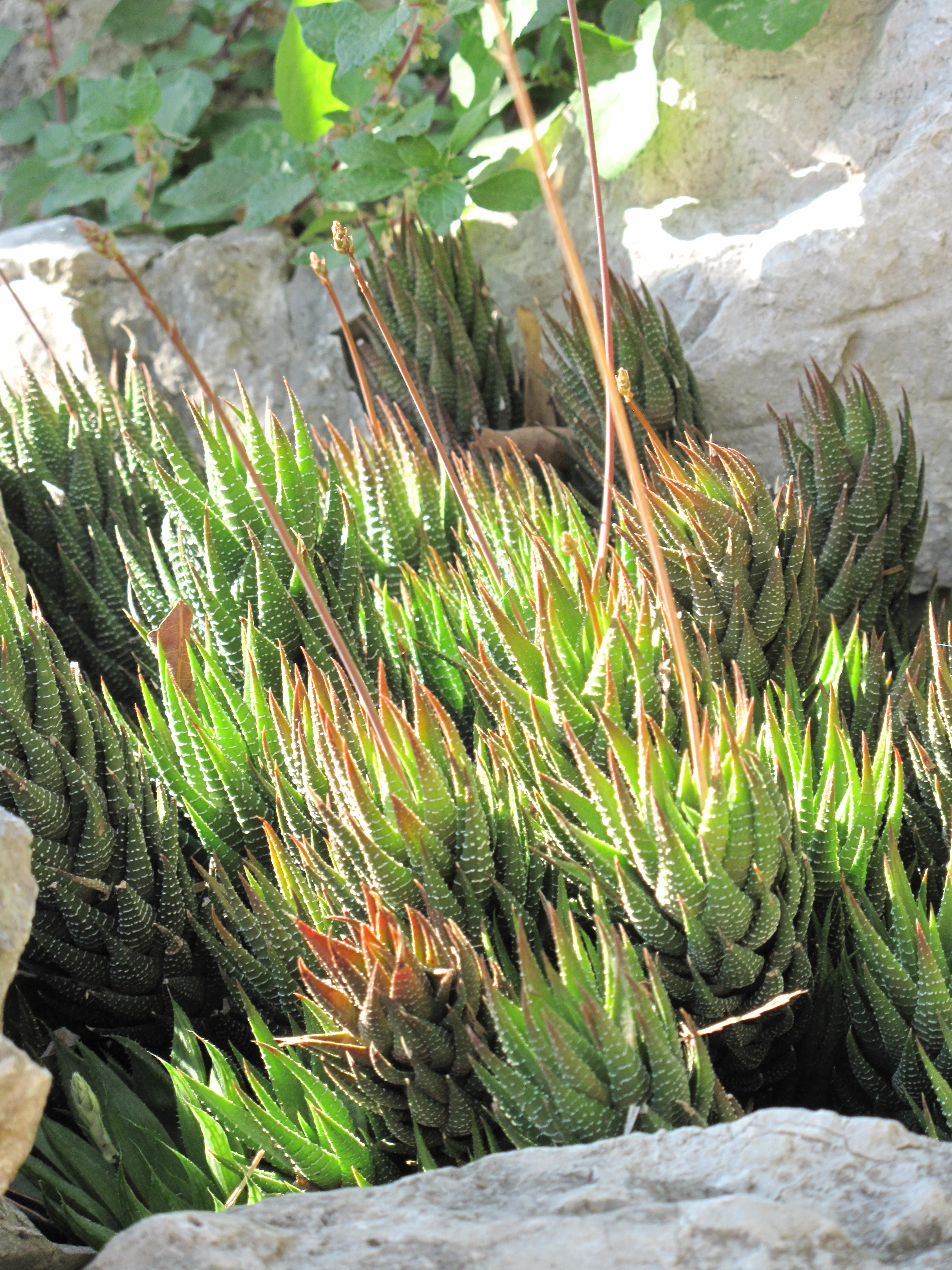
The little zebra carries stiff, narrowly triangular, dark green leaves banded with distinctive white, warty tubercles, arranged in a tight rosette that curves gently inward. RHS notes it reaches only about 12cm tall, matching the plant's reputation as a compact windowsill succulent. In summer, wiry flowering stems can rise well above the foliage, carrying small tubular white flowers. It spreads slowly in clumps, producing offsets nestled at the base of the parent rosette.
Source: RHS
Mealybugs Are the Main Culprit
This species is generally disease-free, but mealybugs are the pest most likely to trouble it. They settle into the rosette and leaf joints, so it is worth checking those tucked-away spots on any plant that seems to be struggling.
Source: RHS
Reading the Leaves
Brown, dry leaf tips usually point to underwatering, often made worse by too much sun or heat drying the foliage out. Mushy, discolored leaves tell the opposite story: overwatering and poor drainage, which lead to rot that is very difficult to reverse once it takes hold in the roots. A reddish or altered leaf color in strong sun is a sign of stress rather than damage, and the plant will usually settle if moved to gentler light.
Source: Epic Gardening
Rarely Needs a Hand
No routine pruning is required; the rosette form looks after itself, with only diseased or naturally dying older leaves worth removing by hand. Repotting is infrequent, typically every two to three years, done mainly when offsets crowd the container or the compost needs refreshing. This is also the best time to divide and propagate, since the plant is coming back into active growth.
Source: RHS
Care recipe
The species record — the baseline every cultivar inherits unless it says otherwise.
Care notes are early — not yet verified
- Light
- ai:claude-opus-4-8
- Water
- ai:claude-opus-4-8 (range 14-28d)
- Humidity
- ai:claude-opus-4-8
- Soil
- ai:claude-fable-5
- Care
- ai:claude-fable-5
Bright, indirect
≈ every 28 days
Low — average room
10–27 °C
Gritty, fast-draining cactus and succulent mix
Offsets (pups) potted up, or leaf cuttings
Dilute succulent feed once or twice in spring and summer
Slow
Slender tubular blooms possible but rare indoors
Not yet documented
This is where toxicity lives — every cultivar of this species inherits it and none can override it.
Reference images
Every image credited. Licenses link to their deeds.
PrimarySources: ai:claude-opus-4-8 · ai:claude-opus-4-8 (range 14-28d) · ai:claude-fable-5
Kept true by its growers
Every fact here carries its source. Grow Fasciated Haworthia yourself? What you’ve observed — how it drinks, how it holds its color, a name that’s off — and a clear photo of your plant are exactly what keep this page honest. Contributions are reviewed before anything changes.
Sign in to add what you know →