Species · genus Haworthia · Asphodelaceae
Bristle Haworthia
Haworthia cooperi Baker
Cultivars of H. cooperi
The named forms growers keep — each with its own page, each honest about how much we know.
No named cultivars catalogued under H. cooperi yet. When growers document a stable, named form, it earns its own page here.
Guide
The species-level account. Cultivar pages build on this and say where they differ.
A Collector's Rosette
Haworthia is a genus of compact, easy-care succulents that form small rosettes of fleshy leaves, often marked with bold stripes or speckles. Their neat size and huge variety of forms make them a favourite for windowsill collections.
Source: RHS
Southern African Roots
Most haworthias hail from the dry regions of South Africa and its neighbouring countries. Epic Gardening notes the genus is native to Southern Africa more broadly, sharing similar habits and care needs with relatives like Aloe and Echeveria.
Source: RHS
Bright Light, Sparing Water
Give haworthias bright, indirect light and let the compost approach dryness before watering again, in a peat-free cactus mix. They do best between 10 and 26°C, and in winter they need a cooler, drier dormant spell with only light, occasional watering to stop the leaves shrivelling. Cooperi specifically likes full light with low humidity, watered freely while actively growing but kept just moist otherwise, with a dilute low-nitrogen feed fortnightly through late spring and summer.
Source: RHS
Dividing the Clump
Clump-forming haworthias are simple to increase: separate the smaller rosettes growing around the outside of the parent plant and pot them up individually. Haworthia cooperi can also be raised from seed or offsets.
Source: RHS
Windows, Stripes, and Rosettes
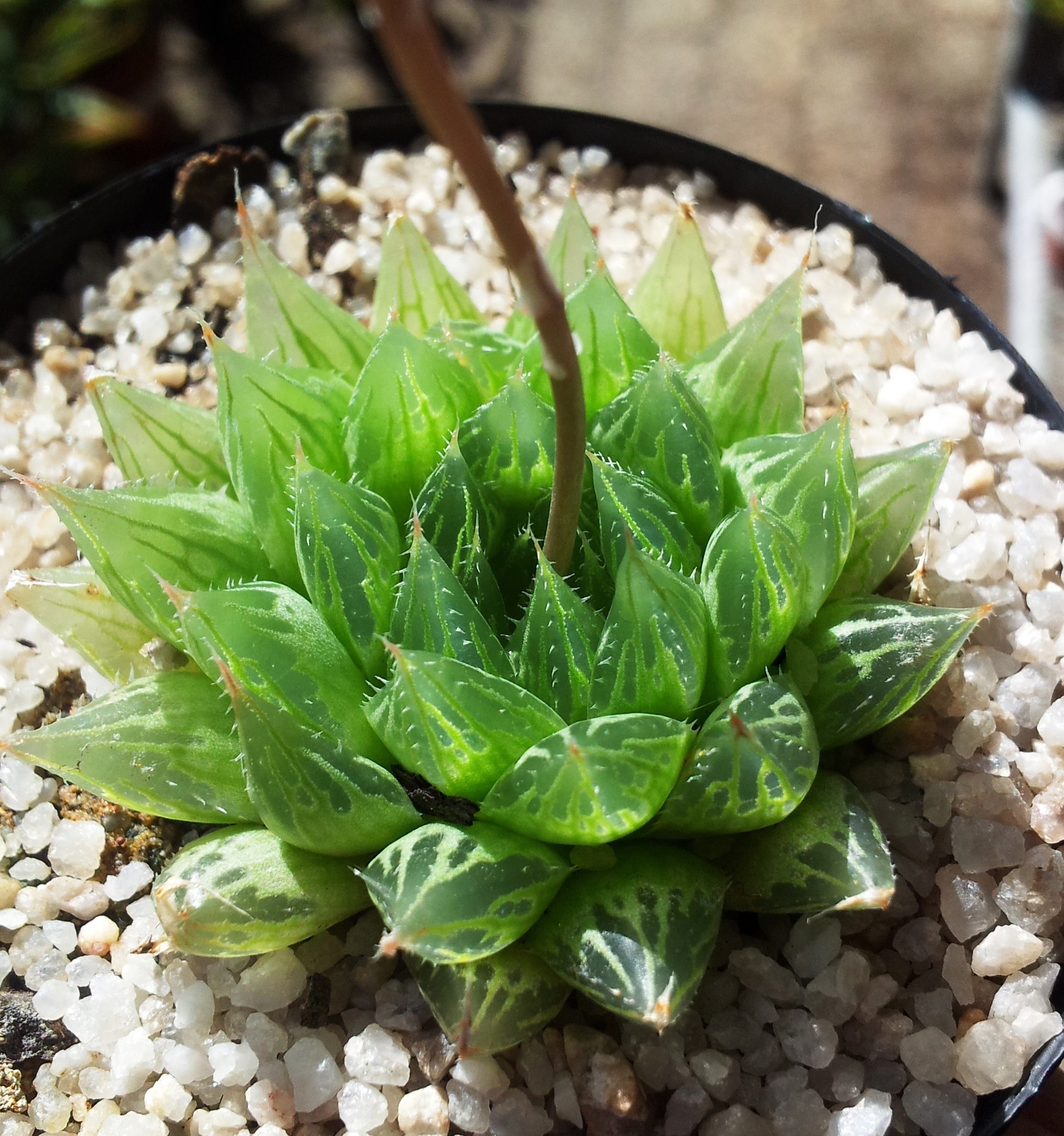
The rosette habit is the through-line, but the details vary widely by species: some, like Haworthia cooperi, carry translucent leaf tips that let light reach the leaf even when partly buried in sand back home. Leaves may be triangular or rounded, marked with white tubercles, bristly margins, or fine hairlike spines, and plants can grow as solitary rosettes or as spreading clumps. Cooperi itself stays low, under 10cm, forming clumps of pale green leaves with transparent tips, sending up slender flower stems to 40cm with white to pinkish blooms in spring or summer.
Source: RHS
Watch for Mealybugs
Haworthia cooperi may be troubled by mealybugs, though it is otherwise generally free of disease.
Source: RHS
Rot from Too Much Care
The main danger to haworthias is overwatering or sitting in damp compost, which leads to rot, especially in winter when the plant should be resting cool and dry. Skip that winter rest and the plant responds with thin, weak growth that spoils its shape. Fluoride in tap water can also damage leaves, so rainwater or filtered water is worth using, and temperatures should never drop below 10°C.
Source: RHS
Care recipe
The species record — the baseline every cultivar inherits unless it says otherwise.
Care notes are early — not yet verified
- Light
- ai:claude-opus-4-8
- Water
- ai:claude-opus-4-8 (range 14-28d)
- Humidity
- ai:claude-opus-4-8
- Soil
- ai:claude-fable-5
- Care
- ai:claude-fable-5
Bright, indirect
≈ every 28 days
Low — average room
10–27 °C
Gritty, fast-draining succulent mix
Offsets or leaf cuttings, callused first
Weak feed once or twice over the growing season
Slow
Small white flowers on a thin stalk; foliage is the draw
Not yet documented
This is where toxicity lives — every cultivar of this species inherits it and none can override it.
Reference images
Every image credited. Licenses link to their deeds.
PrimarySources: ai:claude-opus-4-8 · ai:claude-opus-4-8 (range 14-28d) · ai:claude-fable-5
Kept true by its growers
Every fact here carries its source. Grow Bristle Haworthia yourself? What you’ve observed — how it drinks, how it holds its color, a name that’s off — and a clear photo of your plant are exactly what keep this page honest. Contributions are reviewed before anything changes.
Sign in to add what you know →